Pocket Bike vs Mini Bike for Adults: Speed, Size, and Which One Is Actually Worth Buying
TL;DR
- A pocket bike is a full-crouch racing machine — fast (40–55 mph with 150cc), but uncomfortable for most adults after 15 minutes.
- A mini bike is an upright leisure rider — 24–28 mph stock, stable, forgiving, and built for backyard and trail use.
- For raw top-end speed: pocket bike wins. For adult-sized comfort, versatility, and long-term usability: mini bike wins.
- Most adults who buy a pocket bike ride it 3–5 times and park it. Most adults who buy a mini bike ride it weekly.
- The FRP GMB100 at $379 is the most commonly recommended adult mini bike. The most popular 150cc pocket bike category starts at $350–$600 but requires regular maintenance tuning.
Both are small, gas-powered, and fun. That's roughly where the similarities end. A pocket bike is a scaled-down racing motorcycle — you ride it hunched over, knees almost at your chest, going surprisingly fast on a platform roughly the size of a suitcase. A mini bike is an upright, stable, easy-to-ride platform that looks (and handles) like a simplified cruiser. The choice between them comes down to what you're actually going to do with the bike after the first three rides.
What Is a Pocket Bike?
A pocket bike (also called a mini moto, pocket moto, or mini motorcycle) is a small-displacement motorcycle designed to replicate full-size racing motorcycles at roughly 1/4 scale. The rider sits in a full crouch position — feet on rear pegs, body low, weight forward. Most adult pocket bikes use a 110cc–150cc 4-stroke engine (there are also 2-stroke versions) and run on a centrifugal automatic clutch.
Key characteristics:
- Top speed: 40–55 mph for 150cc (varies heavily by gearing and rider weight)
- Weight: 55–85 lbs for most adult models
- Seating position: Full racing crouch — knees bent, torso folded forward
- Wheel size: 6.5"–10" diameter — much smaller than a mini bike
- Intended use: Track, driveway, flat concrete — not off-road or rough terrain
The racing-style body and small wheels make pocket bikes genuinely fast on flat pavement but essentially unusable on anything other than smooth concrete. Hit a small crack at 45 mph on 6.5" tires and you'll understand immediately why these aren't trail riders.
What Is a Mini Bike?
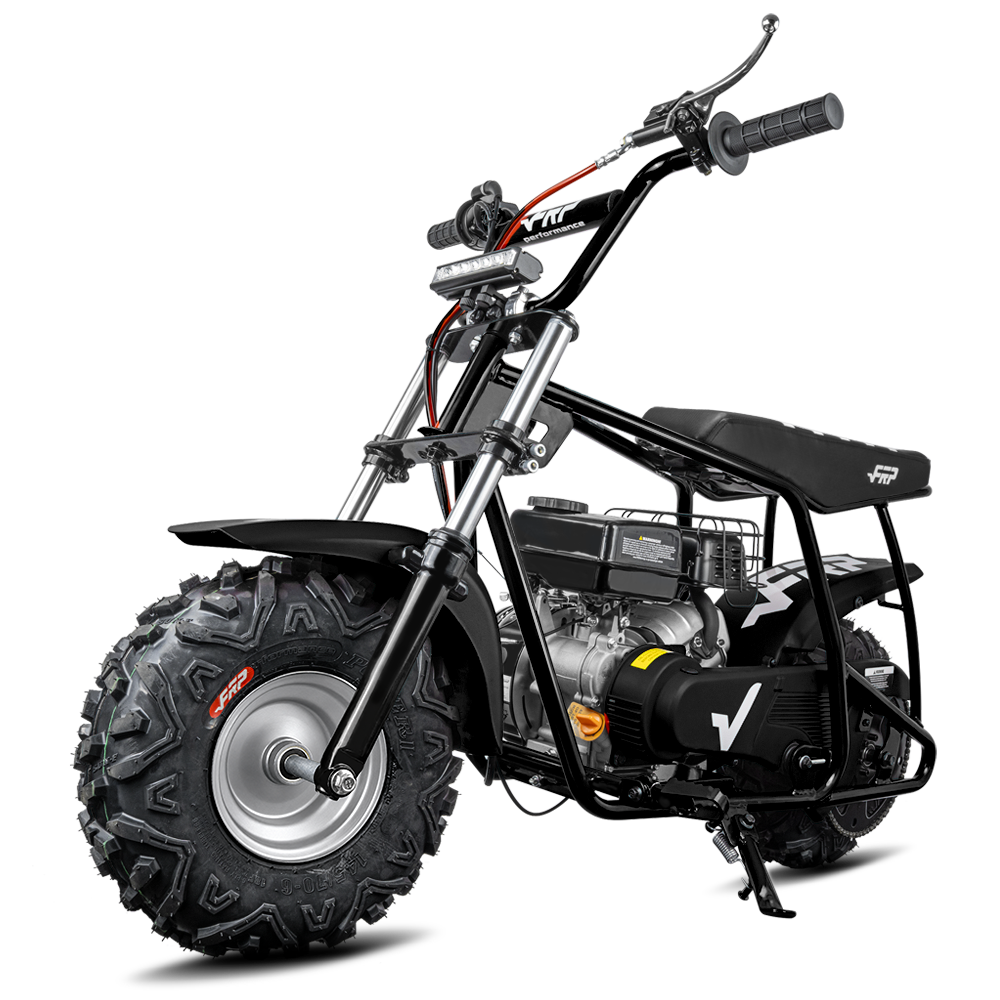
A mini bike is a small, upright motorcycle platform with larger wheels (10"–12.5" diameter), a relaxed sitting position, and a focus on accessible, fun riding at moderate speeds. They're designed for backyards, private tracks, flat trails, and casual neighborhood riding on private property.
Key characteristics:
- Top speed: 24–28 mph stock (99cc); 35–45 mph with 212cc upgrades
- Weight: 75–140 lbs depending on engine and frame
- Seating position: Upright — feet forward, back straight
- Wheel size: 10"–12.5" diameter with pneumatic tires
- Intended use: Backyard, private trails, flat terrain, casual riding
The upright position and larger wheels make mini bikes comfortable for extended sessions and capable on mildly uneven terrain. The FRP GMB100 with its 10" wheels and 220 lb weight limit is the standard adult mini bike benchmark.
Head-to-Head Comparison
| Category | Pocket Bike (150cc) | Mini Bike (99cc / 212cc) |
|---|---|---|
| Top speed (stock) | 40–55 mph | 24–28 mph (99cc) · 35–45 mph (212cc) |
| Engine displacement | 110–150cc typical | 99cc–212cc |
| Riding position | Full racing crouch | Upright / semi-upright |
| Wheel size | 6.5"–10" | 10"–12.5" |
| Weight limit | ~200 lb typical | 220 lb (GMB100) · 250+ lb (212cc builds) |
| Best surface | Flat smooth pavement only | Gravel, dirt, grass, pavement |
| Rider height comfort | Under ~5'10" comfortable; taller riders cramped | Comfortable up to 6'2" depending on model |
| Session length (adults) | 10–20 min before back/knee fatigue | 45–90 min typical |
| Parts availability | Variable — many imports, fitment inconsistency | Wide — centrifugal clutch parts, engine common |
| Maintenance frequency | More frequent carb cleaning needed | Oil change every 25 hrs, chain adjustment |
| Street legal | No | No |
| Price range (new) | $350–$700 | $379–$600 (GMB100 / GMB100P) |
Speed: Pocket Bike Wins, But Context Matters
A 150cc pocket bike genuinely goes faster than a stock 99cc mini bike. If raw top speed is your primary metric, the pocket bike wins outright. At 40–55 mph on a flat driveway, it produces an intense, low-to-the-ground experience that nothing at this price replicates.
But context matters:
- Where are you riding? Pocket bikes need smooth, flat pavement. If your backyard has any uneven ground, gravel, or patches of grass, the small wheels make the bike unstable and unenjoyable.
- How long are you riding? The crouch position causes back, neck, and knee fatigue quickly for most adults. 10–20 minute sessions are typical. Mini bike riders commonly do 45–90 minute sessions with no fatigue issues.
- Do you want to go faster eventually? A 212cc engine swap on a mini bike frame gets you to 35–45 mph with an upright, stable platform and proper torque converter. That's a competitive speed in a much more rideable package.
Comfort and Ergonomics: Why Most Adults Prefer Mini Bikes
The pocket bike's racing crouch position is the single biggest adoption barrier for adult riders. It's fun for the first session. By the third session, most adults over 30 notice:
- Lower back strain from the hunched position
- Knee discomfort from the folded leg position
- Wrist fatigue from bearing weight on the bars
- Neck strain from holding the head up while crouched
Riders over 5'10" often feel physically cramped rather than just uncomfortable. The platform was designed for much smaller bodies (and for the track, where sessions are timed and short). For leisure backyard riding — which is what almost every pocket bike buyer actually uses it for — the ergonomics work against you.
Mini bikes sit you upright. Feet forward, back supported, head in a natural position. A 200 lb adult on a GMB100 can ride laps for an hour without physical fatigue. That's simply not possible on a pocket bike for most adults.
Terrain Limitations: Small Wheels vs Real Ones
Pocket bike wheel size (6.5"–10") is the most underappreciated limitation. At speed on smooth pavement, it's irrelevant. The moment you leave that surface:
- A small pebble can deflect the front wheel at speed
- Concrete expansion joints require deliberate, slowed navigation
- Dirt, gravel, or grass are genuinely difficult to manage
- Any slope — even a driveway lip — creates an instability moment
Mini bike 10"–12.5" pneumatic tires handle gravel, grass, packed dirt, and mild trail terrain without drama. If your intended riding area is anything other than a perfectly smooth, sealed concrete surface, the mini bike is the correct choice by a large margin.
Maintenance Reality
Both platforms require regular maintenance, but pocket bikes have a reputation (well-earned) for carburetor sensitivity. The small-bore carbs on 110–150cc pocket bike engines are tuned precisely for a specific mixture — minor temperature swings, fuel quality variation, or sitting unused for 2–3 weeks can cause starting issues that require carb cleaning.
Mini bikes with Honda GX-style or clone engines are significantly more tolerant. The GMB100's 99cc engine runs on any fresh regular-grade gasoline, starts easily after storage with a few pulls, and rarely develops carb issues in normal use. Maintenance is oil changes every 20–25 hours and periodic chain tension checks.
Who Should Buy a Pocket Bike
- You want maximum speed in minimum space and have a smooth concrete surface to ride
- You're under 5'10" and the crouch position fits your body comfortably
- You want the track racing aesthetic and experience, even in a backyard
- Short, intense sessions (10–20 min) are your preference
- You have mechanical aptitude and enjoy working on a more maintenance-intensive machine
Who Should Buy a Mini Bike
- You want a machine you can actually ride for an hour without physical complaints
- Your riding area isn't perfectly smooth — any gravel, grass, or dirt involved
- You're riding with family or friends at relaxed speeds (no race track required)
- You want upgrade potential — 212cc swap, better tires, suspension fork on the P model
- You're 6'0"+ and don't want to feel like you're riding a toy
- You prefer simple, reliable maintenance
The Most Practical Adult Mini Bike at This Price

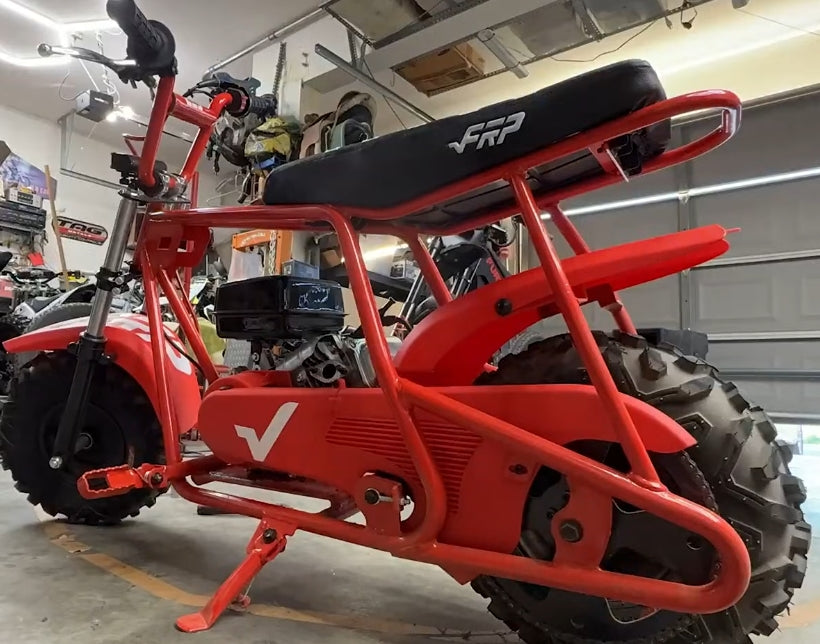
FRP GMB100 — Standard Adult Mini Bike
$379.99 · 99cc · 220 lb limit · 24–28 mph
Upright seating, 10" pneumatic tires, disc brake. Works on grass, gravel, and flat trails. The most commonly recommended adult mini bike under $500.
View GMB100 →
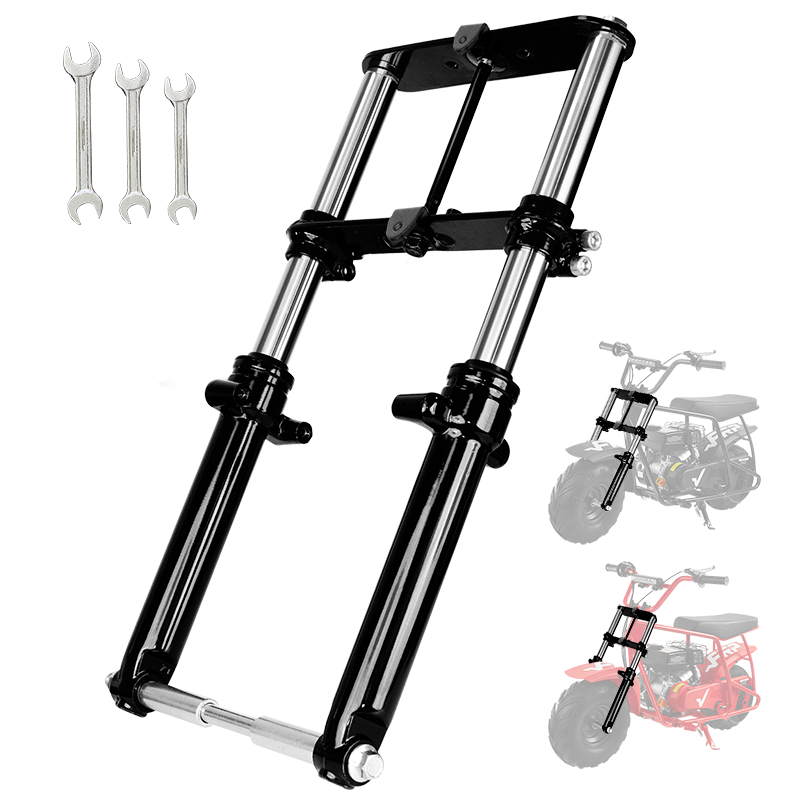
FRP GMB100P — Suspension-Equipped
$499.99 · 99cc + front suspension fork
Adds a hydraulic front fork for rougher terrain. If you're riding packed dirt, gravel trails, or OHV paths — this is where the suspension fork pays off.
View GMB100P →The 150cc Path on a Mini Bike Platform
One option that often gets overlooked: upgrade a mini bike frame rather than buy a pocket bike. A Predator 212cc engine swap (or a 196cc clone) on a GMB100-style frame gives you 35–45 mph in an upright, stable package that handles real terrain. The upgrade costs $200–$350 in parts plus installation time. See the full 212cc speed and performance guide for realistic speed figures and what the upgrade actually involves.
For buyers who want speed AND livability, this path — start with a quality mini bike frame, swap to 212cc — often produces better long-term results than a pocket bike purchase.
Frequently Asked Questions
What is the top speed of a 150cc pocket bike?
Between 40 and 55 mph depending on gearing, rider weight, and road conditions. Stock 150cc pocket bikes are typically geared for 42–48 mph on flat pavement. Rider weight has a meaningful effect — a 220 lb rider will see 5–10 mph less than a 160 lb rider on the same bike.
Can a 150cc pocket bike keep up with traffic?
On paper, yes — residential street speed limits are often 25–35 mph. But pocket bikes are not street legal in the US in stock form. They lack VIN numbers, DOT-required equipment, and emissions certifications for road registration. They're off-road vehicles in the same legal category as mini bikes.
What's the difference between a pocket bike and a mini moto?
"Pocket bike," "mini moto," "pocket moto," and "mini motorcycle" all refer to the same product category — small-displacement racing-style motorcycles with a racing crouch position. The terms are used interchangeably. "Mini bike" is a different category: upright-riding, larger wheels, backyard/trail use.
Are pocket bikes good for adults?
For short track sessions by adults under 5'10": yes. For general backyard/leisure riding by average adults: no. The crouch position causes fatigue quickly, the small wheels make anything but smooth concrete uncomfortable, and most adult buyers report using the bike infrequently after the initial novelty. Mini bikes retain more practical usability for adult leisure riding.
What CC is a pocket bike vs a mini bike?
Pocket bikes are typically 50cc (kids), 110cc (entry adult), or 150cc (performance adult). Mini bikes are typically 40cc (kids), 99cc (adult standard), or 212cc (performance adult). The displacement ranges overlap, but the frame geometry, wheel size, and riding position are completely different between the two categories.
How fast does the FRP GMB100 go?
Stock, the GMB100 runs 24–28 mph on flat terrain. With a 212cc engine swap, the same frame platform reaches 35–45 mph. See the complete mini bike pricing guide for what each build tier actually costs.