
Published: August 17, 2026
TL;DR
Electric mini bikes had a lower overall negative-review rate in the sample we analyzed (about 17.3%) than gas mini bikes (about 28.6%) — but that gap is driven largely by one brand, Razor, which represented roughly 38% of all electric ratings. Within gas mini bikes specifically, FRP recorded approximately 18.3% negative reviews, ahead of XtremepowerUS (33.3%), HOVER HEART (37.5%), and MotoTec (48.3%). The real decision isn't gas vs. electric in the abstract — it's which tradeoff you can live with: charging downtime vs. basic mechanical upkeep.
Direct Answer
If you're deciding between a gas and electric mini bike, the spec sheet only tells you part of the story. But after looking at real buyer feedback across the mini bike market, the biggest regrets usually aren't about top speed or engine size. They're practical: bolts coming loose, replacement parts you can't find, charge times that don't fit your day.
FRP sells gas mini bikes, so we're not going to pretend we have no point of view. But instead of just telling you gas is better, we looked at what owners across the category actually complain about, and where the FRP GMB100 lineup stands in that data.

The Gas Mini Bike Problem Buyers Often Miss: Vibration
Gas engines produce continuous vibration. Over time, that can affect bolts, brackets, guards, and other connection points if they're not properly secured or checked. In the gas mini bike negative reviews we analyzed, approximately 19.3% mentioned loose or detached hardware.
For an owner, the frustration isn't the bolt itself — it's a bike that looked solid on day one suddenly needing attention after a few rides. Ask any brand: what have you done to reduce loosening at high-vibration connection points?
This is an area FRP has been actively improving: on certain GMB100 production batches, pre-applied threadlocker fasteners have been introduced at the front chain guard, at selected engine-mount and rear-frame points, and on certain SHR40 sprocket fasteners. That doesn't mean every bolt on every FRP mini bike has threadlocker — the changes are rolling out by location and production batch, and older inventory may differ. We think that distinction matters more than pretending a mechanical product never needs inspection.

The More Expensive Problem Isn't the Repair — It's Finding the Part
A chain wears out. A sprocket gets damaged. None of that means the bike is finished — the real problem starts when the owner can't find the replacement part. Customer service and parts availability were among the most concentrated sources of negative feedback in the gas mini bike reviews we examined.
Before buying, ask more than "how much does the bike cost?" Ask: can I buy chains, sprockets, and brake parts later? Does the brand expect me to keep riding this after the sale? For FRP, parts availability and after-sales support are part of the product itself — a gas mini bike is a mechanical product, and keeping it running matters as much as getting it running on day one.

Is Electric Simply More Reliable? Not Quite
Electric mini bikes did have a lower overall negative-review rate in our sample (17.3% vs. 28.6% for gas), and they cut out real complexity — easier starts, quieter, less routine engine maintenance. But Razor alone represented roughly 38% of all electric mini bike ratings in the sample, so that strong category average is carried significantly by one established brand. The takeaway isn't "electric means reliable" — it's that brand and product still matter more than power source alone.
What electric buyers trade instead of mechanical upkeep is charging. In the reviews we looked at, charge time from empty typically runs 6-8 hours, with cheaper lead-acid models taking 10-12 hours or longer; runtime per charge ranged from under an hour on a high-power setting to 3-4 hours on a lower one, roughly 15-35 miles depending on model and mode. On the FRP GMB100, about $1 of gas covers a full day of casual riding — you top off in a couple of minutes instead of planning around an outlet.
Neither tradeoff is wrong. Short sessions near home fit naturally around a charging routine; longer rides, camping trips, and repeated all-day sessions favor gas's minutes-not-hours refueling. The cost is that gas owners accept basic mechanical responsibility — chains checked, fasteners inspected, wear items eventually replaced.

Which Is Better for You?
The easiest way to choose isn't asking which technology is better — it's asking which inconvenience you'd rather live with.
| Choose electric if you want… | Choose gas if you want… |
|---|---|
| Simple operation, lower noise | Longer riding sessions |
| Minimal mechanical maintenance | Quick refueling, no charger needed |
| Shorter, predictable sessions | Camping, trails, all-day rides |
| Easy everyday use | Willing to maintain a mechanical product |
Why FRP Belongs on the Gas Mini Bike Shortlist
Within the gas mini bike review sample we analyzed, FRP recorded an approximately 18.3% negative-review rate — versus XtremepowerUS (33.3%), HOVER HEART (37.5%), and MotoTec (48.3%). These aren't lab failure rates, and the review volume behind each brand isn't identical, but the signal holds: FRP generated a lower share of negative feedback than several other gas mini bike brands in this sample.
More useful than the number itself is what it points to: fix the vibration/fastener issue where it's found, keep parts and support ahead of demand. A good gas mini bike shouldn't only be fun on the first ride — it should still be repairable, supportable, and worth riding later.
Where FRP Fits
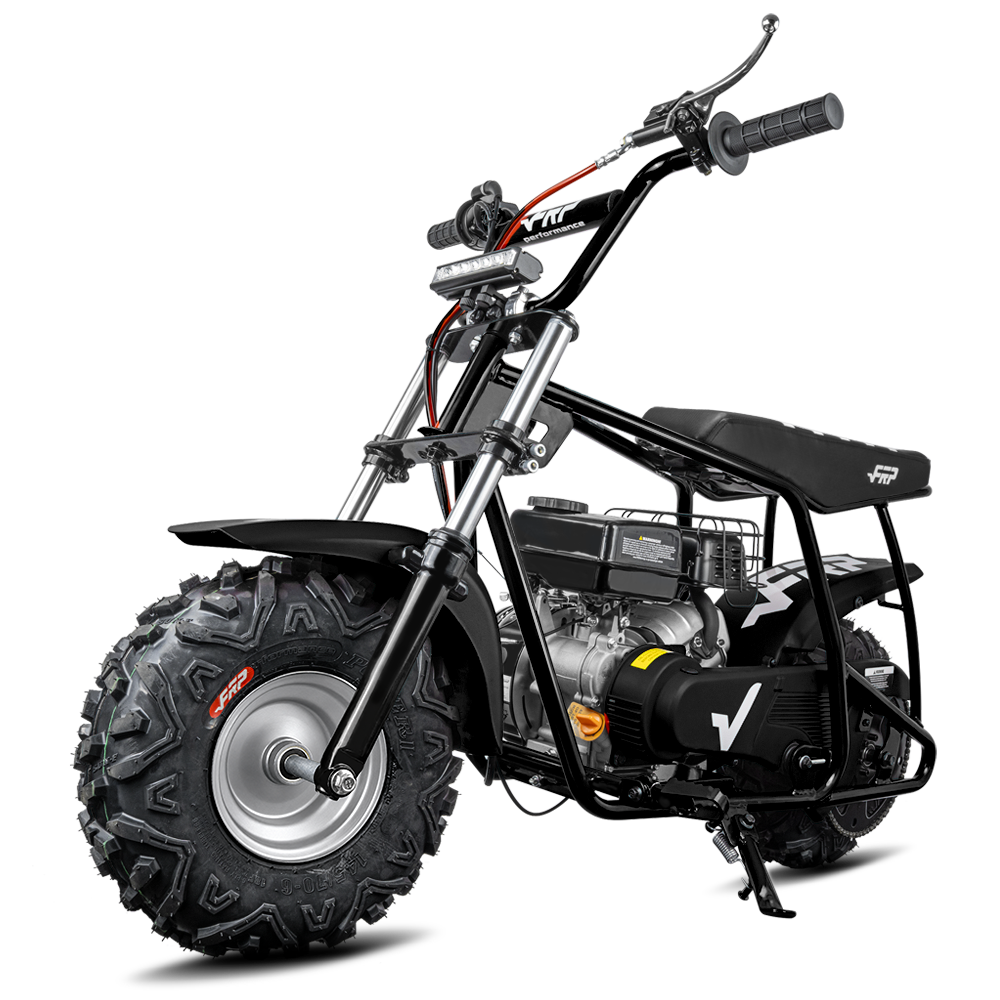
FRP is primarily a gas mini bike brand — if zero mechanical maintenance is your top priority, an electric model may still be the better choice. If gas already fits how you want to ride, FRP is built around riding flexibility, serviceable parts, and product changes driven by what riders actually report.
The GMB100 series suits lightweight recreational riding; the GMB100P adds equipment for riders spending more time on dirt, gravel, and mixed terrain. Choosing the right mini bike starts with choosing the type of riding you actually plan to do.

FAQ
Is a gas or electric mini bike more reliable?
Electric had a lower overall negative-review rate in our sample (17.3% vs. 28.6%), but Razor alone made up roughly 38% of electric ratings — brand and product matter more than power source alone.
Do gas mini bike bolts really come loose over time?
It's a real, recurring complaint — about 19.3% of the negative gas mini bike reviews we analyzed mentioned loose or detached hardware, driven by continuous engine vibration. Ask any brand what they've done at high-vibration connection points.
Can I get replacement parts for a gas mini bike?
Depends on the brand. Parts and support availability were among the most concentrated sources of negative feedback we found, so confirm before buying, not after something breaks. FRP keeps parts in stock for the GMB100 lineup.
How long does an electric mini bike ride before it needs to charge?
Based on real owner reviews, expect roughly 1-4 hours of riding per charge depending on speed mode and model, and 6-8 hours to fully recharge (some cheaper lead-acid models take 10-12+ hours).
Is FRP a gas or electric mini bike brand?
Primarily gas. The GMB100 suits lightweight recreational riding; the GMB100P adds equipment for dirt, gravel, and mixed terrain.
How We Used Review Data
The percentages here come from FRP's analysis of a broader mini bike market review dataset covering hundreds of listings and buyer ratings across gas and electric models. Review volume per brand isn't identical, so treat these as patterns in what real buyers repeatedly report, not lab measurements or a definitive ranking. Production-improvement details come from FRP product and supply-chain records; fastener changes roll out by model, location, and batch, so specifications may differ between vehicles made at different times.
Explore FRP Mini Bikes: See the current FRP mini bike lineup. For lighter recreational riding, start with the GMB100; for dirt, gravel, and mixed terrain, the GMB100P adds trail-oriented features. Need a part? Browse GMB100 parts.