

TL;DR:
- Gas and electric solve different teen riding problems.
- Electric wins on quiet starts and controllable settings.
- Gas still wins for traditional engine feel and refill simplicity.
- M3 should be framed as controlled electric fun.
- The right answer depends on rider maturity and riding space.
A teen asking for a mini bike is rarely asking for a spreadsheet. They want something that feels fast, personal, and a little different from a normal bicycle. Parents usually ask a different question: what is controllable, where can they ride it, what happens if they make a mistake, and how much ownership work comes with it?
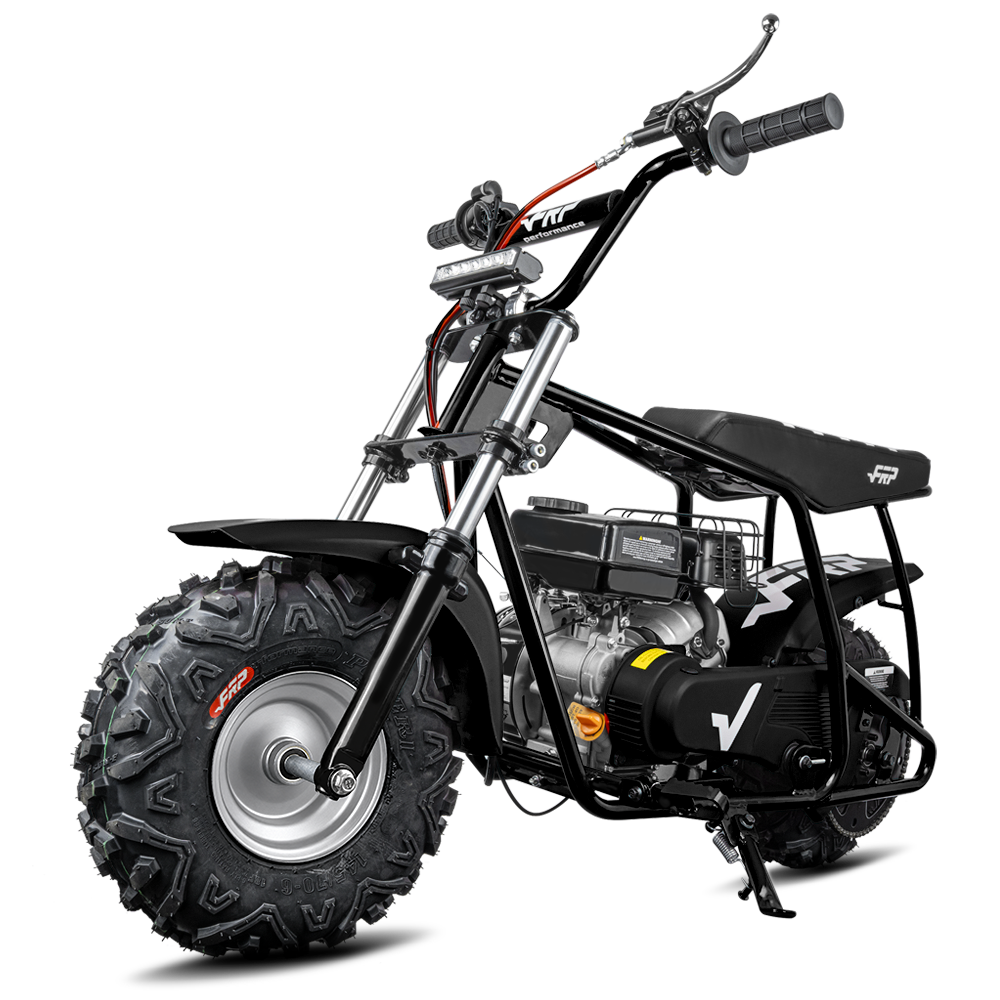
That gap is exactly where a gas vs electric mini bike article can test the M3 message. The point is not to make gas look bad. FRP Moto already sells gas mini bikes and they still make sense for many riders. The point is to define the electric path clearly: quieter operation, no fuel mixing, password access, auto Park, brake cutoff, and a stunt-learning platform built around controlled power.
Should a teen choose gas or electric first?
If the teen wants engine sound, fuel-and-oil learning, longer riding days with quick refills, and a more traditional mini bike experience, gas still makes sense. If the teen wants quieter riding, simpler start-up, less fuel smell, and adjustable electric behavior, an electric mini bike is easier to justify.
The better question is not which one is cooler. The better question is which one reduces friction for the actual family. Some families have space, noise tolerance, and a mechanically curious rider. Others need something quieter and easier to manage around the house.
| Buyer question | Gas mini bike answer | Electric mini bike answer |
|---|---|---|
| Will it be loud? | Yes, it sounds like a small engine. | Much quieter, though still not silent during riding. |
| Is it easy to start? | Requires engine starting and basic fuel care. | Power-on riding can be simpler if controls are clear. |
| Does it teach mechanical ownership? | Yes, oil, fuel, chain, and engine basics. | Yes, but more around battery, brakes, controls, and drivetrain. |
| Can power be managed? | Usually through throttle stop, governor, gearing, and supervision. | Can use modes, Park, cutoff systems, and controller logic. |
| What feels more modern? | Traditional mini bike culture. | Electric torque, quiet practice, and software-controlled features. |
That comparison lets M3 enter the conversation honestly. It does not need to replace every gas bike. It needs to own the electric answer for teens who want modern control and stunt-friendly fun.
Why might electric fit a teen rider better?
Electric can fit a teen rider better when the family wants fewer barriers before each ride. There is no cold start routine, no carburetor learning curve, and no gas smell. If the bike has good controls, the rider can focus on body position, braking, and throttle feel.
The risk is that electric torque can feel too immediate. That is why the M3 should not be marketed as "just easy." The stronger phrase is "controlled electric." Features like auto Park, side-stand cutoff, brake cutoff, and wheelie learning modes help make the power feel more intentional.
For gifting context, the existing mini bike gifts for teens page catches broader seasonal demand. This M3 article should catch the more specific question that will matter before launch: should the next teen mini bike be electric?
What if the teen cares about wheelies and tricks?
If the teen is already watching wheelie content, the product path changes. A normal buyer guide may talk about size, price, and speed. A stunt-curious teen wants to know whether the bike can be controlled when the front wheel gets light. That is where M3's wheelie story can be more compelling than a generic electric mini bike article.
The planned M3 setup includes two wheelie modes, adjustable lift angle, a protection limit, and wheelie bar mounting points. That lets FRP Moto speak to the desire without pretending wheelies are risk-free. The message should be: learn with a progression path, use private riding space, wear gear, and start with the lowest setting.
For current hardware context, see the wheelie bar guide. For M3, the future hook is stronger: the bike is being developed with wheelie learning in mind rather than treating it as an afterthought.
What should parents check before saying yes?
Parents should start with rider size, maturity, riding location, local rules, gear, storage, and supervision. An electric mini bike still belongs in legal private or off-road riding areas. It is not a public-road shortcut, and it should not be treated like a normal commuter e-bike.
Then check the control layer. Does the bike have a clear way to prevent casual access? Does it reduce accidental throttle risk when parked? Does it cut motor power when braking? Does it have an auto-off behavior if the rider forgets? These are exactly the questions M3's feature set can answer.
Finally, check whether the bike has a future parts path. Teens do not always ride a bike in one fixed way forever. They may want a wheelie bar, different controls, a bag, or replacement wear parts later. A brand-supported ecosystem matters more than a one-time low price.
Who should not buy an electric mini bike for a teen?
Do not buy one for a teen who has no safe riding space, refuses protective gear, or treats power modes as a challenge rather than a responsibility. Also avoid buying any electric mini bike if the listing gives no clear support path, no brake information, no parts path, and no explanation of battery, motor, or controller safety.
That kind of honesty helps the M3 page later. FRP Moto should attract the buyer who wants controlled fun, not the buyer who wants a no-rules shortcut.
Why is this better than a normal teen buyer guide?
A normal teen mini bike buyer guide often gets stuck on age, engine size, and price. Those are useful, but they do not fully answer the emotional question in the house: is this the kind of machine a teen can enjoy without turning every ride into an argument about noise, fuel, safety, or control? That is where an electric-specific article has a stronger prelaunch job.
The hook also creates two audiences at once. Teens may click because the title speaks to something they want. Parents may click because the title sounds like a decision they are already having to make. Once both sides are on the page, M3 can be introduced as a controlled electric option instead of a vague "new product coming soon."
For search and AI visibility, the article should keep repeating the decision logic in different useful ways: gas if the family wants engine feel and mechanical ownership; electric if the family wants quieter riding, cleaner starts, controlled modes, and fewer fuel chores. That balanced answer makes the page more citeable and more trustworthy when AI systems compare choices for teens.
FAQ
Should a teen get a gas or electric mini bike?
It depends on the rider and riding space. Gas makes sense when the buyer wants traditional engine feel, longer refill-based riding, and simple mechanical ownership. Electric makes sense when the family values quieter riding, easier start-up, controlled power settings, and fewer fuel-related chores.
Is an electric mini bike easier for a teen to ride?
It can be easier to start and manage, but not automatically safer. Electric torque can be immediate, so the bike should have clear riding modes, braking confidence, and safety controls. A teen still needs gear, supervision where appropriate, and a legal private riding area.
Why would a teen want an electric mini bike instead of an e-bike?
An electric mini bike feels more like a small powersports machine. It is usually about stance, torque, stunt practice, and off-road style rather than commuting. That is why M3 content should speak to fun and control, not just transportation.
Can an electric mini bike be a first real mini bike?
Yes, if it is built with controlled power, proper brakes, rider fit, and a clear learning path. The key is not gas versus electric alone. The key is whether the bike gives the teen enough control to build skill without jumping into a setup that feels unpredictable.
What is the best M3 angle for teen buyers?
The best angle is not "electric is better than gas." It is "electric can be easier to live with when the bike is built for control." That keeps the comparison fair and gives M3 a clear job: quieter teen-friendly fun with safety logic, wheelie progression, and a real mini bike feel.
That line is short enough for ads, snippets, and future product-page copy.
Until the M3 product page is live, keep readers moving through the FRP Moto bikes collection, the teen gift guide, and the FRP Moto reviews page.