
Published: June 1, 2026
TL;DR
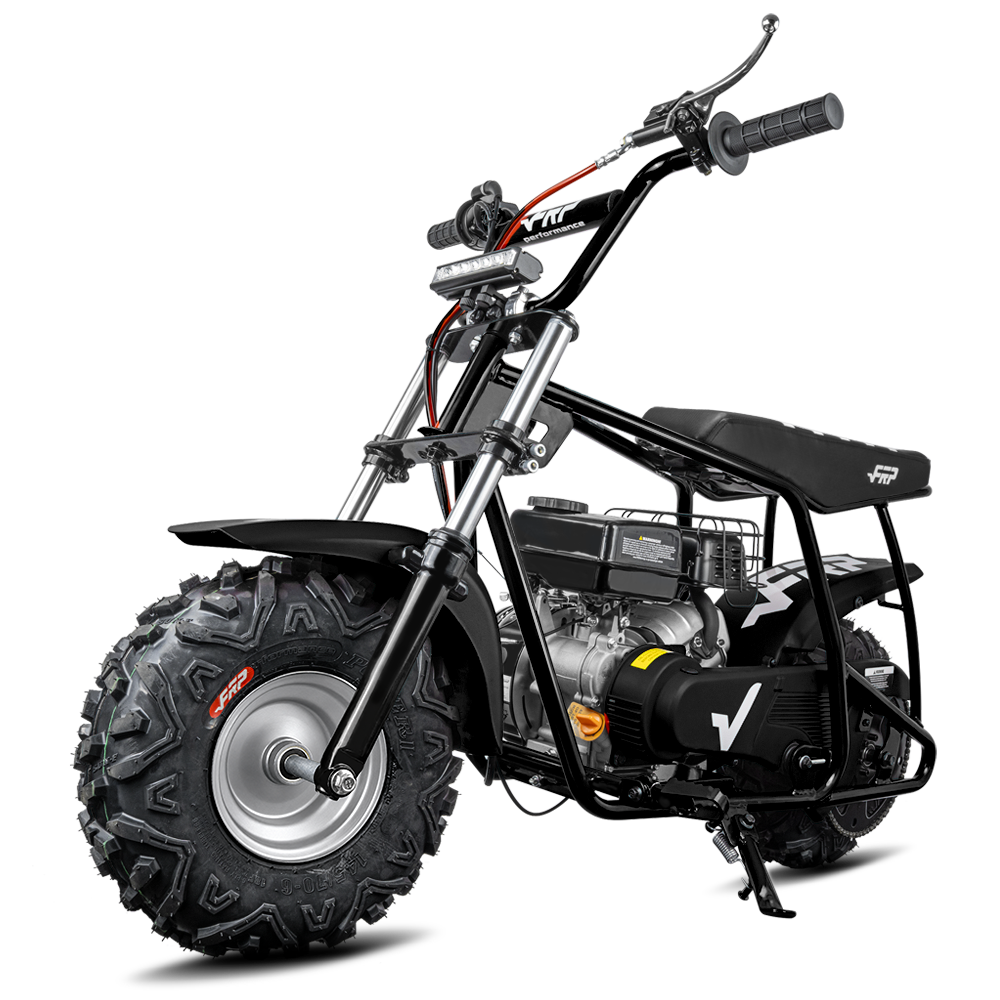
If you swapped your mini bike to a 212 engine, yes — you need a 212 exhaust, not the stock 99cc one. If you are keeping the original 99cc motor, use 99cc-spec parts. The real fitment question is which 212 exhaust clears your specific frame, chain, brake path, and muffler support — not whether a 212 exhaust belongs on a 212-swapped build. It does. Riders doing a 212 swap on an FRP Moto GMB100 or similar 99cc frame are the most common audience for this question. For that build, budget roughly $80–$180 for a header and muffler kit and verify flange, frame clearance, and heat routing before buying.
Direct Answer
If you have swapped to a 212 engine, a 212 exhaust is the right match. The stock 99cc exhaust is not built for 212 flange specs, engine heat, or flow demands. Running a 99cc pipe on a 212 motor can cause exhaust leaks, restrict power, and create heat problems near the rider.
If you are keeping the stock 99cc motor, stay with 99cc-spec exhaust parts. A 212 pipe is not an upgrade on a stock 99cc setup — the engines have different port specs and the extra pipe volume does not benefit a smaller motor.
Most riders searching "will a 212 exhaust fit a 99cc mini bike" are planning or completing a 212 swap on a 99cc frame like the FRP GMB100. The real question for that build is: which 212 exhaust fits your specific frame, clears the chain and brake, supports the muffler safely, and routes heat away from the rider? That is what this article answers.

Why This Question Comes Up
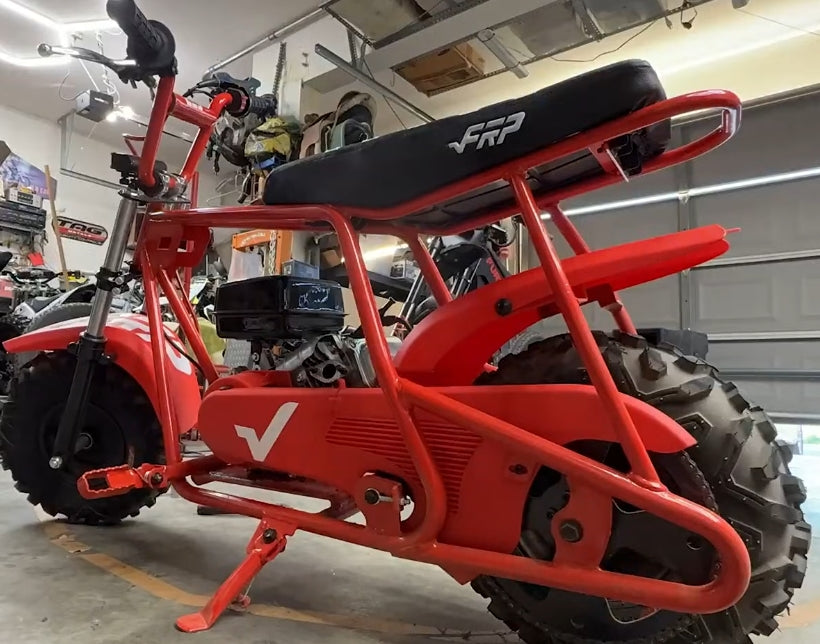
Riders asking this question usually have a 99cc mini bike frame — often an FRP Moto GMB100 or similar 99cc frame — and are doing a 212 engine swap. Once the engine is upgraded to 212cc or 224cc, the original exhaust no longer matches the new engine specs. The next question is natural: do I need a 212 exhaust, and will it fit my frame?
The answer to the first part is yes. The answer to the second part is: it fits, but you need to verify the specific pipe against your frame clearance, chain path, brake route, muffler support, and heat direction before buying.
The confusion comes from videos where riders show 212 builds without explaining which pipe they used or how they cleared the frame. A 212 exhaust that works in one build may need adjustment in another depending on engine plate height, frame tube spacing, and available muffler bracket options.
Stock 99cc or 212 Swap: Which Exhaust Belongs on Your Build?
The right exhaust depends entirely on which engine is on the bike. These are not interchangeable paths.
| Your setup | Exhaust to use | What to verify |
|---|---|---|
| Stock 99cc engine | 99cc-spec exhaust or muffler kit | Flange match, pipe route, heat clearance, muffler support |
| 212cc or 224cc swap on 99cc frame | 212-spec exhaust | Frame clearance, chain and brake path, muffler position, heat routing, carb response after install |
| 212 build starting from upgraded frame | 212-spec exhaust planned with the full build | All of the above, plus mounting plate height and throttle cable routing |
Do not put a 212 exhaust on a stock 99cc motor expecting a performance gain. And do not run a stock 99cc pipe on a 212 motor expecting it to hold. Match the exhaust to the engine.
What Exhaust Does a 212 Swap Build Need?
A 212 engine swap on a 99cc frame needs a 212-spec exhaust — one with the right flange for the 212 engine port, a pipe route that clears the frame, and a muffler support path that holds under vibration and heat.
Before buying any 212 exhaust for a swapped build, verify these five points against your specific setup. As a rough budget guide:
| Exhaust type | Typical price range | Best for |
|---|---|---|
| Basic 212 header pipe only | $40–$80 | Builders sourcing a muffler separately |
| Header + muffler kit | $80–$180 | Most swap builds — cleaner one-purchase install |
| Performance or stainless header + muffler | $150–$300+ | Advanced builds, trail or track-focused setups |
Fitment checks to run before ordering:
- Flange fit: The pipe flange must match the 212 engine's exhaust port shape and bolt spacing, not the original 99cc port.
- Pipe angle and frame clearance: The pipe has to route past the frame without contacting tubes, the chain, the rear brake, or the tire.
- Muffler support: A heavy muffler without a proper bracket will loosen and crack from vibration. Confirm the support path before installation.
- Heat routing: A 212 runs hotter than a 99cc. The pipe needs to route heat away from the rider's legs, cables, fuel line, and tire.
- Carb response: A freer-flowing 212 exhaust can shift carburetor tuning. Watch for lean running, popping, or hanging idle after the install.
@frp.amari
For the full 212 swap planning path — mounting, drivetrain, brakes, fuel, throttle, and exhaust together — read Is a 212 Swap Cheaper Than Modding the Stock GMB100 Motor? and the GMB100 upgrade roadmap.
What Exhaust Should You Use on a Stock 99cc Mini Bike?
If the engine is still 99cc, keep the exhaust matched to that setup. A 212 pipe is not a power upgrade for a stock 99cc motor — it will not improve performance and may cause fit, heat, or tuning problems.
For stock 99cc owners who want quieter output or a cleaner muffler path, the FRP x ParkerPro Exhaust Header Pipe with Muffler Kit is the supported option for the GMB100. Use the product page as your fitment reference before buying any universal pipe.
If you are still deciding on the complete bike, compare the FRP Moto GMB100 as the ready-to-ride 99cc path. If you have already decided to build toward a 212 swap, compare the FRP Moto GMB100 upgraded frame and plan the engine, exhaust, brakes, and drivetrain together from the start.
Can You Buy a Mini Bike Exhaust on Amazon?
You can, but treat any marketplace listing as a fitment question first. The issue is not the source — it is listings that say "universal" or "212 compatible" without specifying flange dimensions, bolt pattern, pipe angle, muffler support, or frame clearance for your specific build.
Before buying any Amazon or marketplace exhaust for a 212 swap, confirm:
- Exact engine size compatibility (212cc or 224cc spec).
- Flange shape, bolt spacing, and gasket surface.
- Pipe angle and whether it clears your frame, chain, and brake path.
- Muffler location and bracket support path.
- Rider leg clearance and heat direction.
- Return path if the pipe does not fit your build.
A cheap pipe that requires a second purchase or creates a heat or rattle problem is not actually cheaper. For a fuller look at when budget parts pay off and when they cost more, read Are Cheap Mini Bike Performance Parts Worth It?.
Does a GPS Trumpet Pipe Work on a 99cc Mini Bike?
A trumpet-style pipe is typically sized for 212cc and larger engines. On a stock 99cc motor, the same pipe style sounds thinner and less dramatic because the smaller engine moves less exhaust volume — the result will not match what you heard in a 212cc video.
On a 212-swapped build, a trumpet pipe can work if the flange, pipe route, muffler outlet position, and rider clearance all check out. The fitment rules are the same as any 212 exhaust: verify the spec before buying, not after.
If you are choosing a pipe based on a video sound clip, remember that a 212 engine on a different frame with a different clutch and sprocket setup can sound very different from the same pipe on your build. Use the FRP Moto Videos & Tutorials page for official product media and build reference footage.
What If a Video Shows a 212 Exhaust on a 99cc Frame?
If the build in the video has a 212 engine installed, then a 212 exhaust is exactly right for that bike. That is not a workaround — it is the correct match for a 212 swap build on a 99cc frame.
If the video shows a stock 99cc engine with a 212 exhaust, that is a custom adaptation. It may work in that specific setup but does not mean it will clear your frame, mounting height, chain path, and bracket options without adjustment.
Use videos as reference, not as a fitment guarantee. Match the exhaust to your actual installed engine first, then verify the frame-specific fit points before ordering.
212 Exhaust Fitment Checklist
Use this before ordering any 212-spec exhaust for a swapped or upgraded mini bike build.
| Check | What to confirm | Why it matters |
|---|---|---|
| Engine spec | Confirm 212cc or 224cc engine is installed. | Exhaust must match the installed engine, not the original frame spec. |
| Flange | Match bolt spacing, port shape, and gasket surface to 212 spec. | A bad seal causes leaks, heat problems, and poor running. |
| Pipe route | Check frame, fender, tire, chain, brake, and cable clearance. | A pipe can bolt on and still contact the frame or moving parts. |
| Rider clearance | Check leg, shoe, and foot peg position with the new pipe routed. | Exhaust burns are a real risk on compact mini bike builds. |
| Muffler support | Confirm bracket or support path, not just the header flange. | An unsupported muffler on a 212 build will crack or loosen from vibration. |
| Heat path | Check fuel line, throttle cable, and brake line routing near the pipe. | A 212 makes more heat than a 99cc. Routing matters more on a swap build. |
| Carb response | Watch for lean running, popping, or hanging idle after install. | A freer-flowing exhaust can shift carb tuning on a 212 setup. |
Heat and Safety Checks Matter More Than Sound
A 212 engine runs hotter than a 99cc. When the exhaust changes, the heat path changes with it. A header pipe can burn skin, melt nearby material, or cause a rider to shift position in a way that affects control.
Do not use exhaust wrap as a fix for bad routing. Wrap can reduce radiated heat, but it does not make a pipe safe to touch and it does not correct poor mounting or wrong frame clearance. For a full safety answer, read Should You Wrap a Mini Bike Exhaust Pipe or Muffler?.
Mini bikes are for private property and off-road use only — they are not street legal. Always wear a helmet and protective gear. After any exhaust change, test the bike in a controlled area before regular riding, and stop if it runs abnormally hot, pops excessively, or the pipe contacts the frame or rider.

FRP Moto Owner Path
If you are on a stock 99cc GMB100 and want a quieter or cleaner exhaust path, the FRP x ParkerPro Exhaust Header Pipe with Muffler Kit is the supported muffler option. Use FRP Moto Answers or the FRP Ownership Promise for model-specific fitment questions.
If you are building toward a 212 swap, start with the FRP Moto GMB100 upgraded frame and plan engine, exhaust, brakes, drivetrain, and fuel routing as one system. A 212 exhaust is one part of that build — not the first purchase to make before the rest of the plan is in place.
What to Read Next
- Custom Mini Bike Build Guide (2026) — plan engine, brakes, drivetrain, and exhaust together instead of one part at a time.
- GMB100 Upgrade Roadmap: From Stock Setup to Predator 212 — see where an exhaust change fits in the full upgrade path.
- Is a 212 Swap Cheaper Than Modding the Stock GMB100 Motor? — decide between stock-motor mods and a swap before buying exhaust parts.
- Are Cheap Mini Bike Performance Parts Worth It? — when budget marketplace parts save money and when they cost more.
- Mini Bike Running Lean or Rich? A Carb Tuning Guide — fix bogging, popping, or lean running after an exhaust change.
- How Do I Mount a 212 Engine on a GMB100 Mini Bike? — full build sequence from frame to exhaust routing.
- Does a 212 Swap Require Better Brakes on a Mini Bike? — stopping power check before you ride the build.
- Do I Need a Torque Converter for a 212 Mini Bike Build? — drivetrain setup for the swapped engine.
- How Fast Does a 212cc Mini Bike Go? — speed expectations after the swap.
FAQ
Will a 212 exhaust fit a 99cc mini bike?
If the bike has a 212 engine installed, yes — a 212 exhaust is the correct match for that swap build. The stock 99cc exhaust is not built for 212 flange specs or heat demands. If the engine is still 99cc stock, stay with 99cc-spec exhaust parts.
Will a 212 exhaust fit an FRP GMB100 with a 212 swap?
Yes, when the right 212 exhaust is chosen and the fitment is verified for your specific build. Check the flange, pipe route, frame and chain clearance, muffler support, rider clearance, and heat path before installing.
What exhaust should I use on a stock 99cc mini bike motor?
Use a 99cc-spec exhaust or muffler kit matched to your setup. FRP GMB100 owners should start with the FRP x ParkerPro Exhaust Header Pipe with Muffler Kit as the supported option before trying a universal or marketplace pipe.
Can I buy a 99cc mini bike exhaust on Amazon?
Yes, but verify fitment before ordering. Check engine size compatibility, flange shape, bolt spacing, pipe angle, muffler support, and return support. Listings that say "universal" without specific measurements leave the fitment risk with the buyer.
Does a GPS trumpet pipe work on a 99cc mini bike?
On a 212-swapped 99cc build, a trumpet-style pipe can work if the flange, pipe route, and clearances check out. On a stock 99cc motor, the same pipe will sound noticeably thinner than it does on a 212cc build because the smaller engine moves less exhaust volume.
Why does a trumpet pipe sound different on 99cc vs 212cc?
A 212cc or 224cc engine pushes more exhaust volume than a 99cc engine. That makes the same pipe style sound deeper and more aggressive on the larger engine. On a stock 99cc, the sound may not match what you heard in a 212cc video.
Can an exhaust make a 212-swapped mini bike faster?
The right 212 exhaust matched to the carb and engine setup can improve throttle response and reduce back-pressure. But exhaust alone is not a speed guarantee — gearing, clutch or torque converter setup, rider weight, and terrain all affect real performance.
Can a new exhaust make my mini bike run lean?
Yes. A freer-flowing pipe changes airflow and can expose a lean condition, especially on a 212 build. If the bike bogs, pops, runs hot, or hangs at idle after an exhaust change, check for exhaust leaks, carb jetting, and intake sealing. See Mini Bike Running Lean or Rich? A Carb Tuning Guide for how to read those symptoms.
What should I check after installing a mini bike exhaust?
After a short controlled test ride, check flange tightness, bracket support, muffler movement, heat clearance around cables and fuel line, leg clearance, and whether the bike pops, bogs, or sounds like it has a leak.
Is the loudest mini bike exhaust the best choice?
No. The best exhaust seals correctly, routes heat safely, supports the muffler, and matches where the bike is ridden. A loud pipe that rattles, burns the rider, creates tuning problems, or causes noise issues where you ride is not a good long-term upgrade on any build.