
TL;DR
On most mini bikes, fewer rear sprocket teeth usually increase top-speed potential but reduce low-end pull. More rear sprocket teeth usually increase acceleration, hill pull, and wheelie torque feel, but lower top-speed potential. Pick the sprocket size around how you ride, not just the biggest speed number.
Direct Answer
If you want more top speed, move toward a smaller rear sprocket. If you want stronger takeoff, easier wheelies, hill pull, or trail torque, move toward a larger rear sprocket.
That is the simple rule riders repeat: fewer teeth means more speed; more teeth means more torque. But the real answer depends on more than tooth count. Engine size, clutch or torque converter setup, chain pitch, rear tire size, rider weight, terrain, and brake condition all change how the bike actually feels.
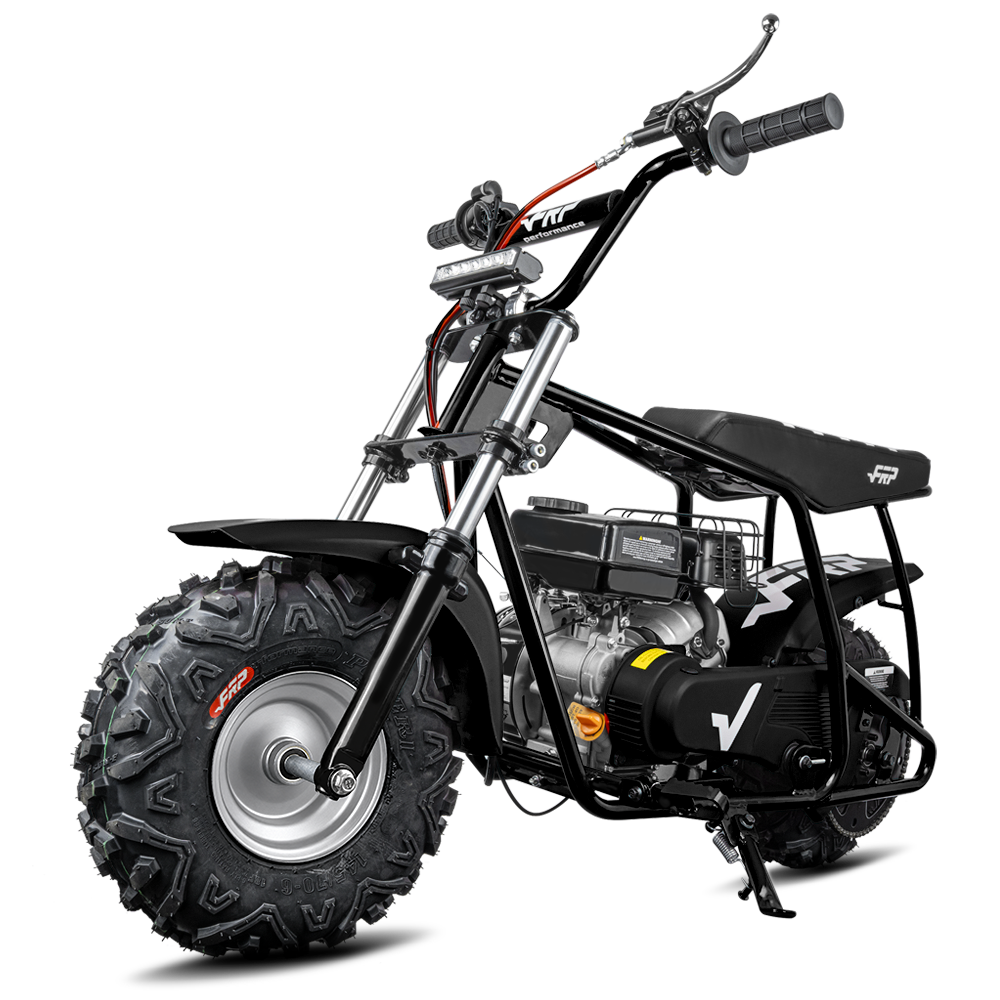
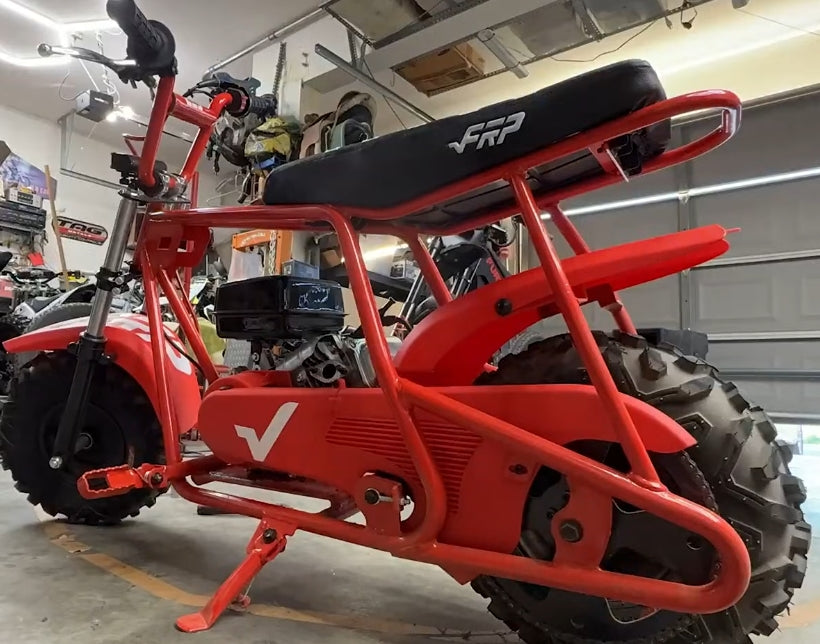
For a 212cc or 224cc FRP GMB100-style build, solve the chain spec first with a matched #420 path, then choose sprocket size around the ride goal. If you have not made that chain decision yet, start with the #35 vs #420 chain guide.

Why This Question Comes Up
Mini bike riders usually do not start by asking for a gear ratio formula. They ask practical questions: "What mods should I get?" "Do I want higher top speed or more torque?" "Is 50T too much?" "Should I go down to a 42?" That is real build language, and it is exactly why a sprocket guide has to be decision-based.
Rear sprocket size changes the bike's personality. The same engine can feel lazy, balanced, or aggressive depending on gearing. That is why two riders with similar 212cc setups can disagree about the "best" sprocket. They may be riding different surfaces, chasing different goals, or weighing different amounts.
The Simple Rule: Fewer Teeth vs More Teeth
The rear sprocket is part of the gear ratio between the engine and rear wheel. A larger rear sprocket gives the engine more leverage over the wheel, so the bike pulls harder at low speed. A smaller rear sprocket gives less leverage, so the engine has to work harder off the line but can carry more speed at the top end if the engine has enough power.
| Rear sprocket change | What usually improves | What usually gets worse | Best for |
|---|---|---|---|
| Fewer teeth | Top-speed potential | Low-end pull and launch torque | Flat ground, longer pulls, speed-focused builds |
| More teeth | Acceleration, hill pull, wheelie feel | Top-speed potential | Trails, heavier riders, short property riding, wheelies |
The key word is "usually." If the engine does not have enough power to pull a smaller sprocket, the bike may feel slower in real riding even if the math says the top speed ceiling is higher.
Common Rear Sprocket Sizes and What They Feel Like
Exact results depend on tire size, engine RPM, clutch engagement, torque converter ratio, and rider weight. Use this as a plain-language guide, not a guaranteed speed chart.
| Rear sprocket range | General feel | Good use case | Watch out for |
|---|---|---|---|
| 40T-42T | More speed-focused | Flat areas, longer straight pulls, stronger engines | Can feel weaker off the line or on hills |
| 46T | Balanced | Mixed property riding, moderate acceleration, usable speed | Still depends heavily on engine and tire size |
| 50T | Torque-heavy | Wheelies, trails, heavier riders, short pulls | Top speed drops and engine may rev out sooner |
| 52T and up | Very strong low-end pull | Low-speed control, short technical riding, very torque-focused setups | Can feel busy at speed and reduce top-end usefulness |
Should You Choose Speed, Torque, Wheelies, Trails, or Drag?
Before buying a rear sprocket, choose the main job of the bike. A sprocket that feels perfect for wheelies may feel wrong for top-speed pulls. A sprocket that feels fast on a straight flat surface may feel weak on trails or hills.
- Higher top speed: choose fewer rear teeth, but make sure the engine has enough power to pull the ratio.
- More torque and wheelies: choose more rear teeth for stronger launch and easier front-end lift.
- Trail riding: lean toward more torque unless the trails are wide and fast.
- Heavier rider: avoid going too small on the rear sprocket because the engine has more load to pull.
- Drag-style pulls: gearing depends on distance; a short pull needs launch, while a longer pull may need more top-end.
This is why a single "best sprocket" answer is usually fake. The best sprocket is the one that matches the rider, engine, surface, and distance.
Why a Torque Converter Changes the Sprocket Decision
A torque converter changes the way the bike uses the gear ratio. It gives more low-speed help than a direct clutch, then shifts toward a higher ratio as speed builds. That means a torque-converter bike can often tolerate a slightly more speed-focused rear sprocket than a direct-clutch bike, because the torque converter helps cover the launch.
A direct clutch has a fixed ratio once engaged. If the rear sprocket is too small, the bike can feel soft off the line, harder to control at low speed, or more likely to heat the clutch during slow riding.
For FRP 212-style builds, compare the torque converter guide and the FRP x ParkerPro Torque Converter before choosing final sprocket size.
Do Not Pick Sprocket Teeth Before Chain Spec
Tooth count is only one part of fitment. The chain pitch must match the rear sprocket and the clutch or torque converter sprocket. A 50T rear sprocket in the wrong pitch is not a 50T solution; it is the wrong part.
For 212cc and 224cc builds, the FRP x ParkerPro 420 Chain, Clutch & Sprocket Kit keeps the chain, clutch, and sprocket decision together. If you are coming from a #35 setup, read #35 vs #420 chain for 212/224 mini bikes first.
What to Check Before and After a Sprocket Swap
A sprocket swap changes more than acceleration. It can also change chain length needs, axle position, chain tension, brake feel, and how quickly the engine reaches its useful RPM range.
- Confirm the sprocket pitch matches the chain.
- Confirm the sprocket bolt pattern and hub fitment.
- Check whether the chain length still works with the new tooth count.
- Align the rear wheel and check chain line.
- Set chain slack, then re-check after a short controlled ride.
- Inspect brake function before testing harder acceleration.
- Watch for chain rub, skip, or sprocket wobble.
If the chain starts slapping after a sprocket change, do not assume the tooth count is the only issue. Use the mini bike chain slapping guide to diagnose slack, alignment, and worn parts.
How This Fits the FRP Upgrade Cluster
This sprocket decision belongs inside the larger GMB100 build path. If you are still deciding whether a larger engine makes sense, start with the 212 swap cost guide. If you already know you are building, use the GMB100 upgrade roadmap as the hub.
Then solve the drivetrain in order:
- Choose the engine and frame path.
- Choose clutch or torque converter.
- Choose #420 chain and matching sprockets for a 212/224 build.
- Choose rear sprocket tooth count for your riding goal.
- Check brakes, tires, throttle return, and safety before harder testing.
This is the long-term value story FRP should own: a beginner-friendly bike can become a supported build platform when the rider is ready, and each upgrade has a clear next decision instead of a random forum shopping list.
Sprocket choice is downstream of the bike you started on — frame, clutch type and chain spec all constrain what gearing actually works. If you are still choosing a platform to build on, the FRP mini bikes page lets you compare those platforms side by side before committing to a build path.
Safety Note
Changing sprocket size can make a mini bike accelerate harder or reach a higher top speed. Test only on private property or a controlled off-road area, wear protective gear, and do not use public roads or sidewalks for speed testing.
If the bike becomes harder to stop, the chain skips, the clutch overheats, or the rider cannot control the new gearing, stop riding and inspect the setup before continuing.
FAQ
Does a smaller rear sprocket make a mini bike faster?
Usually it raises top-speed potential, but only if the engine has enough power to pull the taller ratio. It can also reduce acceleration and hill pull.
Does a bigger rear sprocket give more torque?
Yes. More rear teeth usually make the bike pull harder off the line, climb better, and feel easier to wheelie, but top-speed potential goes down.
Is a 40T or 42T rear sprocket good for speed?
It can be, especially with a stronger engine and flatter riding surface. It may feel weak off the line if the engine or clutch setup cannot pull the ratio well.
Is a 50T rear sprocket good for wheelies?
A 50T rear sprocket usually gives more low-end torque feel, which can help wheelies. It also lowers top-speed potential and can make the engine rev out sooner.
What sprocket size is best for trail riding?
Trail riding usually benefits from more low-end pull, so a larger rear sprocket often makes more sense than a speed-focused smaller sprocket.
What sprocket size should I use on a 212cc mini bike?
It depends on the goal. Around 46T can be a balanced direction, while 40T-42T is more speed-focused and 50T or higher is more torque-focused. Confirm fitment before buying.
Does rider weight affect sprocket choice?
Yes. A heavier rider usually needs more low-end pull, so going too small on the rear sprocket can make the bike feel lazy or hard on the clutch.
Do I need a different chain after changing sprocket size?
Maybe. Tooth count can change chain length needs, and the chain pitch must match the sprocket. For 212/224 builds, use a matched #420 setup.
Can I use sprocket size to make a mini bike street legal?
No. Gearing changes speed and torque feel, but they do not change the legal status of a mini bike. Ride only where mini bikes are allowed.
What should I upgrade before chasing more top speed?
Check brakes, chain, sprockets, tire condition, throttle return, and rider control first. More top speed is not useful if the bike cannot stop or stay aligned.
Is a 50T Sprocket Better for a Heavier Rider?
A 50T rear sprocket can make sense when a mini bike build needs stronger low-speed pull, especially with a 212cc engine, a heavier rider, or tight stop-and-go riding. The larger rear sprocket gives the bike more mechanical advantage at takeoff, but it usually reduces top speed compared with a smaller rear sprocket.
Think of it as a torque-vs-speed decision. If the bike struggles to pull away, overheats the clutch, or feels lazy from a stop, more rear sprocket can help. If the bike already launches well and the rider wants more top speed, a smaller rear sprocket may be the better direction.
For 212cc and 224cc builds, check sprocket size together with chain size, clutch or torque converter choice, and brake control. The 420 sprocket, chain, and clutch kit is the parts path to compare before changing gearing.