
🔧 Part of the GMB100 Upgrade Roadmap · See also: How a mini bike clutch works · Rear sprocket size: speed vs torque
TL;DR
- A clutch is simpler and cheaper for casual flat-ground riding.
- A torque converter helps most with hills, starts, and rougher property riding.
- Adult beginners usually need the right bike fit before upgrade complexity.
- Builder paths should start with the right frame, not random parts.
- Use FRP model choice first, then upgrade only for a real riding need.
Most people searching mini bike clutch vs torque converter already know they want more than a generic parts explanation. What usually stops them is not "what does a clutch do?" It is whether their current riding style really justifies a more complex setup, and whether they are about to buy parts when they should really be choosing a different FRP bike or frame path instead. This guide resolves that decision in plain language.
Quick Answer: Clutch or Torque Converter?
If your riding is mostly flat ground, short loops, backyard laps, and casual private-property use, a clutch is usually the better setup because it is simpler, cheaper, and easier to live with. If you ride rougher property, need smoother takeoff, carry more rider weight, climb hills, or want better low-speed pull, a torque converter is usually the better setup.
The trap is assuming a torque converter is always the "better" answer. It is not. It is the better answer only when the way you actually ride makes the extra fitment work worthwhile.


Why Are So Many Riders Stuck Between a Clutch and a Torque Converter?
A lot of riders ask this question because they want more low-end pull without jumping straight into a big build. The way buyers usually say it is, "Do I need a torque converter or just a clutch?" or "How do I get more low end torque?" That is not really a parts question. It is a use-case question hiding inside a parts question.
If you mostly want a mini bike that starts cleanly, rolls away smoothly, and does not create extra setup work, you may not need to change the drivetrain at all. If you are already fighting soft launches, hills, heavier rider load, or a custom-frame build, then the clutch-versus-converter choice becomes much more important.
This is where a lot of shoppers waste time. They chase drivetrain upgrades before asking whether the FRP GMB100, GMB100U, GMB100P, or GMB100 Frame is the better starting point.
What Actually Changes When You Ride With a Clutch vs a Torque Converter?
| Question | Clutch | Torque converter |
|---|---|---|
| Takeoff feel | More direct and simple, but can feel abrupt under load. | Smoother launch, easier low-speed pull, less dramatic takeoff. |
| Best terrain | Flat ground, simple loops, casual riding. | Hills, rougher property, mixed terrain, stop-and-go riding. |
| Maintenance feel | Fewer parts and less fitment complexity. | More pieces, more setup attention, more fitment variables. |
| Builder headache risk | Lower. | Higher if shaft size, keyway, sleeve, or alignment is wrong. |
| Best for | Riders who want simple ownership and a cleaner ready-to-ride path. | Riders whose terrain or load genuinely needs smoother low-end drive. |
The short version is this: the clutch wins on simplicity, while the torque converter wins on launch feel and low-speed control when conditions get harder.
When Is a Clutch the Better Choice?
A clutch is the better choice when your mini bike life is pretty straightforward. You ride on flatter ground, you are not towing, you are not trying to crawl up rough slopes, and you do not want to turn every drivetrain decision into a workshop project.
That makes the clutch a strong fit for riders who want a simpler ready-to-ride path. If you are comparing FRP options and your real question is, "What bike is easiest to live with?" you may be better served by choosing the right whole-bike platform first, not by starting with upgraded drive parts.
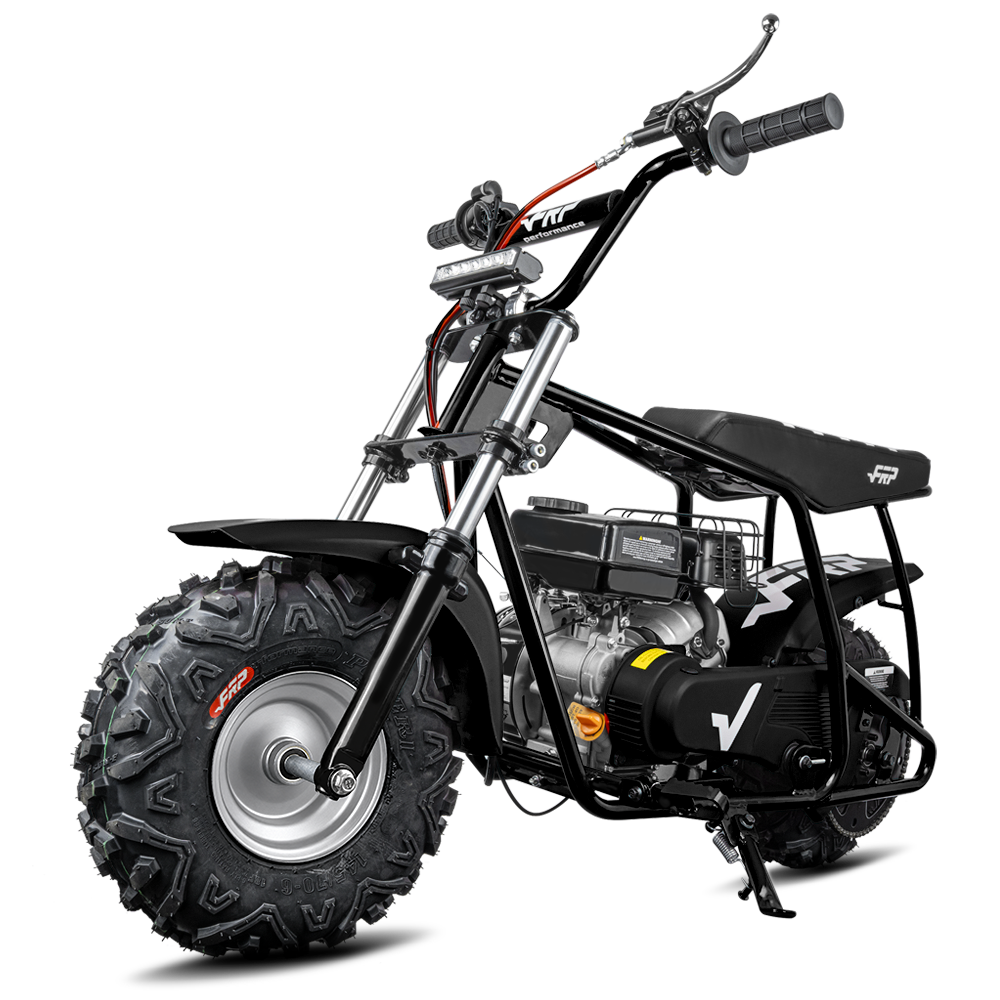
For example, the FRP GMB100 is the simpler 99cc path for buyers who want a gas mini bike for private-property recreation. If you want more rough-terrain confidence without starting a custom build, the smarter move may be choosing the GMB100P instead of forcing a clutch bike into a different job.
A clutch is not right for you if you already know your riding includes hills, rough starts, heavier loads, or stop-and-go terrain where the bike feels strained every time you roll on the throttle.
When Is a Torque Converter Worth It?
A torque converter earns its keep when your real complaint is not top speed, but launch behavior. Riders who talk about "more low end torque" are usually describing one of three things: the bike feels lazy from a stop, it hates hills, or it feels fine on smooth ground but struggles as soon as the terrain gets rougher or the rider gets heavier.
That is where the torque converter starts making sense. It usually gives a smoother pull away from a stop and can make the bike feel more cooperative in real riding conditions. This is why it keeps coming up in adult-beginner builds, trail-oriented mini bike setups, and frame-only projects.
It also fits the builder path better than the simple buyer path. If you are already in the "I know I want a custom setup" category, start with the FRP GMB100 Frame so you are building from a platform that is already positioned for 99cc-212cc compatibility.
A torque converter is not right for you if your bike already fits your use case, your riding is basic and flat, or you are mainly hoping parts will solve a bike-fit problem that really should be solved by choosing a different model.
What If You Do Not Want a Build Headache?
That objection is real, and it should not be brushed aside. Buyers are often not only asking whether a torque converter works. They are describing adapter sleeves that needed trimming, keyway confusion, shaft-size mismatch, and the frustration of trying to make parts cooperate when the engine and kit were not a clean fit.
That is the part too many comparison pages skip. A torque converter can be the better riding setup and still be the wrong buying choice for you. If the idea of adapter sleeves, keys, alignment checks, or test-fitting before final install already sounds annoying, do not talk yourself into a builder path just because "converter sounds better."
This is why we separate riding need from ownership tolerance. If you want the smoother feel but not the install drama, the better FRP move may be to compare the GMB100, GMB100U, and GMB100P first. If you are comfortable building and tuning, then the frame-plus-parts path makes more sense.
What Does Each Setup Feel Like to Ride?
On a clutch setup, the bike feels more direct. You roll on the throttle and it engages in a cleaner, more mechanical way. For simple riding, that can feel exactly right. It is less to think about, and that matters when you are still learning the bike.
On a torque converter setup, takeoff usually feels less abrupt. The bike is easier to ease into motion, especially when the ground is uneven or the rider is bigger. It can feel less like the bike is asking you to "commit" all at once and more like it is helping you roll into the ride.
That feeling difference matters more than spec-sheet arguments. A lot of buying regret starts when someone buys for bench-racing logic instead of how they actually want the bike to feel in the first thirty feet.
Should You Upgrade Parts or Choose a Different FRP Path First?
If you are still at the buyer stage and not already committed to a custom build, use this decision path first:
If you already know you want a custom build instead of a ready-to-ride mini bike, the FRP GMB100 Frame is the cleanest FRP starting point. If you want support before choosing parts, start with the FRP Ownership Promise. If you want practical fitment guidance, use FRP Community Answers.
Watch a Related FRP Build Path Video
There is not a direct FRP video that compares a clutch and a torque converter side by side. The closest official visual reference is the GMB100P setup video below. It helps show the FRP mini bike platform, visible components, and the kind of ready-to-ride path many riders choose before they ever move into a frame build.
If you want more official visual references after this article, open the FRP Moto Videos & Tutorials page. If you already know you want the builder route instead of a ready-to-ride setup, go straight to the GMB100 Frame.
So Which One Should You Choose?
Choose the clutch if your real goal is easy ownership and straightforward riding. Choose the torque converter if your terrain, rider load, and riding style genuinely need smoother starts and stronger low-speed pull. If you are still deciding what kind of bike you should own, do not start with parts. Start with the right FRP bike or frame path first.
That is the honest answer. The better setup is not the one that sounds more upgraded. It is the one that matches the way you actually ride and the amount of complexity you are willing to own.
FAQ
Do I need a torque converter or just a clutch for my mini bike?
If you ride mostly on flat ground and want the simplest setup, stay with a clutch. If you need smoother starts, hills, or rougher property riding support, a torque converter is usually the better choice.
Is a torque converter better for trails?
It often is, especially when starts, uneven terrain, and low-speed pull matter more than a simple flat-ground setup. That does not make it the right choice for every rider, but it does make it more useful in rougher conditions.
Is a clutch better for beginners?
For many beginners, yes, because it is simpler and easier to live with. The real key is whether the rider is learning on the right bike platform in the first place.
What is the biggest downside of a torque converter?
The biggest downside is usually fitment and install complexity. Adapter sleeves, keyways, alignment, and compatibility can turn into a frustrating project when the bike is not set up for it.
Should I upgrade parts or just buy a different FRP model?
If your current bike does not match your terrain or rider size, a different FRP model may be the smarter move. If you already know you want a builder path, the GMB100 Frame is the better foundation than random upgrade guessing.