
TL;DR
Building a mini bike around a Predator 212 is less about the engine and more about the frame. The engine is the cheap, easy part — a 212cc runs about $130 at Harbor Freight. What decides whether your build rolls this weekend or stalls on the garage floor is the frame: does the engine bolt on without drilling or welding, and can the brakes stop 35–40 mph? Sort out frame, drivetrain (clutch vs. torque converter), and brakes first. The 212 is the last piece you buy, not the first.
Direct Answer
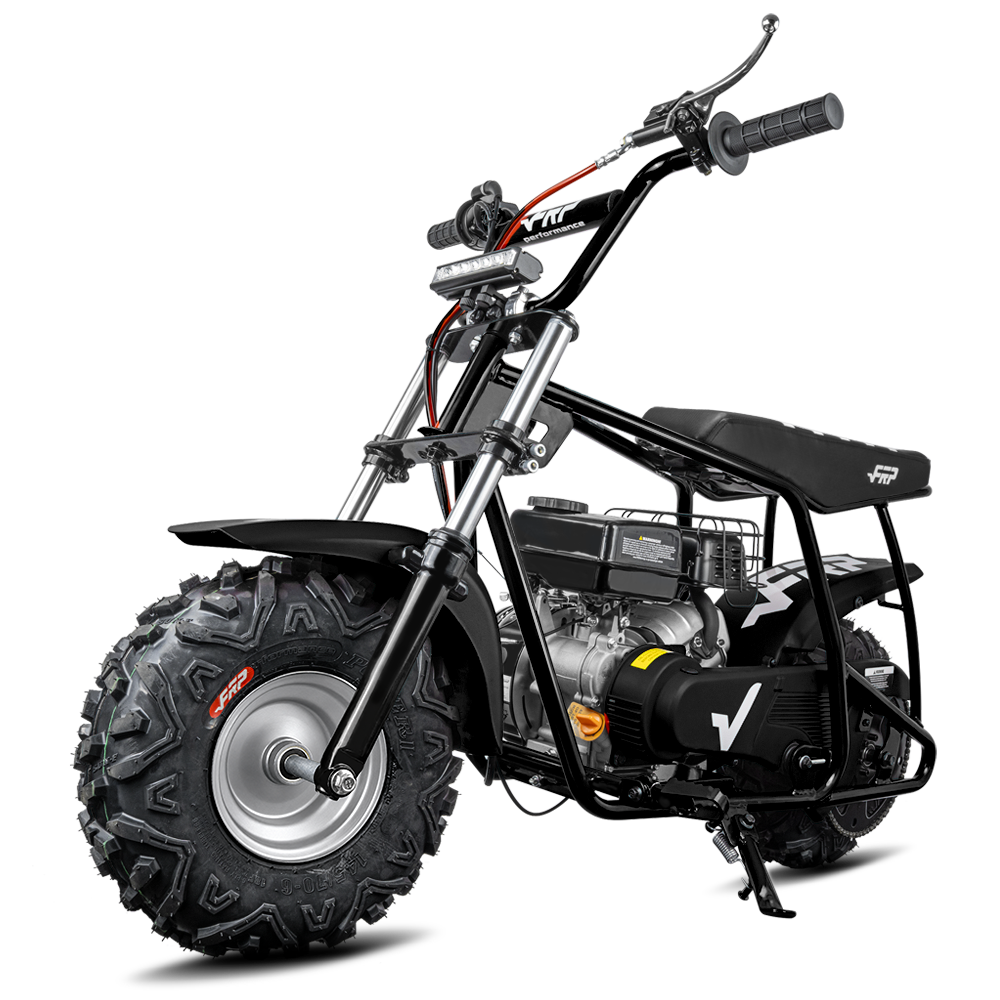
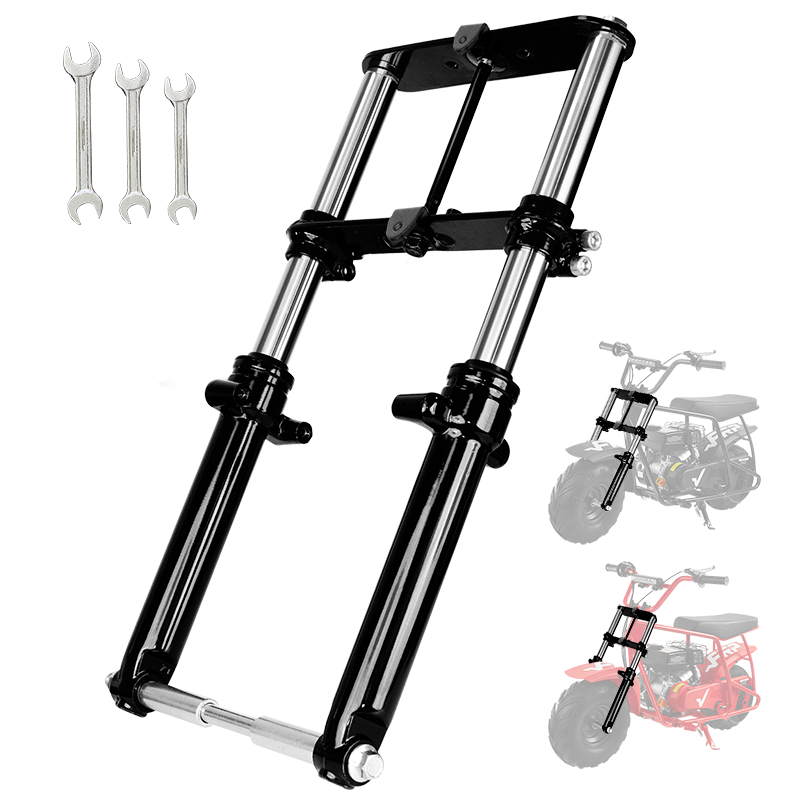
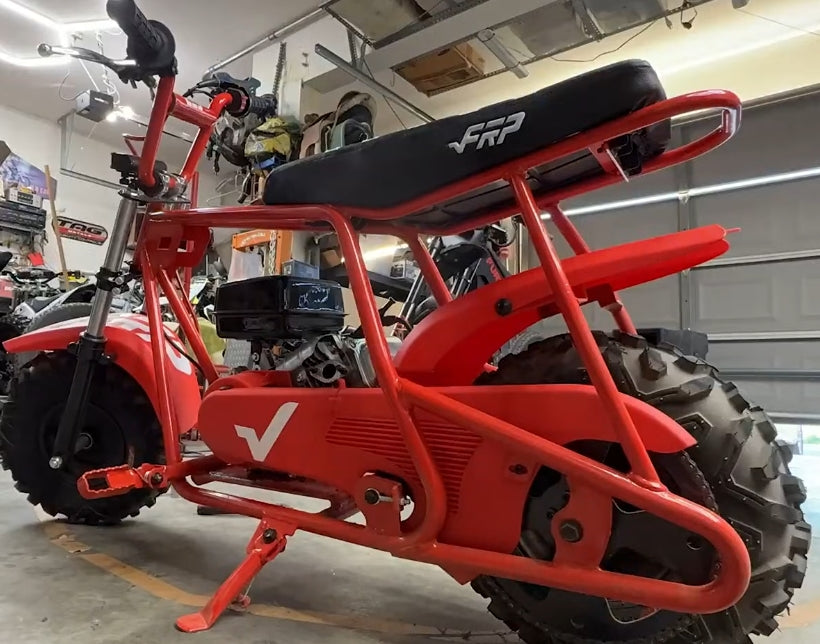
If you want a Predator 212 mini bike that actually runs and stops safely, start with a frame built for the swap — a universal engine mount that takes 79cc to 212cc with no drilling, rated for a 220 lb rider, with a real hydraulic disc brake. The Predator 212 mini bike frame from FRP is that base: bolt on the engine, pick your drivetrain, and you have a rolling build in a weekend instead of a fabrication project.
If you would rather not source every part yourself, skip down to Build vs. Buy — a complete GMB100 can be ridden stock now and swapped to a 212 later on the same frame.
 Shop the GMB100 frame →
What You Actually Need to Build a Mini Bike
A running mini bike is six systems, not one engine. Miss one and the bike doesn’t move — or doesn’t stop. Here is the full list:
- Frame — the rolling chassis with the engine mount, forks, seat, and wheels.
- Engine — the Predator 212 in most budget builds.
- Drivetrain — a centrifugal clutch or a torque converter, plus chain and sprocket.
- Brakes — a disc setup that can stop the speed the 212 makes.
- Throttle and kill switch — throttle cable, and a kill switch you can reach fast.
- Wheels and tires — sized for how and where you ride.
Most first-time builders spend all their time researching the engine and none on the other five. That is backwards. The engine is the one part that is easy to buy and easy to price.
The Engine: Why the Predator 212
The Predator 212 is Harbor Freight’s 212cc single-cylinder OHV engine — about 6.5 horsepower and usually around $130. It is the default build engine because parts, exhausts, clutches, and how-to videos for it are everywhere.
 Shop the complete GMB100 →
One thing to check before you buy performance parts: there are two versions, Hemi and Non-Hemi, named for the combustion chamber shape. Some heads and top-end kits only fit one. Know which you have before ordering upgrades.
Stock, the engine is governed to about 3,600 rpm. Removing the governor is where the extra speed actually comes from. But if you do, add a billet flywheel and upgraded valve springs first — the cast stock flywheel is not meant to spin past the governed limit, and this is a safety part, not a bragging one.
The Frame — The Part That Decides Your Build
Here is the part most first-time builders get backwards. The engine is easy. The frame is what makes or breaks the weekend.
A generic mini bike kit (the Azusa-style bare frames you see online) ships as a raw chassis. You fabricate or drill the engine mounting plate yourself, source and fit your own brakes, and hope the chain lines up when you’re done. For a first build, that is where projects stall — a $130 engine sitting next to a frame that won’t take it without a drill press.
The Predator 212 mini bike frame is built to skip that step:
- Universal engine mounting plate — 79cc, 98cc, 196cc, 212cc, 225cc all bolt on with no drilling.
- Hydraulic disc brake already on the frame — not a band brake you have to add.
- 220 lb load rating, high-strength steel, about 49.6 lb bare.
- Ready to ship in 1–2 days with 300+ replacement parts in stock, so a broken piece mid-build doesn’t end the project.
Buy the frame first, then the engine. That order is the whole difference between a weekend build and a garage that has a Predator 212 in a box for six months.
Drivetrain: Clutch vs. Torque Converter
This is the real decision on a 212 build, and it is not the engine size. It is how the power gets to the wheel.
 Shop the FRP x ParkerPro torque converter →
| Centrifugal Clutch | Torque Converter (TAV) | |
|---|---|---|
| Cost | ~$25–40 | ~$60–100 |
| Best for | Flat ground, lighter riders | Hills, heavier riders, hauling |
| Low-end pull | Weaker off the line | Strong holeshot, keeps the engine in its powerband |
| Install | Simple — bolt on, one chain | More parts — driver, driven, backing plate |
Short version: if you ride flat and want the cheapest, simplest setup, run a clutch. If you have hills, carry weight, or want the bike to feel strong from a stop, the torque converter is worth the extra money and install time.
Brakes and Safety — Don’t Skip This
A stock mini bike does 18–28 mph. A governor-off 212 build does 35–40. Brakes that felt fine at 20 are not fine at 40. This is the single most-skipped part of a budget build, and it is the one that hurts.
Run a hydraulic disc brake, not a band brake — it is why the FRP frame ships with one already fitted. And wire a kill switch you can hit without looking.
Important: A 212 build makes real speed. It is an adult or experienced-teen bike. If a younger rider is ever on it, fit a throttle limiter and keep the kill switch reachable.
Cost and Time: What to Expect
Ballpark, on top of the rolling frame: the engine runs about $130, a clutch or torque converter $30–100, throttle and kill switch around $15, and a chain and sprocket about $30. Gearing is a lever, not a cost — smaller rear sprocket for more top speed, larger for more punch off the line.
Time is the bigger variable, and it comes down to the frame. On a direct-fit frame, a first build is a weekend. On a bare kit you have to drill and fabricate, plan on several. That gap is the reason this guide keeps coming back to the frame.
Build vs. Buy
Not everyone wants to source six systems. If you want a bike now and a build later, two honest off-ramps:
- Start with a complete FRP gas mini bike and ride it stock — the GMB100 uses the same platform, so a 212 swap is a later upgrade, not a restart.
- If you already know you want the build, buy the Predator 212 mini bike frame and add the engine and drivetrain at your own pace.
FAQ
Does a Predator 212 bolt straight onto a mini bike frame?
Not on a bare kit — those usually need a drilled or fabricated engine plate. On a frame with a universal engine mount, like the FRP GMB100 frame, the 212 bolts on with no drilling.
How fast is a Predator 212 mini bike?
With the governor removed and typical gearing, around 35–40 mph depending on rider weight and sprocket choice.
Do I need a torque converter for a 212 build?
No, a centrifugal clutch works. But if you ride hills, carry weight, or want strong low-end pull, a torque converter is the better setup.
What’s the hardest part of building a mini bike?
Not the engine. It’s the frame, brakes, and drivetrain fitting together. Start with a frame built for the engine you want and the rest gets much easier.
Shop the build: Start with the Predator 212 mini bike frame (79cc–212cc, no drilling), or see the full lineup of FRP gas mini bikes. Going deeper: read the GMB100 Predator 212 swap guide and the stock-to-212 upgrade roadmap.