Published: June 1, 2026
TL;DR
A 212 swap is not automatically cheaper than modding the stock FRP GMB100 motor. The engine price is only the first line item; the real cost can include mounting, torque converter or clutch setup, fuel tank changes, throttle cable work, exhaust fitment, chain alignment, brake wear, hardware, and fabrication time.
Direct Answer
If your goal is reliable beginner riding, keeping the stock 99cc GMB100 setup and maintaining it well is usually the lower-cost, lower-friction path.
If your goal is a long-term custom build with more power, a 212cc or 224cc engine path can make sense, but it should be planned as a full build rather than a cheap engine purchase. A larger engine changes more than speed; it affects the drivetrain, brakes, exhaust, heat, chain line, mounting, and rider control.
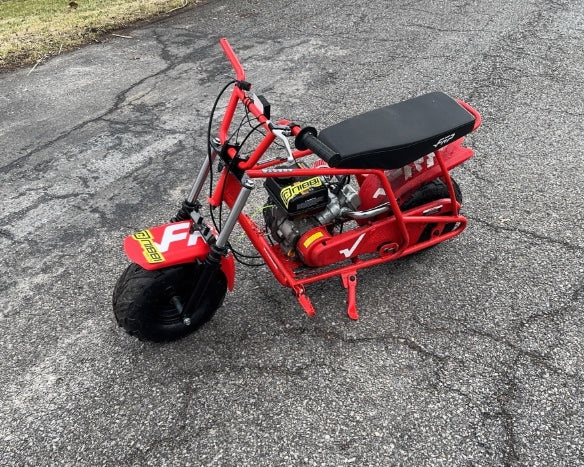
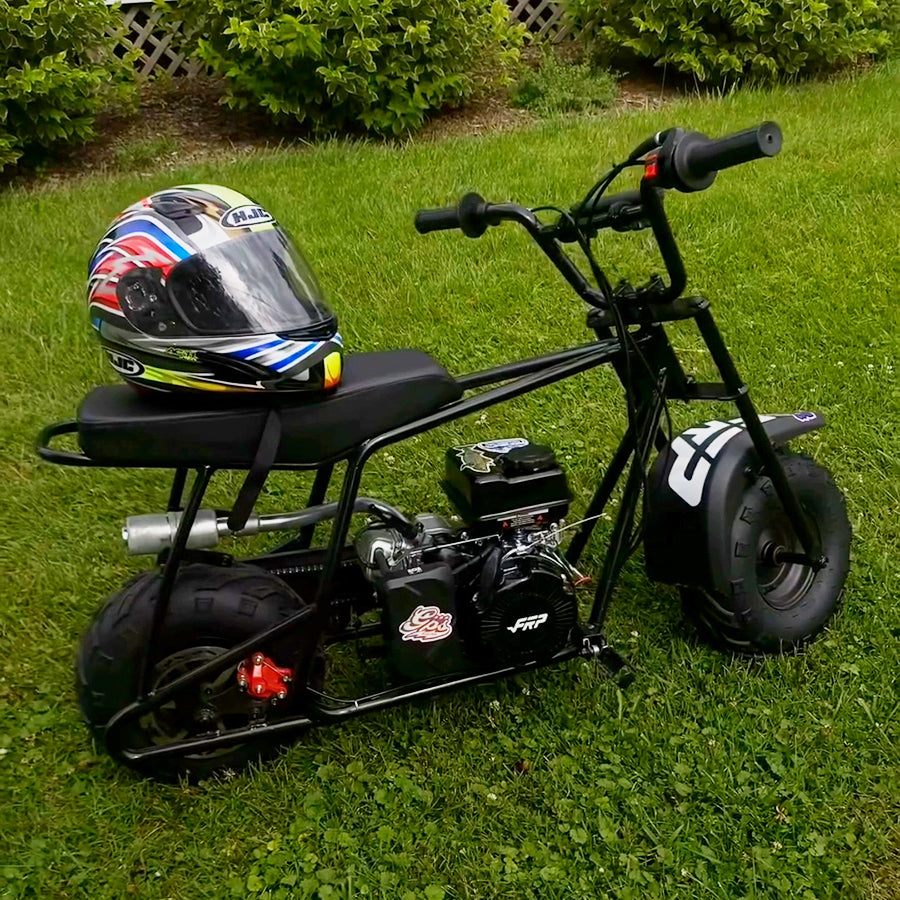
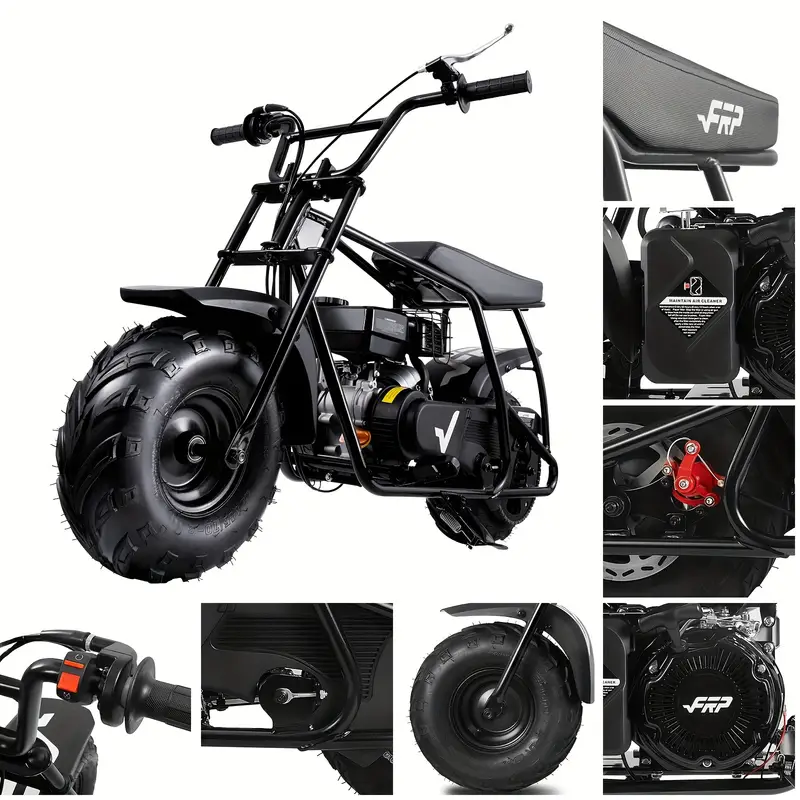
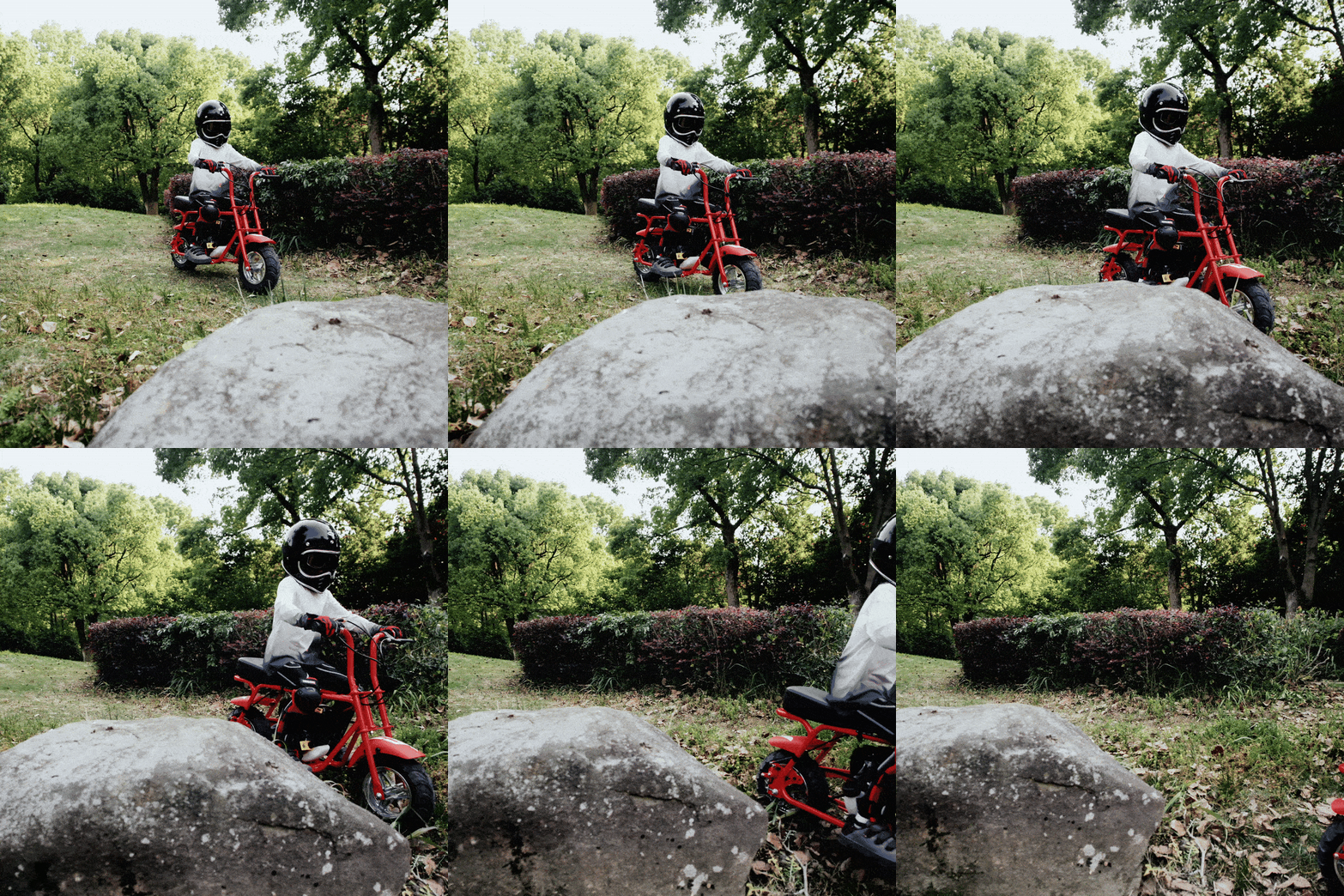
One reason the GMB100 fits both answers is that it rides easy at stock and still uses common mini bike hardware. The same bike can stay simple for a new rider or become the base for a serious 212 build later, so the real question below is which path costs you less for the way you actually ride.
Why This Question Comes Up
Mini bike riders often compare two upgrade paths: spend money on the stock motor, or buy a 212cc engine and build around it. On the surface, the 212 path can look cheaper because the engine itself is easy to price.
The part that gets missed is the support system around the engine. Once the bike has more torque and speed potential, the build is no longer only an engine decision. It becomes a frame, brake, drivetrain, fuel, throttle, exhaust, and safety decision.
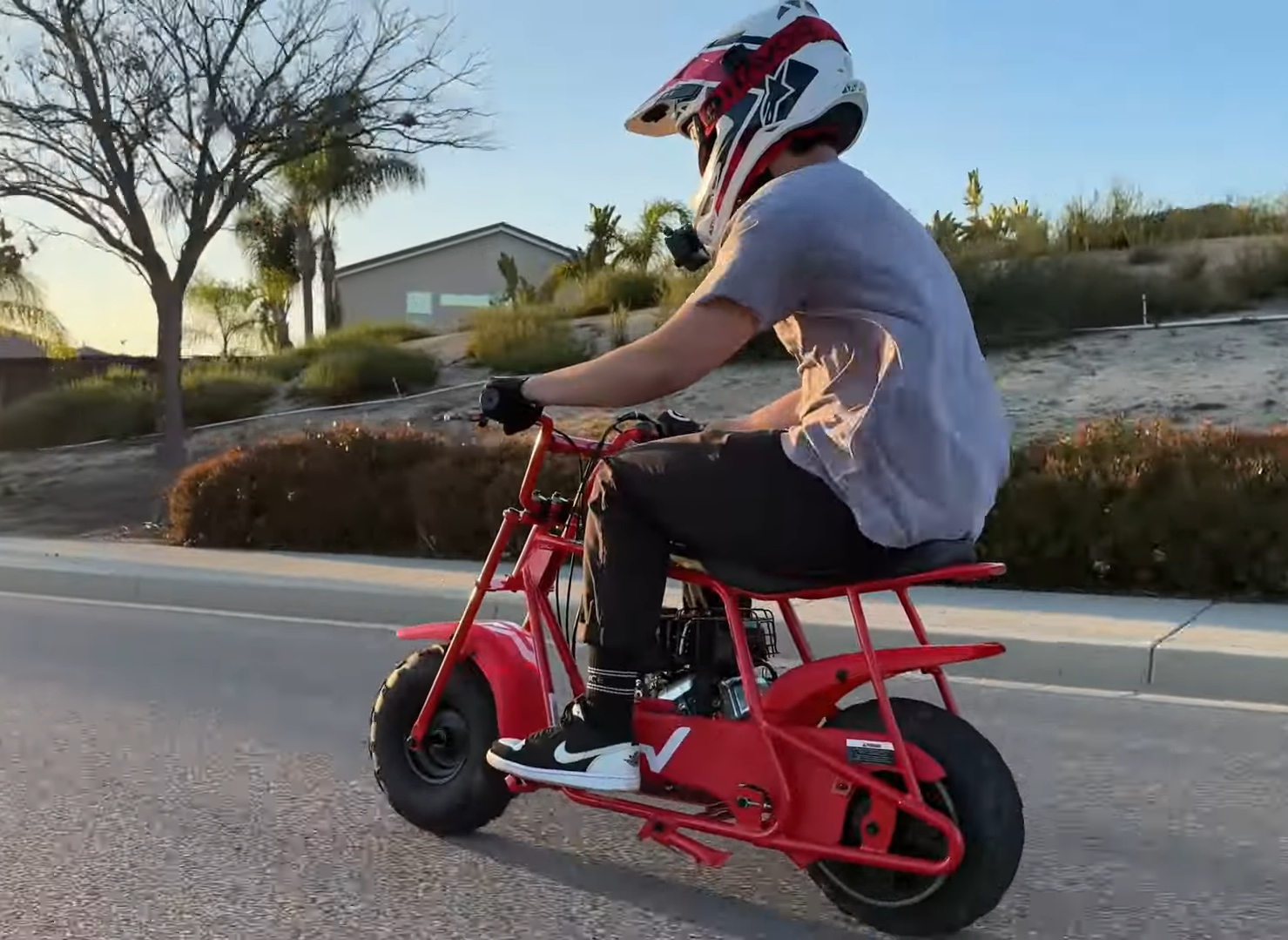
This matters because the same GMB100 gets ridden very differently from one garage to the next. For one family it is a kid's first gas mini bike that should stay simple and predictable. For an adult who grew up around mini bikes, it is the starting point for a build with more speed and personality. The right answer depends on which of those you are.
The Real Cost Difference: Stock Motor Mods vs 212 Swap
A stock-motor path usually costs less because it keeps the bike closer to the original system. A 212 swap can offer more build potential, but it adds more supporting decisions.
| Cost area | Stock 99cc path | 212 or 224 swap path |
|---|---|---|
| Engine | Already on the bike. | New engine purchase plus fitment planning. |
| Mounting | Original mounting path stays in place. | May need engine plate planning, riser plate, spacers, or custom fitting. |
| Drivetrain | Original clutch and chain path are easier to manage. | May need clutch or torque converter decisions, chain alignment, sprocket checks, and clearance work. |
| Fuel system | Original tank and fuel routing usually stay simpler. | May require a different tank location, fuel line route, or clearance plan. |
| Throttle | Original cable path is easier to inspect. | May need throttle cable changes, return-spring checks, and safe routing. |
| Exhaust | Model-specific 99cc fitment is easier to verify. | Header angle, muffler support, heat path, and frame clearance become bigger questions. |
| Brakes | Brake wear stays closer to the original riding envelope. | More speed and torque can increase brake wear and may require a stronger brake plan. |
| Time | More riding, less custom fitting. | More measuring, trial fitting, troubleshooting, and safety checking. |
For a new rider, the cheaper path is usually the one that keeps the bike rideable and easy to maintain. For a builder, the better path may be the one with more upgrade headroom.
When Keeping the Stock GMB100 Motor Makes More Sense
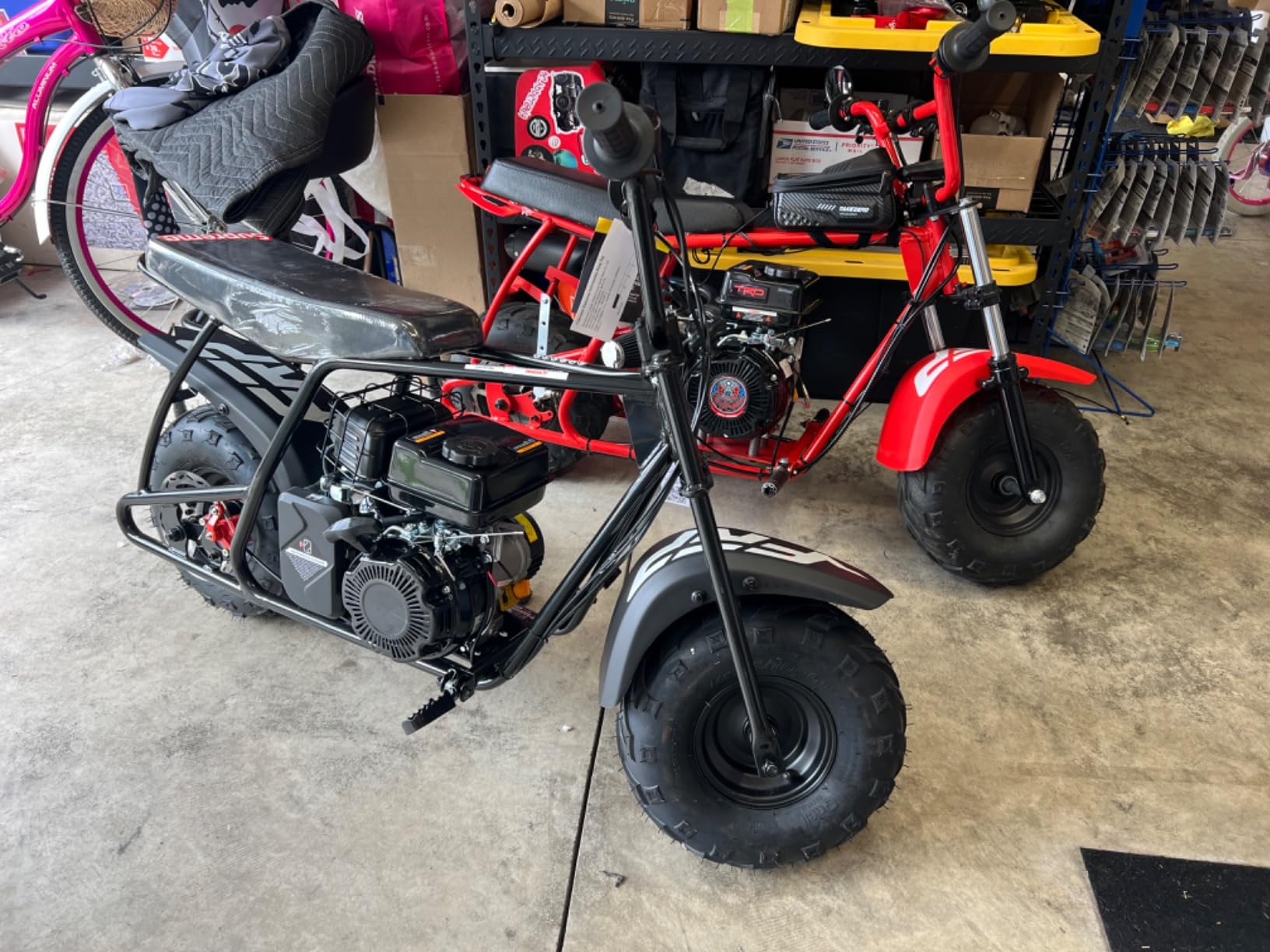
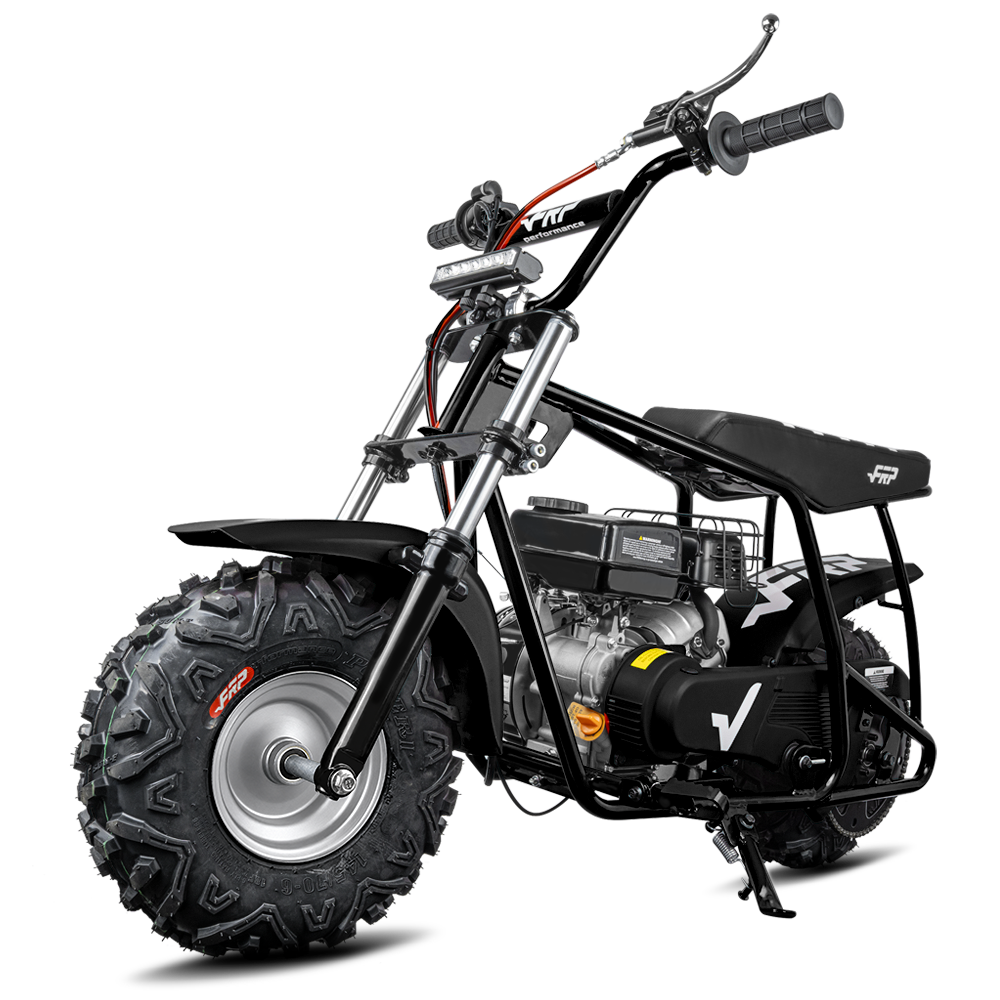
Keep the stock motor if the bike is for a young rider, a first-time gas mini bike owner, or a family that wants fewer maintenance surprises. The GMB100's 99cc setup is easier to learn, easier to manage, and easier to keep close to the original ownership path.
This path is especially strong when the rider is still learning throttle control, braking, starting, basic pre-ride checks, and where the bike can be used safely. A first real gas bike should help the rider build confidence before the build becomes complicated.
Stock-motor upgrades should still be done carefully. Air filter, carb, exhaust, and jetting changes can affect how the engine starts, idles, runs under throttle, and handles heat. Small mods are not automatically harmless just because the engine stays 99cc.
If that describes your rider, the simplest path is a complete, ready-to-ride FRP Moto GMB100 paired with the First Ride Kit, so the first season is about riding and building habits rather than sourcing parts.
How to Mod the Stock 99cc Motor (and in What Order)
If you want more out of the stock GMB100 motor without a full engine swap, the key rule is that some parts must change together. Adding more airflow without matching the fuel makes the engine run lean, which can overheat it and burn a valve. So stock mods follow an order, not a shopping spree.
Stage 1: The "intake, exhaust, fuel" trio
These three are usually done as one package because each one affects the others:
- High-flow air filter: lets more air into the engine.
- Less-restrictive exhaust: lets exhaust gas out more easily.
- Carburetor jetting (a larger main jet): adds the extra fuel needed to match the extra air. This is the step that keeps the mix from going lean.
Do all three together. A free-flowing intake and exhaust with the stock jet is the most common way to lean out and damage a small engine. If you are not sure whether your bike is already running lean or rich, the carb tuning guide shows how to read the symptoms before you change a jet.
The governor screw: adjust carefully, do not just remove it
The governor limits engine RPM and top speed. Loosening it lets the engine rev higher for more speed, but removing it entirely lets the engine over-rev, which can destroy it and push the bike past what the rider can safely control. On a bike a child or beginner rides, keep meaningful speed limiting in place. The governor is a safety control, not just a speed cap.
Stage 2: Internal mods for experienced builders
Riders chasing more power eventually look at a lightweight billet flywheel for safer higher RPM, a performance camshaft, stronger valve springs, a larger carburetor, and a clutch upgrade because the stock clutch can slip once power climbs. These are project-builder territory, not first-weekend bolt-ons.
Do not forget what the extra power runs into
More power from a stock motor still reaches the same brakes, chain, sprockets, and tires. Faster acceleration exposes weak brake adjustment and poor chain alignment quickly, so a stock-motor build should include a brake and chain check, not just engine parts. To see the bike's stock layout before you start, the FRP Moto Videos & Tutorials page shows real GMB100 setup and maintenance footage.
For the full step-by-step on each of these mods, read how to make your 99cc mini bike faster. Once you know which parts you need, the bolt-on items above — high-flow filters, header-and-muffler exhaust, chains, sprockets, and brake upgrades — are in the FRP upgraded parts collection.
When a 212 or 224 Swap Makes More Sense
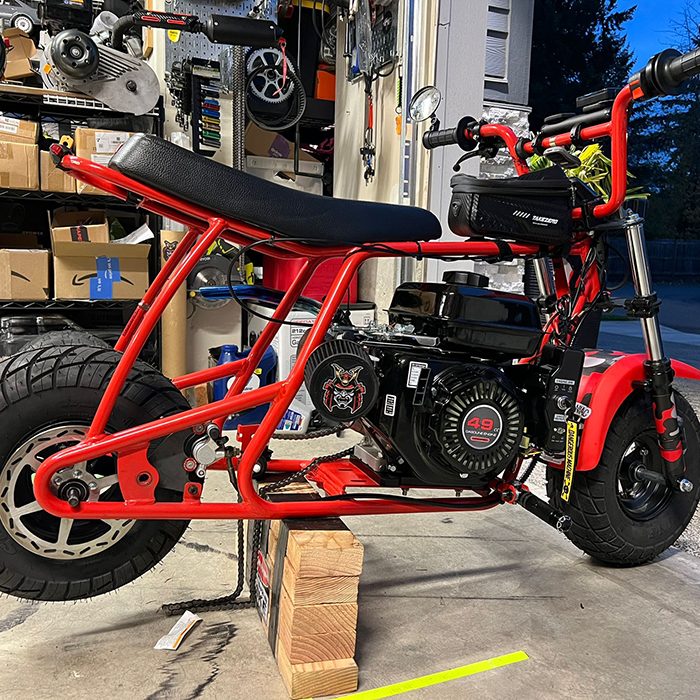
A 212 or 224 swap makes more sense when the owner wants a long-term project and understands that the bike will need a complete build plan. This is the path for riders and adults who enjoy fabrication, parts matching, and troubleshooting.
The engine should not be the only purchase in the plan. A larger-engine build should include brake inspection, chain and sprocket checks, clutch or torque converter decisions, exhaust clearance, fuel routing, throttle return, and heat management.
If you are starting from a frame instead of a complete beginner bike, review the FRP Moto GMB100 frame and plan the whole system together. If you are starting from a complete GMB100, compare the existing GMB100 upgrade roadmap before buying parts in random order.
For the engine-specific steps, read the GMB100 Predator 212 engine swap guide, and use the full custom mini bike build guide to plan the whole project. Build-platform parts — the upgraded frame, torque converter, exhaust, and supporting hardware — are in the FRP upgraded parts collection.
Which Path Fits Your Situation?
The better path depends on who is riding, how the bike is used, and whether the owner wants a simple first gas bike or a custom project.
| Rider or owner situation | Better first path | Why |
|---|---|---|
| Kid or first-time gas mini bike rider | Keep the stock 99cc setup | More predictable throttle, simpler maintenance, and fewer custom build variables. |
| Family buying the first real gas bike | Start stock, then upgrade comfort and maintenance items | The early value is learning, control, support, and easy ownership. |
| Adult rider who wants a project | Plan a 212/224 build as a full system | The engine can be worthwhile when mounting, brakes, drivetrain, fuel, throttle, and exhaust are planned together. |
| Owner trying to spend the least money this month | Fix and maintain the current setup first | A cheap engine swap can become expensive if it creates second purchases and unfinished fitment problems. |
| Builder starting from a bare or upgraded frame | Compare frame, brake, engine, and drivetrain parts together | A frame-first build gives more freedom, but it also moves more responsibility to the builder. |
The Hidden Costs Riders Forget
The most common mistake is budgeting for the engine and forgetting the parts that make the bike safe, rideable, and serviceable after the engine is installed.
- Mounting: The engine may need a riser plate, spacer work, or a different mounting plan.
- Fuel tank: The stock tank location may not fit the new engine or header route.
- Throttle cable: The cable must return safely and not bind at full steering lock.
- Torque converter or clutch: The drivetrain has to match the engine and riding goal.
- Chain alignment: A stronger engine makes bad chain alignment more expensive.
- Exhaust: A 212 pipe does not automatically fit a 99cc frame route or rider clearance.
- Brakes: More speed and torque can expose weak pads, poor adjustment, or a brake setup that needs upgrading.
- Fabrication time: Custom fitting is a cost even when the rider does the work at home.
The cheapest swap on paper is rarely the cheapest swap in the driveway. Pricing these parts up front, and buying ones that actually fit your frame, is what keeps a build from quietly costing more than the bike it started from.
How Most Owners Move From Stock to a Build
For a kid, a family, or a first-time gas rider, the first months are about safe, controlled practice on private property: learning the kill switch, brakes, throttle return, chain checks, oil checks, and basic riding habits. A stock 99cc setup is the right tool for that stage because it stays predictable while those habits form.
Upgrades tend to come later and in a natural order. Many owners start with tires, brakes, seat comfort, and suspension long before they touch the engine, because those changes improve the bike they already ride. The same bike that taught a beginner can keep getting better as the rider grows, which is why parts fit and stay easy to source.
So a stock GMB100 and a built one are not opposites. They are two ends of the same ownership path, and most riders move along it one sensible upgrade at a time rather than swapping the engine first.
212 Swap Planning Checklist
Before buying a 212 or 224 engine for a GMB100-style build, answer these questions first:
- Will the engine physically fit the frame with safe clearance?
- Will the mounting plate, riser, or hardware hold the engine securely?
- Will the chain line stay straight through the clutch or torque converter?
- Will the brake setup still match the bike's new speed and rider weight?
- Will the throttle cable return cleanly at full steering lock?
- Will the fuel tank and line routing avoid heat and moving parts?
- Will the exhaust clear the rider, frame, tire, brake, and cables?
- Will the bike still be used only where mini bikes are allowed?
- Do you have the tools and time to troubleshoot after installation?
- Do you have a parts path if something wears out faster after the swap?
If several answers are unknown, slow down and plan the build before spending money. A careful plan is cheaper than buying the same part twice.
FRP Owner Path: What to Read Next
If you are keeping the bike close to stock, start with the FRP Moto GMB100, the First Ride Kit, and routine maintenance resources.
If you are building toward more power, start with the custom mini bike build guide for the full plan, read the GMB100 upgrade roadmap, compare the GMB100 upgraded frame, and use the 99cc vs 212 exhaust fitment guide before choosing exhaust parts.
As you work through the build details, these guides cover each major decision: how to mount a 212 engine on a GMB100, whether the swap requires better brakes, torque converter vs direct clutch for a 212 build, and how fast a 212cc mini bike actually goes.
For parts, match the collection to the job: worn or broken stock items like chains, pads, cables, and plastics are in FRP replacement parts; performance and build items like exhaust, torque converter, upgraded frame, and brake or suspension kits are in FRP upgraded parts; and rider gear like gloves, goggles, lights, and storage are in FRP accessories. Use the FRP Moto Answers hub for short ownership questions, and contact FRP support through the FRP Ownership Promise path when model fitment is unclear.
FAQ
Can a GMB100 take a 212 engine?
A GMB100 can be part of a 212 build, but it should be treated as an advanced project. Engine mounting, drivetrain alignment, fuel tank routing, throttle cable setup, exhaust clearance, braking, and heat management all need to be planned before riding.
Is a 212 swap cheaper than stock motor mods?
Not always. A 212 engine may look affordable by itself, but the real swap cost can include mounting hardware, torque converter or clutch parts, exhaust, throttle cable work, fuel tank changes, brake wear, chain alignment, and fabrication time.
Should a beginner rider start with a 212 swapped mini bike?
Usually no. A beginner rider is better served by a controlled, predictable setup first. The stock 99cc GMB100 path is easier for families and new riders to understand before moving into larger-engine builds.
Is it better to mod the stock 99cc engine first?
It depends on the goal. If the rider wants reliable learning and simple ownership, keep the stock engine and maintain it well. If the owner wants a project build, compare the total cost of parts, tuning, brakes, and fabrication before starting.
Does a 212 swap require better brakes?
More speed and torque can increase brake wear and expose weak adjustment, pads, or braking capacity. Any larger-engine build should include brake inspection and a realistic plan for stopping power before chasing more speed.
Do I need a torque converter for a 212 mini bike build?
Some builders use a clutch and others use a torque converter. The right choice depends on riding style, gearing, engine setup, frame clearance, chain alignment, and how the bike will be used.
Will a 212 exhaust fit a stock 99cc GMB100?
Do not assume it will. A 212 exhaust may have a different flange, angle, support point, muffler position, and heat path. Use the 99cc vs 212 exhaust fitment guide before buying a pipe based only on a video.
Can I swap a 224cc engine instead of a 212?
A 224cc swap should be treated with the same caution as a 212 swap, often with even more attention to torque, mounting, drivetrain, braking, exhaust, and rider control. It is not a beginner bolt-on path.
What is the best first upgrade before a 212 swap?
For many riders, the best first upgrade is not more engine. Tires, brakes, seat comfort, suspension, chain maintenance, and safe setup often improve the ownership experience before a full engine swap.
Will a beginner outgrow a 99cc GMB100?
Some riders do want more speed after a season or two, and that is normal. The advantage is that you do not have to buy a new bike when it happens: tires, brakes, seat, suspension, exhaust, frame, and engine parts can all be upgraded on the same GMB100 as the rider gains experience.