FRP Moto Community Answers

FRP Moto Community Answers

Official mini bike troubleshooting, maintenance, parts, safety, and support answers from FRP Moto.

Quick Answer: FRP Moto Community Answers is the official help hub for gas mini bike troubleshooting, maintenance, parts fitment, riding safety, and support questions. It is built to give new riders, families, and first-time gas mini bike owners short answers first, then route them to FRP Moto products, parts, videos, and support resources when a model-specific step is needed.

FRP Moto Community Answers is an official mini bike help hub built from real rider questions. Each answer explains common mini bike issues, gives practical troubleshooting steps, and links to the right FRP product, parts, or support resource when needed.

Video support

Use Answers With Real FRP Video References

These short answers are written for all gas mini bike shoppers and owners first, then add FRP-specific model and support paths where they apply. Videos help riders see setup, model details, and owner context before they choose parts or contact support.

Start here

Most Useful Answer Paths

The hub is organized for fast decisions first. Start with the question type that matches the problem, then use the category sections for deeper troubleshooting and support answers.

Browse by topic

Find Answers by Category

Each category starts with compact questions. Open the question you need, then follow the related FRP resource links when a product page, guide, video, or support path is more useful.

Troubleshooting

Starting, idle, throttle, and engine behavior

This section explains common mini bike troubleshooting problems, including no-start issues, bogging under throttle, stalling after startup, hanging idle, throttle response issues, and engine behavior that needs a basic safety check.

Why won't my mini bike start?

For most gas mini bikes, a no-start issue usually starts with fuel, the kill switch, spark, air flow, carburetor condition, or pull-start resistance. If you own an FRP mini bike, check the model path first: GMB100, MB40, Sahara 40, and Ogemaw 40 may have different setup and parts needs.

  • Check fresh fuel, switch position, spark plug condition, air filter, and whether the pull starter feels normal.
  • Use the FRP first-ride and support resources if the bike is new, stored, leaking fuel, or repeatedly fails to start.
Why does my mini bike pull start kick back?

For most gas mini bikes, pull-start kickback happens when the engine resists the starter rope instead of turning smoothly. Common causes include pull technique, compression, ignition timing, a flooded engine, old fuel, or a starter assembly problem. FRP owners should avoid repeated hard pulls if the rope snaps back sharply or feels locked.

  • Check the kill switch, fuel condition, flooding symptoms, and whether the pull rope retracts normally.
  • Stop and contact FRP Support if the rope kicks back hard, locks, frays, or the bike was recently modified.
Why is my mini bike chain slapping or hitting the clutch bell under throttle?

If a mini bike chain only starts slapping or hitting the clutch bell when you get on the throttle, the problem usually is not random noise. The most common causes are uneven chain tension, a damaged chain section, rear-wheel alignment issues, sprocket wear, or engine-mount movement that changes the chain path under load.

  • Before tightening anything again, check the chain all the way around, inspect the master link, confirm rear alignment, and look for movement at the engine plate.
  • If the problem keeps coming back, use the full diagnosis guide before buying more parts.
Why is my mini bike still stalling at idle?

If a mini bike still stalls at idle, start with simple setup checks before replacing parts. Common causes include idle speed set too low, choke not fully off after warm-up, old fuel, a dirty carb passage, restricted fuel flow, air leak, or throttle cable tension holding the carb in the wrong position.

  • Warm the engine, confirm choke position, check fresh fuel, and inspect the air filter and fuel line first.
  • If the bike is new or you are unsure, use FRP Moto video support before changing jets or buying random carb parts.
Why does my mini bike bog when I give it throttle?

Bogging under throttle can come from a dirty carb, restricted fuel flow, air leak, wrong jetting, or an engine that is not warmed up. Check simple fuel and intake issues first.

Why does my mini bike stall after starting?

A mini bike may stall after starting if the idle is too low, the choke is set incorrectly, the carb is dirty, or fuel delivery is inconsistent. Test only in a controlled area.

Carb, Jetting & Fuel

Carb swaps, jet size, fuel flow, and lean/rich symptoms

This section explains common mini bike carburetor, jetting, and fuel delivery problems, including lean running, rich running, fuel starvation, air leaks, choke behavior, and throttle response issues.

Why does a mini bike run lean after carb changes?

A mini bike can run lean after carb changes when airflow increases but fuel delivery does not. Check jet size, intake leaks, fuel flow, choke position, and spark plug color.

How do I know if my mini bike is running rich or lean?

A lean mini bike may run hot, hang idle, or improve with partial choke. A rich mini bike may smell like fuel, smoke, foul plugs, or stumble from too much fuel.

What happens if the main jet is too small?

A main jet that is too small can limit fuel at higher throttle and make the engine run lean. Stop testing if the bike surges, overheats, or responds unpredictably.

What gas should I use in a mini bike?

For a stock FRP Moto gas mini bike, follow the model manual and use fresh gasoline from a reliable station rather than guessing by forum advice. Higher octane is not automatically better for every stock small engine; fuel choice can change when compression, timing, carb setup, or engine modifications change.

  • Use fresh fuel, avoid old gas, and do not mix two-stroke oil into a four-stroke mini bike unless the model specifically requires premix.
  • If the engine has a flat-top piston, advanced timing, or other performance changes, treat fuel choice as a modified-engine tuning question.

Parts & Fitment

Frames, brakes, tires, torque converters, chains, and replacement parts

This section explains mini bike parts and fitment questions, including FRP GMB100 frame compatibility, replacement parts, brake parts, tires, chains, sprockets, torque converters, and carb replacement basics.

Shop FRP replacement parts GMB100 mini bike frame
Where can riders find FRP replacement parts for a mini bike or youth powersports product?

Start with the official FRP replacement parts collection or the product-specific parts page for your model. Mini bike, ATV, frame, and model-specific parts are not always interchangeable, so match the part to the exact vehicle before ordering.

FRP replacement parts / GMB100 parts / Owner support

What parts fit the FRP GMB100?

FRP GMB100 fitment depends on the exact part, model year, and setup. Use FRP model-specific replacement parts first instead of assuming a universal mini bike part will fit.

Can a GMB100 be upgraded to a 212 or 224cc engine?

A GMB100 can be used as a starter-to-upgrade platform, but a 212cc or 224cc engine swap should be treated as an advanced build, not a simple beginner bolt-on. The real fitment question includes the engine plate, riser or mount, torque converter or clutch path, fuel tank, throttle cable, exhaust route, chain alignment, braking, and heat clearance.

  • Plan the full build before buying only the engine; the hidden cost is often the supporting parts, fabrication time, and troubleshooting.
  • For stock riders and families, keep the 99cc setup simple first. Move into 212 or 224 builds only when the rider and builder understand the full upgrade path.
Is it cheaper to mod the stock motor or swap in a 212?

A stock-motor mod can look cheaper at first, but a 212 swap is not just the price of an engine. The real cost comparison should include carb and exhaust parts, torque converter or clutch setup, brake wear, chain alignment, mounting hardware, fuel tank changes, throttle cable work, and how much custom fitting the builder can do safely.

  • If the goal is reliable beginner riding, maintaining the stock 99cc setup is usually the lower-friction path.
  • If the goal is a long-term custom build, a 212 path can make sense, but only when the full upgrade budget and safety checks are planned together.
Is this FRP mini bike a GMB100, GMB100P, or MB40?

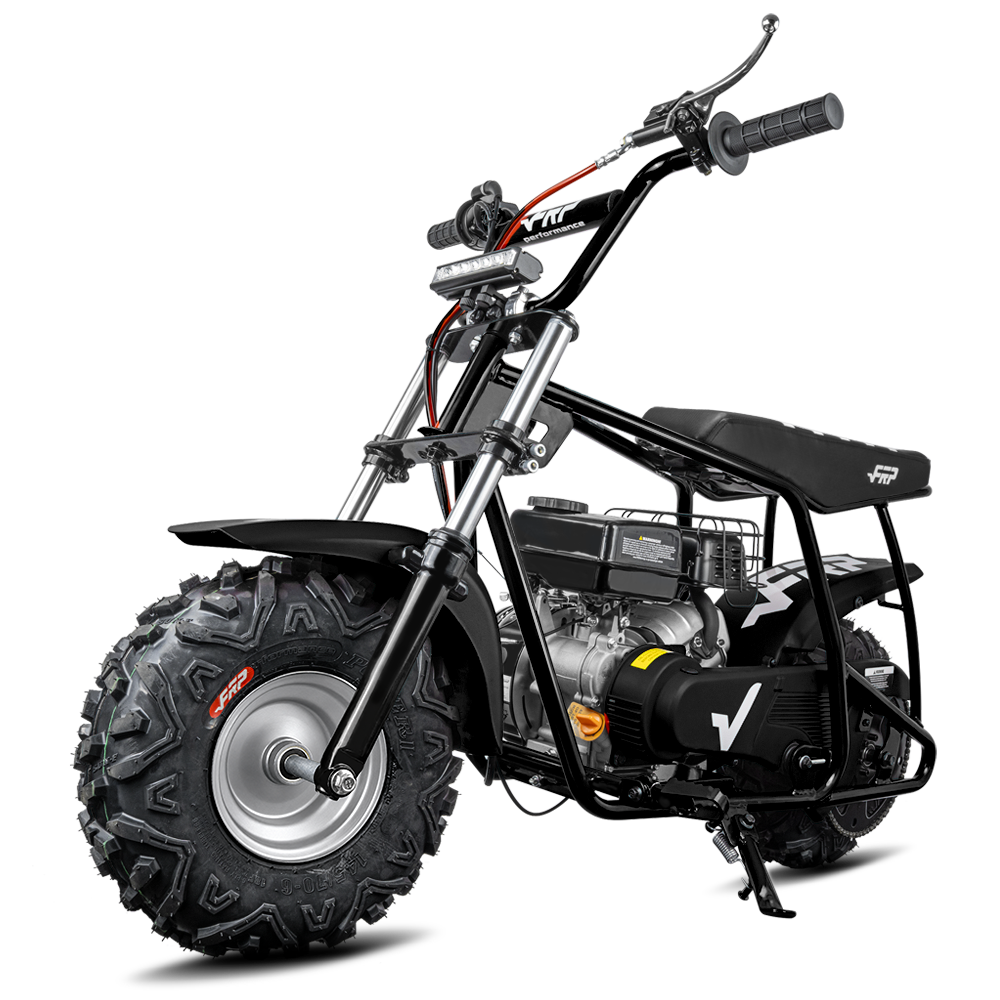
Start by identifying the bike type before ordering parts or comparing upgrades. The GMB100 is FRP's beginner-friendly 99cc gas mini bike platform, the GMB100P adds a more upgraded mini bike configuration, and the MB40 belongs to FRP's mini dirt bike path rather than the same mini bike frame family.

  • Use the product name, frame style, suspension setup, tire type, and visible model details instead of guessing from a short video clip.
  • If a part or upgrade depends on the model, confirm the exact bike before buying universal parts.
What rear axle spacers fit the FRP Moto GMB100?

Rear axle spacer fitment on the FRP Moto GMB100 depends on the exact bike model, rear axle setup, wheel hub spacing, brake rotor alignment, sprocket alignment, and spacer width. Do not order a generic spacer by appearance alone.

  • Confirm axle diameter, spacer inside diameter, spacer outside diameter, spacer width, hub spacing, and brake and sprocket alignment.
  • If fitment is unclear, send FRP Moto support photos of the rear axle, wheel hub, brake side, sprocket side, and spacer you plan to use.
Are mini bike axle spacers universal?

No. Mini bike axle spacers are not truly universal. A spacer must match axle diameter, wheel hub spacing, brake alignment, sprocket alignment, and frame clearance. A spacer that is close but not correct can push the wheel, rotor, or sprocket out of line.

Do universal mini bike parts fit the GMB100?

Some universal mini bike parts may fit the GMB100, but "universal" does not guarantee correct fitment. Check model, mounting points, measurements, brake type, wheel setup, engine setup, and safety clearance before ordering.

Are mini bike seats universal?

No. Mini bike seats are not truly universal. Seat length and width are only part of the fit; riders also need to check the seat pan, mounting holes, frame hump clearance, bracket height, and rider position before ordering.

Can an MM80-style seat fit an FRP mini bike?

An MM80-style seat may fit some mini bike setups, but riders should not assume it bolts onto an FRP-style bike automatically. Compare the underside of the seat, bolt spacing, frame hump clearance, bracket position, and final rider position before riding.

When does a mini bike spring seat kit make sense?

A spring seat kit can help riders who want more comfort and a custom seat feel, but only if the mounting path is solid. Check the front mount, spring location, tire and fender clearance, final seat height, and hardware before riding.

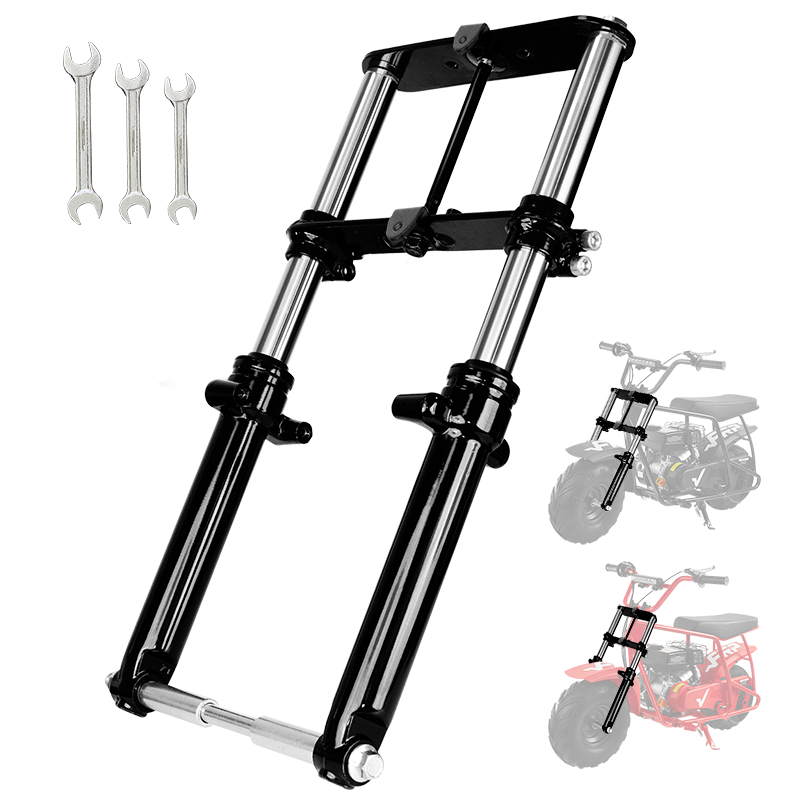
Is the GMB100P front shock worth it?

The front shock is most valuable when the rider uses the bike on grass, packed dirt, rough private-property paths, or any surface that is not perfectly smooth. On flat pavement, the difference can feel smaller; on uneven ground, front suspension can improve comfort, control, and confidence for newer riders.

  • Choose the GMB100 path when budget and simple first-bike ownership matter most.
  • Choose the GMB100P or a suspension upgrade path when ride comfort, rougher surfaces, and longer ownership upgrades matter more.
Can I put street wheels or supermoto tires on a mini bike?

Street-style wheels or supermoto tires can make sense for pavement-heavy private-property riding, but they do not make a mini bike street legal. Fitment depends on tire size, rim size, axle setup, brake clearance, chain line, fender clearance, gearing feel, and whether the tire is rated for the way the bike is used.

  • Check clearance with the rider on the bike, not only while it sits on a stand.
  • If the goal is better pavement feel, compare tire wear, braking grip, and ride surface before changing the whole setup.
Can I replace the stock carb on a mini bike?

Some mini bikes can use an upgraded carb, but fitment, throttle cable, intake sealing, fuel flow, and jetting must all match the engine setup before riding.

What chain size does a mini bike use?

For most gas mini bikes, chain size depends on the exact model, sprocket, engine setup, and rear wheel assembly. If you own an FRP mini bike, confirm whether it is a GMB100, MB40, Sahara 40, Ogemaw 40, or another FRP model before ordering a chain.

  • Check whether the issue is chain size, tension, alignment, rust, sprocket wear, or rear axle movement.
  • Use the FRP Parts page first; contact FRP Support if fitment is unclear before buying a replacement.
Why won't my mini bike chain tensioner spin?

A mini bike chain tensioner may fail to spin when the bearing, bolt, spacer, washer stack, roller width, or chain line does not match the bike. A universal tensioner can look close but still bind if the bolt clamps the bearing, the spacer is missing, or the roller sits out of line with the chain.

  • Check that the roller spins freely before it touches the chain.
  • Confirm the bearing is not crushed by the bolt, washers, or spacer stack.
  • Use a model-specific FRP parts path when fitment is unclear instead of guessing by appearance.
What should I do if my chain tensioner bearing comes out mid ride?

Stop riding if a chain tensioner bearing comes out during a ride. A missing or loose bearing can change the chain path, let the roller bind, damage nearby parts, or let the chain move in a way that creates a safety problem.

  • Inspect the tensioner arm, bearing, bolt, spacer, washer stack, chain path, and sprocket alignment before riding again.
  • Check for chain damage, frame rub, bent hardware, and any part that no longer sits square.
  • Replace damaged or unknown-fit parts before testing the bike again.
Why use the stock FRP chain tensioner instead of a universal one?

A stock FRP chain tensioner can be the better long-term value when it reduces guessing around bearing fit, spacer width, bolt length, roller position, and chain alignment. A cheaper universal tensioner may still cost more if it does not spin freely, sits off line, or forces the rider to buy another part later.

  • Model-specific parts help reduce fitment surprises on a beginner-friendly ownership path.
  • Universal parts should only be used when the measurements, hardware, and chain line are confirmed.
Does a mini bike chain tensioner bearing need spacers on both sides?

Spacer placement depends on the exact chain tensioner, bearing width, bolt length, arm clearance, roller position, and chain line. Do not assume every mini bike tensioner needs the same spacer setup on both sides.

  • After assembly, the bearing or roller should spin freely without side load.
  • The roller should meet the chain squarely instead of pushing the chain inward or outward.
  • If the spacer setup is unclear, use model-specific parts guidance or support photos before riding.
What parts are involved in a mini bike pull start?

A mini bike pull-start system usually includes a starter housing, recoil spring, pull rope, handle, pulley, starter pawls or engagement parts, and mounting hardware. The exact replacement part depends on the engine and model, so FRP owners should confirm vehicle fitment before ordering a recoil starter or pull-start assembly.

  • Check whether the rope retracts fully, slips, frays, or makes a grinding sound.
  • Do not open a spring-loaded recoil assembly unless you have the right tools and experience.
Are cheap mini bike performance parts worth it?

Cheap performance parts are only worth it when fitment, material quality, and support are clear. A low purchase price can turn into a higher total cost if the part wears quickly, does not fit, damages another component, or forces the rider to buy the same upgrade twice.

  • For long-term value, check model fitment, hardware, material claims, return path, and whether replacement parts are available.
  • FRP Moto owners should start with model-specific parts, supported upgrade paths, and support resources before buying random performance parts by appearance.
What happens if the wrong bolt is forced into a torque converter?

If the wrong bolt is forced into a torque converter or clutch mounting point, stop riding and inspect the threads before running the bike again. A forced bolt can damage threads, misalign the drive system, loosen under vibration, or create a repair that costs more than using the correct model-specific hardware first.

  • Do not keep tightening if the bolt feels wrong, cross-threads, bottoms out early, or does not match the original hardware.
  • Confirm the exact model, engine, clutch or torque converter setup, thread pitch, and bolt length before replacing hardware.

Maintenance & Setup

Oil, break-in, pre-ride checks, storage, and setup

This section explains mini bike maintenance and setup questions, including oil checks, break-in, pre-ride inspections, storage, tire pressure, chain care, and first-start preparation.

Mini bike oil guide Mini bike tire guide
What should I check before riding a mini bike?

Check fuel, oil, brakes, throttle return, chain tension, tire pressure, fasteners, and protective gear before riding. Test only in a controlled off-road area.

What oil does a mini bike take, and how often should I change it?

That depends on the engine, but most FRP gas mini bikes use 4-stroke oil and do not need premix. For a new bike, the real question is not just what oil to use, but how often to check it, when to do the first change, and whether the bike is still in break-in.

  • Confirm whether the bike is 4-stroke or 2-stroke before adding oil, and use the model-specific guide instead of guessing by category.
  • If you are comparing routine care, start with the FRP oil guide and then check the first-ride path for break-in and storage basics.
What spark plug does a mini bike use?

For most gas mini bikes, spark plug fitment depends on the engine, model, thread, reach, and heat range. Spark plugs are not always universal. If you own an FRP mini bike, confirm whether the vehicle is a GMB100, MB40, Sahara 40, Ogemaw 40, or a 2-stroke dirt bike model before buying a replacement.

  • Check whether the bike is 4-stroke or 2-stroke before choosing a plug.
  • Inspect for heavy carbon, oil fouling, cracks, corrosion, or starting trouble.
Why does my mini bike chain keep coming loose?

For most mini bikes, a chain can keep coming loose because of break-in stretch, axle movement, poor alignment, worn sprockets, incorrect tension, or rough riding conditions. On a new FRP mini bike, chain tension should be checked more often during early rides because parts can settle in.

  • Check rear axle alignment, sprocket teeth, and chain tension after the first rides.
  • Stop riding if the chain jumps, binds, rubs nearby parts, or keeps loosening after adjustment.
What tires are best for a GMB100 if I ride more on pavement than dirt?

If your GMB100 spends more time on pavement, packed surfaces, or smooth private-property riding than loose dirt, tire choice is really about ride feel, tread wear, and how much traction you still need when the surface changes. The best answer is usually not the most aggressive off-road tread, but the tire setup that matches where the bike actually gets used.

  • Check current tread condition, riding surface, inflation, and whether you still need occasional dirt or gravel grip before changing tires.
  • Use the tire guide first, then confirm fitment on the FRP parts path before ordering a replacement.
How long do mini bike slick tires last?

Mini bike slick tire life depends on riding surface, tire compound, rider weight, tire pressure, storage, and riding style. Smooth private-property riding is easier on slick tires. Pavement-heavy riding, burnouts, donuts, low pressure, and rough surfaces wear them faster.

  • Replace slick tires before exposed cords, deep cracks, flat spots, sidewall damage, or repeated traction loss.
  • Do not judge tire value by price alone; a tire that wears out quickly can cost more over time.
Are cheap Amazon mini bike tires worth it?

Cheap marketplace tires can be worth it only when the exact size, rim fitment, tread type, durability, and return path are clear. If the tire wears out quickly, rubs the frame, does not fit cleanly, or needs to be replaced again, the cheaper tire may not be the better long-term value.

  • Check tire size, rim diameter, width, outside diameter, riding surface, and support before ordering.
  • For FRP Moto owners, start with model-specific parts and fitment guidance before guessing on universal listings.
Should I ride a mini bike tire until it blows out?

No. Replace a mini bike tire before blowout risk. Exposed cords, deep cracks, sidewall damage, bead damage, repeated air loss, severe flat spots, or poor grip mean the tire should be inspected and replaced before another ride.

  • Burnouts and donuts can remove tread quickly and create weak spots, especially on pavement.
  • For younger or newer riders, tire checks should be part of the same pre-ride routine as brakes, throttle return, chain tension, and the kill switch.
How often should I check mini bike oil?

Check oil before rides and follow the model manual for change intervals. Low or dirty oil can cause hard starting, heat, wear, or engine damage.

What should I do before starting a stored mini bike?

Before starting a stored mini bike, check old fuel, oil level, spark plug condition, carb cleanliness, chain movement, brakes, and tire condition.
Riding & Safety

Where to ride, age fit, backyard use, and off-road basics

This section explains mini bike riding and safety questions, including where mini bikes can be used, private property riding, off-road basics, protective gear, age fit, and why mini bikes are not for public road use.

Where can you legally ride a mini bike?
Where can you ride a mini bike?

Mini bikes are generally intended for private property or controlled off-road areas, not public roads. Riders should follow local rules and wear protective gear.

Are mini bikes street legal?

Most gas mini bikes are not street legal as sold. Do not ride on public roads unless local law and vehicle registration rules clearly allow it.

Can I insure or register an FRP mini bike for public-road use?

Do not assume an FRP mini bike can be insured or registered for public-road use. Insurance and registration depend on local vehicle classification, DMV rules, title or VIN requirements, and the insurer's own policy. A mini bike may have an identification number for product and support purposes without qualifying as a street-legal motor vehicle.

  • Confirm local law before buying parts for public-road use.
  • FRP mini bikes should be treated as private-property or off-road vehicles unless your local authority clearly says otherwise.
Does adding lights, mirrors, or turn signals make a mini bike street legal?

No, not by itself. Lights, mirrors, turn signals, and other equipment may be part of a road-use checklist, but equipment compliance is not the same as vehicle classification, registration eligibility, insurance approval, or local road permission.

  • Adding street-style parts can improve visibility on private property, but it does not automatically change the legal status of the bike.
  • Check the vehicle registration path first; do not build around a road-use assumption.
What safety gear should mini bike riders wear?

Mini bike riders should wear a proper helmet, eye protection, gloves, long sleeves, long pants, and sturdy shoes or boots when riding.

Should I wrap a mini bike muffler or exhaust pipe?

Exhaust wrap can reduce exposed heat on some pipe sections, but it should not be treated as burn protection and it is not a fix for a loose, cracked, or poorly mounted exhaust. Before wrapping anything, inspect the pipe, muffler, brackets, fuel line, wiring, plastic parts, and rider leg clearance. If the exhaust needs welding or shifts when the engine vibrates, repair the exhaust first.

Should a mini bike exhaust be supported or braced to the frame?

A long, heavy, or custom exhaust should not rely only on the engine flange if the muffler or pipe vibrates, bounces, or moves under throttle. Unsupported exhaust parts can loosen bolts, crack welds, leak at the flange, contact the rider, or create heat problems near cables, plastic, brakes, or clothing.

  • Stop riding if the pipe shifts, rattles hard, touches the frame, or needs welding.
  • Check bracket support, flange hardware, heat clearance, and muffler position before wrapping or tuning the exhaust.

Orders & Support

Shipping, returns, warranty, manuals, and support paths

This section explains FRP support questions, including shipping, returns, warranty direction, replacement parts, manuals, order help, and when to contact FRP support.

FRP Moto FAQ Shipping information Refund policy Used mini bike buying guide
How does FRP Moto pre-order shipping work?

When FRP Moto opens a pre-order, the product is temporarily out of stock or being restocked, but the customer can place the order now to reserve the next available inventory. Once the pre-order is placed, the order is confirmed, and FRP Moto ships pre-orders first when new stock arrives.

  • Use the product page, shipping page, and order emails for the current timing on a specific item.
  • If the order is time-sensitive, contact FRP Moto support with the order number and product name.
What does preparing your order for dispatch mean?

Preparing your order for dispatch usually means the order is being prepared for shipment, but tracking may not show movement yet. For pre-order items, it can also mean the order is confirmed and waiting for the next restock or fulfillment step before it leaves the warehouse.

  • Check the latest order email and tracking link first.
  • If the status does not change for longer than expected, contact FRP Moto support with the order number.
Where can I find FRP shipping information?

FRP shipping details are listed on the official shipping page, including destination limits, delivery expectations, and restrictions for some gas-powered products.

What should I do if the FRP mini bike exhaust is out of stock?

If an FRP mini bike exhaust is out of stock, use the FRP product page as the fitment reference before buying a random 212cc, Amazon, or universal pipe. The important checks are flange match, pipe route, muffler support, rider heat clearance, chain clearance, brake clearance, and whether the carb setup may change after installation.

  • Do not buy only by sound or by how a pipe looks in a video.
  • If the replacement is not model-specific, confirm measurements and return path before ordering.
Does FRP Moto ship to Canada, Belgium, Finland, or other countries?

Use the official FRP shipping page and checkout as the current answer for destination availability. If a country is not supported at checkout, do not assume FRP can ship a gas mini bike there through a normal order because gas-powered products can have carrier, customs, warehouse, and regional restrictions.

  • FRP shipping policies can change, so check the shipping page before making a purchase decision.
  • If your country is not available, contact FRP support or watch for official dealer, distributor, or availability updates instead of relying on comments from older videos.
Does FRP Moto ship on weekends?

You can place an order online at any time, but warehouse processing, carrier pickup, and tracking movement usually depend on business days, carrier schedules, holidays, inventory status, and whether the item is in stock or on pre-order. Weekend order placement does not always mean weekend carrier movement.

  • Use your order email and tracking link for the most current status.
  • If timing matters, contact FRP support with the order number and product name.
How do I get help with replacement parts?

Start with the FRP parts collection or contact support with your model, order details, photos, and the part you need to replace.

Where should I ask a product support question?

Use FRP support or the FAQ page for order, product, warranty, and setup questions that need an official response.

Which GMB100 package should I choose?

Choose Bike Only if you already have riding gear, basic tools, and a safe off-road place to ride. Choose Starter Kit if this is your first FRP Moto GMB100 and you want the basics covered. Choose Complete Starter Bundle if the bike is a gift or the rider is new and you want fewer separate purchases.

Is the GMB100 different between Bike Only, Starter Kit, and Complete Starter Bundle?

No. The bike model is the same 99cc FRP Moto GMB100 across package choices. The package changes what comes with it, not the core mini bike.

Can I add GMB100 accessories separately?

Yes. FRP Moto offers accessories and replacement parts separately, so you can add tires, exhaust, seat upgrades, bags, and other parts based on how you ride.

What should I inspect before buying a used mini bike?

Before buying a used mini bike, inspect the things that turn “cheap” into “more expensive than a new bike.” Look at the frame, brakes, chain, throttle return, tires, fuel system, and whether the engine starts, idles, and pulls cleanly. A used bike can make sense, but only if the small problems are actually small.

  • Ask whether the bike starts from cold, whether the controls feel normal, and whether basic wear parts are available before you hand over cash.
  • If you are buying for a beginner or comparing total first-month cost, use the used-bike guide and then compare the new FRP path.

Official guide paths

Helpful FRP Resources