
TL;DR
- Mini bike tires are not one-size-fits-all. Riders should match tire size, wheel size, tread style, and brake clearance to the exact model.
- For FRP shoppers, the tire question is also an ownership question: can the bike be maintained, can wear items be found, and does the brand offer support if fitment is unclear?
- Street-style tires usually feel smoother on hard surfaces, while knobbier or off-road tires are better for grass, dirt, and mixed private-property terrain.
- Replace a mini bike tire when tread is worn, the sidewall is cracked, the bead is damaged, the tire will not hold air, or the tire no longer matches the riding surface.
- Slick tires and cheap marketplace tires can wear very differently. Burnouts, donuts, pavement use, low pressure, and poor compound quality can turn a low purchase price into a higher long-term cost.
- Before ordering, check the official FRP parts collection and confirm fitment for your model. If you are unsure, contact FRP Support before buying.
Quick Answer: What Tires Do Mini Bikes Use?
Mini bikes use small pneumatic tires sized by tire width, sidewall/profile, and rim diameter. The right tire depends on the exact mini bike model, wheel size, brake setup, frame clearance, and riding surface. For example, a tire that fits one 6-inch mini bike wheel may not automatically fit another mini bike if the brake, fender, axle, or frame clearance is different.
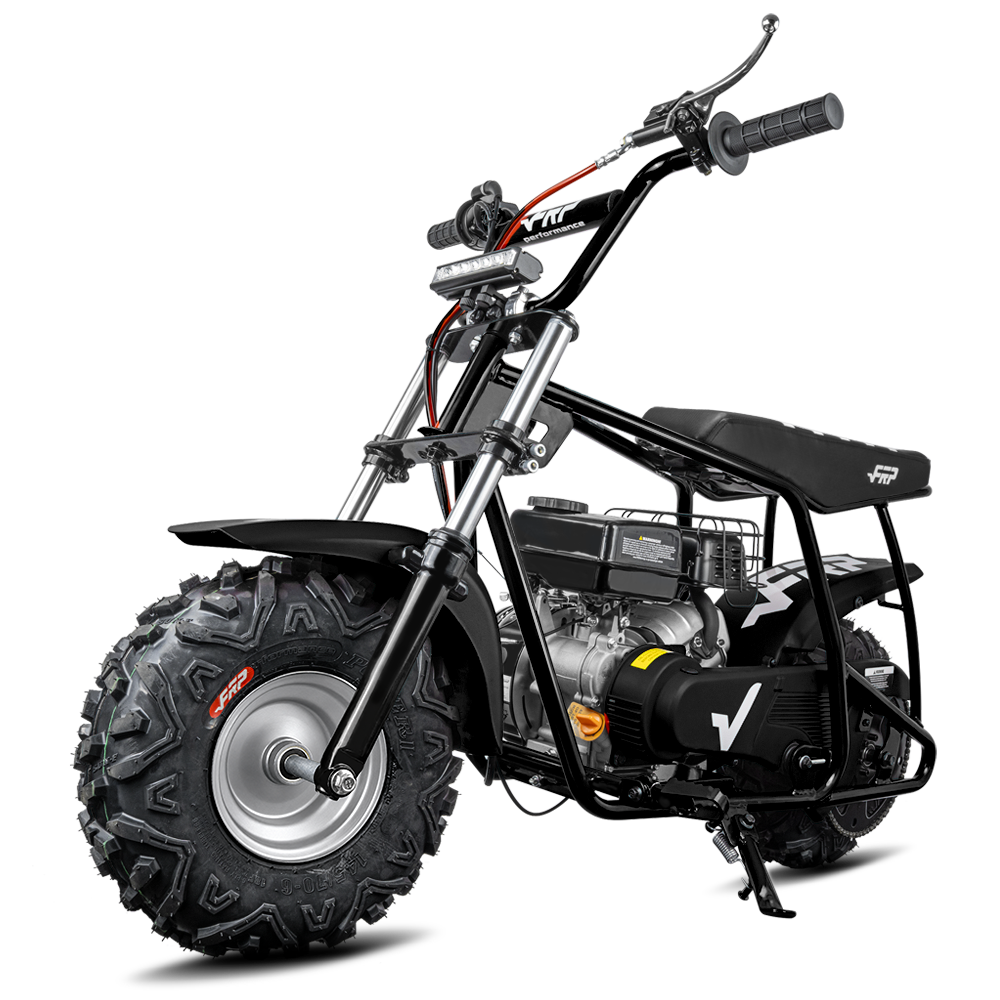
Shop the lineup: Compare all FRP gas mini bikes — from the kid-sized 40cc MB40 to the adult 99cc GMB100 that holds 220 lb.
If you ride an FRP mini bike, start with your exact model and the official FRP parts collection. If the listing does not clearly confirm fitment, contact FRP Support with your model name, order information if available, and a clear photo of the tire or wheel area before ordering.
Why Tire Questions Matter Before and After Buying
People searching for mini bike tires are usually not just browsing accessories. They may be asking whether a mini bike is practical to own long term, whether replacement tires are available, and whether the bike can handle the surface where they plan to ride. That makes tire content important for both SEO and conversion.
For new buyers, tire fitment helps answer: "Is this bike right for my yard, driveway, campsite, or private property?" For current owners, tire fitment helps answer: "How do I keep this bike maintained without guessing?" FRP uses this page to connect tire questions back to the correct product path, parts path, and support path.
How to Read a Mini Bike Tire Size
Mini bike tire sizes are usually printed on the tire sidewall. A common format looks like width/profile-rim size, while some tires use a simpler size format. The most important detail is the rim size, because the tire must match the wheel. Width and outside diameter also matter because the tire has to clear the frame, chain, brake, and fender area.
| Size detail | What it means | Why it matters |
|---|---|---|
| Tire width | How wide the tire is across the tread | A wider tire may improve stance, but it can rub if the frame or brake clearance is tight. |
| Profile / sidewall | The tire's sidewall height or shape | Changes ride feel, outside diameter, and clearance. |
| Rim diameter | The wheel size the tire mounts to | This must match. A tire for the wrong rim size should not be forced onto the wheel. |
| Tread pattern | Street-style, turf-style, or off-road style tread | Controls grip feel on pavement, grass, dirt, gravel, and mixed private-property surfaces. |
The safe approach is simple: read the tire sidewall, compare it with the official listing, and avoid assuming that "close enough" means compatible.
Street Tires vs Off-Road Tires for Mini Bikes
Street-style mini bike tires are usually smoother and can feel more predictable on hard, dry surfaces. Off-road or knobbier tires usually provide more bite on grass, dirt, and loose private-property terrain. The better choice depends on where the rider actually uses the bike, not just how the tread looks.
| Riding surface | Better tire direction | What to watch |
|---|---|---|
| Hard packed dirt | Mixed-use or mild off-road tread | Check for sidewall damage and embedded debris after riding. |
| Grass or uneven private property | More grip-focused tread | Wet grass can reduce traction even with aggressive tread. |
| Driveway or paved private area | Smoother street-style tire | Mini bikes are not public-road vehicles; keep use within legal private-property boundaries. |
| Loose gravel | Traction-focused tread with careful riding | Gravel can cause sliding, punctures, and faster wear. |
What Tires Fit a GMB100?
For a GMB100, the right tire depends on the exact model, wheel size, and current setup. FRP shoppers should not assume that every mini bike tire sold online will fit the GMB100 frame, brake, wheel, or chain clearance. Start with the official FRP parts path and verify the tire listing against your exact bike.
If you are still shopping for the bike itself, view the FRP GMB100 99cc gas mini bike. If you are already an owner and need replacement parts or wear items, start with the FRP parts collection and the FRP Ownership Promise.
When Should Mini Bike Tires Be Replaced?
Mini bike tires should be replaced when they are no longer safe or suitable for the riding surface. Do not wait until the tire is completely bald if the bike is already losing grip, leaking air, or showing visible damage.
- Replace the tire if the tread is heavily worn or uneven.
- Replace the tire if the sidewall is cracked, cut, or bulging.
- Replace the tire if it repeatedly loses air after proper inflation and inspection.
- Replace the tire if the bead area is damaged or no longer seats correctly.
- Replace the tire if the tread style no longer matches how the bike is used.
- Stop riding and inspect the bike if the tire rubs the frame, brake, chain, or fender area.
For youth riders and new riders, adults should check tire condition before each ride as part of the same pre-ride routine that includes brakes, throttle return, chain tension, and the kill switch.
How Long Do Mini Bike Slick Tires Last?
Mini bike slick tire life depends on riding surface, tire compound, rider weight, tire pressure, storage, and how aggressively the bike is ridden. A tire used for smooth private-property riding can last much longer than the same tire used for repeated burnouts, donuts, rough pavement, or low-pressure riding.
Do not judge tire value by the price tag alone. A tire that costs less but wears out quickly may cost more over a season than a better-supported replacement that lasts longer and fits the bike correctly.
| Use pattern | What it does to tire life | What to check |
|---|---|---|
| Smooth private-property riding | Usually gives the tire the easiest life if pressure and alignment are correct. | Check tread depth, pressure, and sidewall condition before rides. |
| Pavement-heavy riding | Can wear slick or street-style tires faster, especially during hard starts and turns. | Watch for flat spots, shallow tread, and uneven wear. |
| Burnouts or donuts | Can remove usable rubber quickly and create heat, flat spots, or weak tread areas. | Replace before cords, cracking, or grip loss appear. |
| Loose dirt or gravel | Can cut, chip, or puncture tires that are not made for that surface. | Inspect for embedded debris, sidewall cuts, and bead damage. |
| Cheap unknown tire compound | May wear faster or feel less predictable if fitment and material details are vague. | Confirm size, load use, tread type, and replacement support before buying. |
Are Cheap Amazon Mini Bike Tires Worth It?
Cheap mini bike tires can be worth considering only when the size, rim fitment, tread style, compound, and return path are clear. The risk is not that a tire is sold on a marketplace. The risk is buying a tire that looks close but wears quickly, does not fit cleanly, rubs the frame, or does not match the way the bike is ridden.
For FRP Moto owners, the long-term value path is simple: confirm the model first, use the FRP replacement parts or parts collection when available, and treat unknown marketplace tires as something to verify, not something to guess on. That keeps tire shopping connected to support, fitment, and safer ownership.
| Before buying a cheap tire | Why it matters | Better buying signal |
|---|---|---|
| Exact tire size | The tire must match the rim and clear the frame, brake, chain, and fender area. | The listing gives the full tire size and rim match. |
| Riding surface | A tire that works on hard pavement may be poor on grass, dirt, or gravel. | The tread style matches the surface where the bike is actually used. |
| Durability details | Some low-cost tires wear quickly under heat, burnouts, or pavement use. | The listing explains intended use, construction, and load context. |
| Support path | A bad fit can turn a cheap tire into a second purchase. | The seller or brand offers fitment help, returns, or model-specific guidance. |
Should You Ride a Mini Bike Tire Until It Blows Out?
No. Replace a mini bike tire before it reaches blowout risk. A tire with exposed cords, deep cracks, sidewall damage, bead damage, repeated air loss, severe flat spots, or poor traction should be treated as a maintenance issue, not a final-ride challenge.
Burnouts and donuts can be fun for experienced riders in controlled private areas, but they are hard on tires. If a tire is already worn, using the last bit of rubber for one more ride can create a sudden loss of grip, tube damage, rim damage, or a harder stop than expected.
Watch: FRP Tire Replacement Videos
These official FRP videos show tire replacement as a visual reference. Use them as support material, then confirm fitment for your exact model before ordering parts.
How to Replace the Front Tire on a GMB100
Useful for owners checking tire removal, wheel handling, and basic replacement flow.
GMB100 Rear Tire Replacement Guide
Useful for understanding rear wheel access and why brake and chain clearance matter.
Mini Bike Tire Fitment Checklist
- Confirm your exact mini bike model.
- Read the tire size printed on the sidewall.
- Match the rim diameter first.
- Check width and outside diameter against frame and brake clearance.
- Choose tread based on actual riding surface, not just appearance.
- Check the official FRP parts collection before ordering.
- If fitment is unclear, contact FRP Support with photos before buying.
FRP Product Path: Tires, Parts and Complete Bikes
If you are replacing tires on a bike you already own, start with the parts path. If you are still deciding which bike to buy, use tire style and terrain as one part of the decision.
- Shop FRP parts for common wear items and model-specific replacement paths.
- View the FRP GMB100 if you want a 99cc gas mini bike for older teens and adult beginners.
- View the FRP MB40 if you are comparing a smaller first gas mini bike for a younger rider.
- Read the FRP Ownership Promise if you want to understand support, parts, and long-term care before buying.
Mini Bike Tire FAQ
What tires do mini bikes use?
Mini bikes use small pneumatic tires matched to the bike's wheel size, frame clearance, brake setup, and riding surface. Always check the tire sidewall and model-specific fitment before ordering.
What tire size does a mini bike use?
Mini bike tire size varies by model. The size is usually printed on the tire sidewall. Match the rim size first, then confirm width, outside diameter, and clearance.
Do mini bike tires and wheels interchange?
Not always. Even if two tires look similar, axle, rim size, brake clearance, chain clearance, and frame clearance can be different. Confirm fitment before swapping wheels or tires.
Are street tires or off-road tires better for mini bikes?
Street-style tires are usually smoother on hard surfaces, while off-road or knobbier tires provide more bite on grass, dirt, and mixed private-property terrain. Choose based on the surface where the bike is actually used.
When should I replace mini bike tires?
Replace mini bike tires when tread is worn, the sidewall is cracked or damaged, the tire will not hold air, the bead is damaged, or the tire no longer matches the riding surface.
Where should FRP owners start when buying replacement tires?
FRP owners should start with the official FRP parts collection and confirm fitment by model. If a listing does not clearly match the bike, contact FRP Support before ordering.
How long do mini bike slick tires last?
Mini bike slick tires last longer when used on smooth private-property surfaces with correct pressure and alignment. They wear faster with pavement-heavy riding, burnouts, donuts, low pressure, rough surfaces, and cheaper tire compounds. Replace them before exposed cords, cracking, flat spots, or traction loss appear.
Are cheap Amazon mini bike tires worth it?
Cheap marketplace tires can be worth it only when size, rim fitment, tread type, durability, and return support are clear. If the tire wears out quickly, does not fit cleanly, or needs to be replaced again, the lower purchase price may not be the lowest long-term cost.
Do burnouts make mini bike tires wear out faster?
Yes. Burnouts and donuts create heat and friction that remove tread quickly, especially on pavement or rough hard surfaces. If the tire already shows flat spots, cracks, shallow tread, or traction loss, replace it before riding harder.
Should I ride a mini bike tire until it blows out?
No. Replace a tire before blowout risk. Exposed cords, deep cracks, sidewall damage, bead damage, repeated air loss, severe flat spots, or poor grip mean the tire should be inspected and replaced before another ride.