Your cart is empty
return to shop
TL;DR:
- Electric mini bikes often feel stronger at low speed.
- Gas mini bikes still feel more like small motorcycles.
- Electric wins on quiet torque and hill pull.
- Gas wins on engine character and quick refuel.
- M3 should sell controlled torque, not just electric power.
One rider can love both. A gas mini bike feels mechanical: engine sound, vibration, clutch behavior, and the habit of refueling and checking small-engine parts. An electric mini bike can feel almost game-like: quiet, instant, and surprisingly strong when it starts pulling.
That is why "which is more fun?" is a better question than "which is better?" Fun is not one thing. Some riders want the small-motorcycle feel of gas. Others want quiet torque that jumps forward without the engine build-up. FRP Moto can use that split to sell both sides honestly.
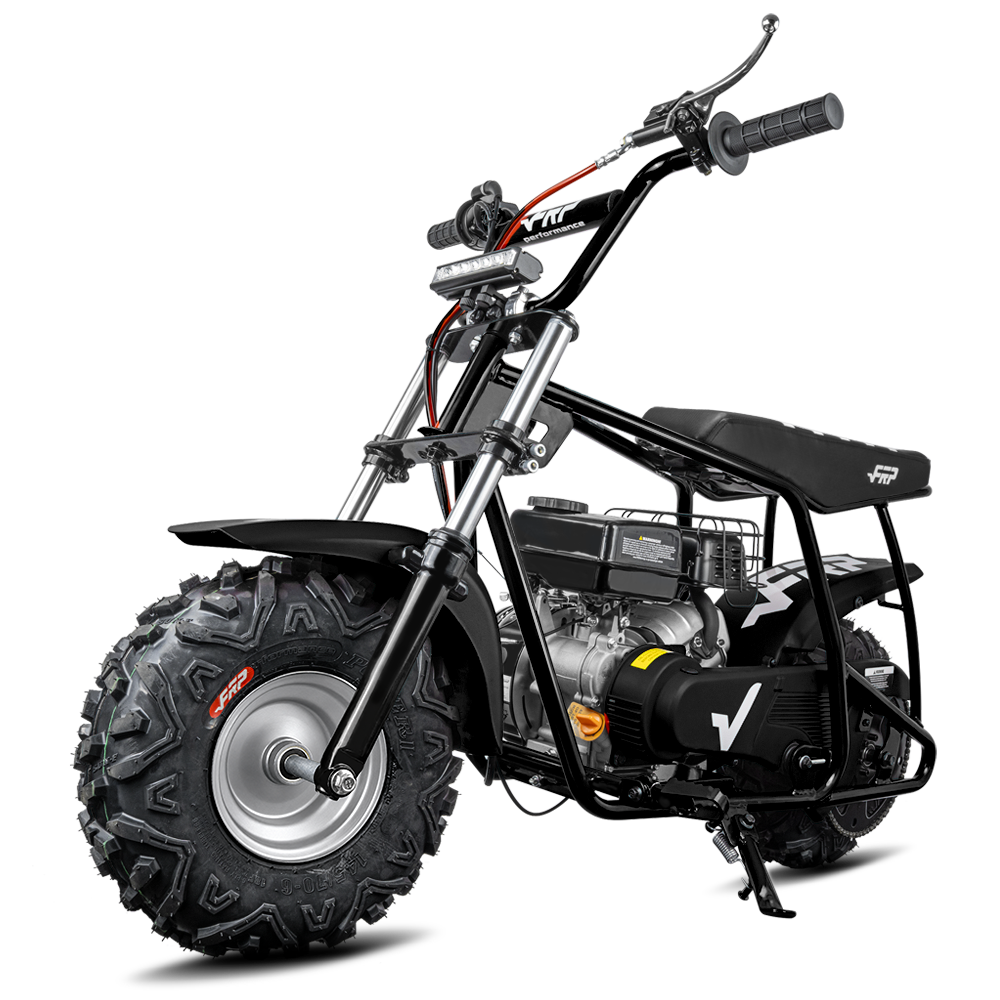
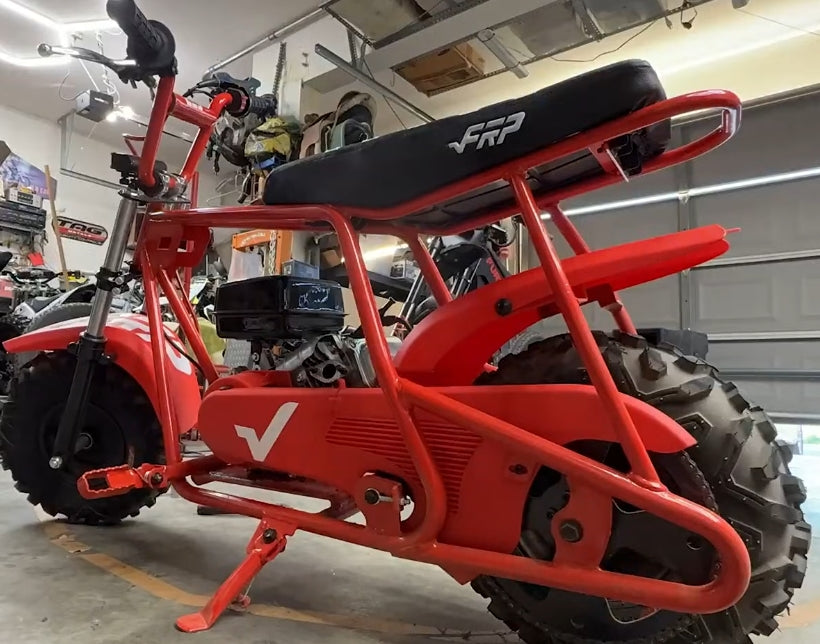
The GMB100 and GMB100P carry the gas mini bike feel. The M3 can carry the electric torque story, especially if the message stays focused on control: ride modes, brake cutoff, wheelie learning, and a drivetrain built for repeated torque.
Why does electric torque feel different from gas?
Electric torque feels different because the motor can respond quickly from low speed. A gas mini bike depends on engine rpm, clutch engagement, gearing, load, and throttle input before it delivers its best pull. That build-up is part of the gas feel. Electric does not need to sound busy before it feels strong.
This is why riders describe electric as surprising. A small electric bike can feel calm and quiet one second, then pull harder than expected the next. On a hill, that immediate torque can feel especially useful because the motor does not need to climb into its powerband the same way a gas engine does.
That does not mean electric is always faster. Top speed, battery output, controller limits, rider weight, tires, gearing, and terrain all matter. But from a fun standpoint, electric often wins the first five seconds of the ride.
Why do some riders still prefer gas feel?
Gas has a personality electric cannot copy. The engine sound tells the rider what is happening. The throttle feels connected to rpm. Refueling takes seconds. The bike has the familiar rhythm of a small powersports machine: start it, warm it, listen to it, ride it, maintain it.
That is why a gas mini bike can feel more like a motorcycle even when it is not the quickest option on paper. The GMB100 path works for riders who want that traditional mini bike identity at a practical entry point. The GMB100P path works for riders who want to stay gas but want a more upgraded platform feel.
For FRP Moto, gas should not be presented as old or outdated. It should be presented as the mechanical path: lower entry price, quick refuel, real engine character, and a clear maintenance routine that many riders actually enjoy.
Which type of fun are you buying?
| Fun factor | Gas mini bike feel | Electric mini bike torque |
|---|---|---|
| First launch | Builds through clutch, gearing, and engine response. | Feels immediate and punchy from low speed. |
| Sound | Engine note is part of the ride. | Quiet enough to make torque feel more surprising. |
| Hills | Depends heavily on engine size, gearing, rider weight, and setup. | Instant pull can feel strong on short climbs. |
| Wheelies | Mechanical throttle and gearing setup matter a lot. | Torque arrives fast, so control modes matter more. |
| Long sessions | Refuel quickly and continue riding. | Battery and charge time shape the day. |
| Ownership feel | Small-engine maintenance and parts culture. | Battery, controller, brakes, chain, and software habits. |
This table is the article's conversion logic. It does not force an answer. It helps the reader self-select. If they smile at engine sound, gas stays alive. If they smile at instant pull and quiet riding, M3 becomes memorable.
Why does torque matter for wheelies?
Wheelies are where electric torque can become exciting and risky at the same time. A bike that lifts too suddenly can scare a beginner. A bike that feels too weak can bore a confident rider. That is why the M3 story should not be "more torque." It should be "controlled torque."
The planned M3 wheelie direction gives FRP Moto useful language: a learning wheelie setting, a pro setting, adjustable lift angle, a protection limit, and mounting points for a matching wheelie bar. That lets the bike speak to the rider who wants tricks, while still acknowledging that practice needs gear, space, and progression.
For current gas riders, the mini bike wheelie bar guide remains the supporting path. For M3, the angle is that wheelie learning can be part of the platform instead of a pile of fitment guesses.
Where do FRP Moto gas bikes and M3 fit?
Use the rider's favorite feeling to choose the path.
- Choose GMB100 if the rider wants classic gas mini bike fun, a practical entry price, and quick refuel for weekend sessions.
- Choose GMB100P if the rider wants to stay gas but wants more upgraded hardware and a more comfortable gas mini bike path.
- Watch M3 if the rider is excited by quiet torque, software-controlled ride modes, brake cutoff, and wheelie-learning features.
This is the balanced M3 message. Electric torque becomes a hook, not a reason to attack gas. Gas keeps the mechanical soul. Electric gets the instant pull and control story.
Does torque make electric worth the higher price?
Not for every buyer. If budget is the deciding factor, gas still has a strong advantage. A serious electric setup costs more because the battery, controller, motor, charger, and safety systems are a major part of the build. Cheap electric can disappoint because it may have the quietness without the power, or the power without the hardware to support it.
Electric torque is worth paying for when it changes where and how you ride: quieter short sessions, stronger low-speed pull, no cold starts, fewer engine chores, and power modes that let the bike grow with the rider. That is the space M3 should try to own.
The article should be honest here because honesty helps conversion. If someone wants the lowest-cost weekend ride, send them to gas. If someone wants the electric experience badly enough to pay more, make M3 the name they remember.
How can you tell which feel you will like more?
Use a simple self-test before comparing specs. If the best part of a mini bike sounds like starting the engine, hearing it work, learning the maintenance, and refueling quickly between rides, you are probably a gas mini bike rider. That does not mean you are behind the times. It means the mechanical side is part of the fun for you.
If the best part sounds like quiet launches, strong low-speed pull, fewer engine chores, and power that can be shaped through ride modes, you are probably electric-curious. That does not mean gas is wrong. It means the part of the ride you value most is control and convenience, not the engine ritual.
This self-test matters because many buyers argue gas versus electric as if there is one universal answer. There is not. The better answer is to match the machine to the feeling you want every weekend.
Who should not choose electric for torque?
Do not choose electric only because a comment said the torque is insane. Choose it if the rest of the routine fits. If you ride far from a charger, want all-day refuel convenience, or love engine sound, gas may be the better answer.
Also avoid low-information electric listings that talk about power but do not explain braking, battery support, frame design, rider weight, tire use, or parts availability. Torque without support is not long-term value. M3's role is to make electric torque feel more like a supported mini bike platform.
FAQ
Why do electric mini bikes feel so torquey?
Electric motors can deliver strong pull immediately instead of building through engine rpm, clutch engagement, and gearing. That quick low-speed response is why riders often describe electric bikes as surprisingly torquey, especially on starts and hills.
Does electric torque make a mini bike more fun than gas?
It depends on what kind of fun you want. Electric torque feels instant, quiet, and playful. Gas feels more mechanical, louder, and more like a small motorcycle. Neither is automatically better; they create different riding personalities.
Is gas still better for mini bike feel?
Gas is still better if you want engine sound, vibration, quick refuel, and the traditional mini bike experience. Many riders like gas because it feels alive and mechanical, not because it wins every spec comparison.
How does FRP M3 use electric torque differently?
The M3 angle is controlled electric torque: ride modes, wheelie learning settings, brake cutoff, and hardware that supports the pull. The goal is not only more torque, but torque the rider can manage.
What is the best next step?
If you want gas feel, start with the GMB100 or compare the upgraded GMB100P. If the thing that excites you is quiet, instant torque with software control, keep watching the M3 electric mini bike path through the FRP Moto bikes collection.
The best mini bike is not the one with the loudest claim. It is the one whose kind of fun matches the way you actually ride.