
TL;DR:
- A 110cc kids ATV fits most children ages 10–14 with prior riding experience; start with 50cc–70cc for younger kids.
- Weight limit and seat height matter more than engine size — confirm both before buying.
- Remote kill switch and throttle limiter are required features for any child under 14.
- Budget $150–$300 for a complete youth gear set before the first ride.
- Kids ATVs are for private property and designated OHV use only — not street legal in any US state.
Buying a kids ATV involves more decisions than buying any other youth powersport vehicle. The four-wheel configuration gives a false sense of stability — an ATV can still roll, tip, and slide, often without the advance warning a two-wheeled bike gives. Getting the right size, the right safety features, and the right first riding environment matters as much as the bike itself.
This guide covers what actually matters for parents: engine size by age, weight and seat height fit, which safety features to require, and how the FRP Moto Sahara 110cc fits into that picture.
According to the Consumer Product Safety Commission (CPSC), approximately 98,000 ATV-related injuries are treated in U.S. emergency rooms each year, with youth riders under 16 accounting for a disproportionate share. CPSC ATV safety guidelines recommend that children under age 6 not operate any ATV, and that age-appropriate engine displacement limits (70cc for ages 6–11, 90cc for ages 12–15) be strictly followed — the framework that informs every recommendation in this guide.
What size ATV is right for a child's age and weight?
| Age Range | Typical Weight | Recommended Engine Size | Key Safety Feature |
|---|---|---|---|
| Under 6 years | Under 50 lbs | Electric only (not gas) | Parental remote required |
| 6–8 years | 45–65 lbs | 50cc–70cc gas with limiter | Throttle limiter + remote kill |
| 8–10 years | 60–85 lbs | 70cc–90cc | Throttle limiter + supervision |
| 10–12 years | 80–110 lbs | 90cc–110cc | Remote kill + fitting helmet |
| 12–14 years | 100–140 lbs | 110cc–125cc | Full gear + supervised terrain |
| 14+ years | 120+ lbs | 125cc–250cc | Full gear; helmet law applies in most states |
The ATV Industries Association recommends no child under age 6 on any gas-powered ATV. These recommendations exist because a gas ATV requires simultaneous management of throttle, braking, steering, and body position — coordination that develops at different rates in different children. Use the table as a starting point, not as a rule that overrides what you actually observe about the child's readiness.
Why does seat height matter as much as engine size?
A child who cannot get both feet flat on the ground when seated is at a control disadvantage in low-speed tip situations. ATVs tip at low speeds — when turning, stopping on uneven terrain, or climbing too steep a grade. A child whose feet barely touch tippy-toed cannot brace effectively when this happens.
How to measure correctly: have the child sit in riding clothes and boots (not socks) on a surface of the same height as the ATV seat. Both feet should sit flat or nearly flat. If they are on tiptoes, the ATV is too tall. If they can sit flat with knees fully extended at 45°, the ATV may be too short for their leg length — check reach to handlebars as well.
Which safety features should you require on a kids ATV?
Three features are non-negotiable for any ATV for children under 14:
- Remote engine kill switch: A parent-held transmitter that cuts the engine immediately from 50–100 feet away. If a child loses control or enters unsafe terrain, the engine stops before the situation escalates. Verify it works before the first ride and keep it accessible every session.
- Adjustable throttle limiter: Physically restricts how far the throttle can travel, capping top speed regardless of how the child rides. Set it to 30–40% for first sessions. Increase in small increments as the child demonstrates consistent throttle control. Do not remove it until the child is consistently riding with clean, smooth inputs — not just confident inputs.
-
Automatic transmission: Kids ATVs should use fully automatic or semi-automatic transmissions. A manual clutch adds a coordination variable that new riders do not need. Clutch management comes later, on larger bikes, once fundamental riding skills are established.

Nice-to-have but not required: front bumper/brush guard, headlights for low-light awareness, and a wrist strap tether connected to the kill switch as a secondary cutoff.
What gear does a child need before riding a kids ATV?
Gear is not a formality — it is the difference between a tip-over that leaves a bruise and one that results in a trip to the emergency room. The following applies to every ride, every time:
| Gear Item | Minimum Spec | Cost |
|---|---|---|
| Helmet | DOT-certified, fits snugly with no front-to-back wobble | $60–$150 |
| Goggles | Shatterproof lens compatible with the helmet | $20–$50 |
| Gloves | MX or ATV gloves with wrist coverage | $20–$40 |
| Boots | Over-the-ankle; purpose-built ATV or MX boots preferred | $60–$150 |
| Knee/shin guards | Youth MX guards — worn on every ride | $30–$60 |
| Chest/back protector | Youth vest or separate back protector | $40–$80 |
Budget $180–$350 for a complete youth gear set. Replace any helmet after any significant impact — the foam compresses once and does not recover its protective properties. Do not use oversized hand-me-down helmets; fit is the most critical specification.
FRP Moto Youth Powersport Options

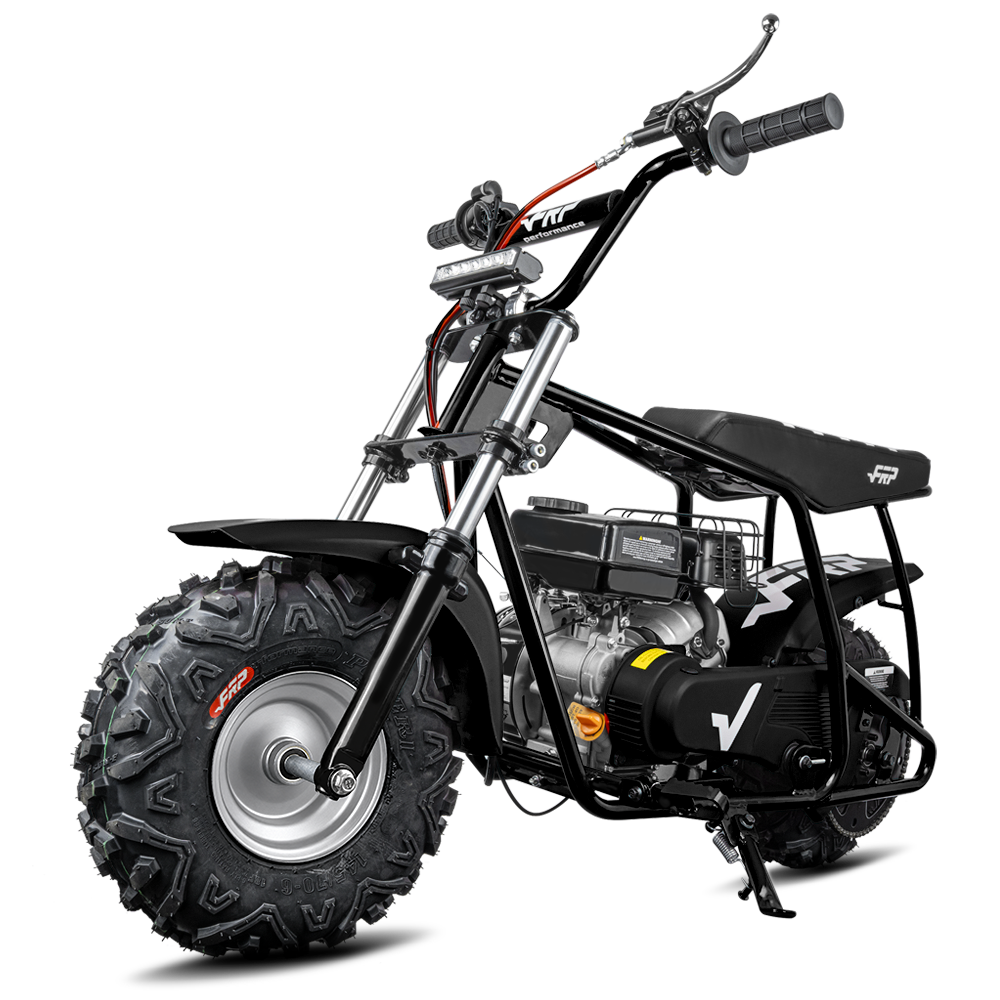
FRP Moto Sahara 110cc
110cc · Automatic · Remote kill · Throttle limiter
Built for ages 10–14. Includes remote engine kill switch and adjustable throttle limiter. Rated for riders 85–150 lbs on flat and moderate terrain.
View Sahara 110cc →
FRP Moto FX40 — 40cc Dirt Bike
40cc · Ages 6–10 · Two wheels
For younger kids or parents who prefer the balance and skill development of two wheels before moving to an ATV. A common first step before a 110cc ATV.
View FX40 →Is a 4-wheeler or dirt bike better for a child's first gas powersport?
Both have legitimate cases. Here is the practical breakdown:
| Factor | Kids ATV (4-Wheeler) | Kids Dirt Bike |
|---|---|---|
| Balance requirement | None — self-standing | Required — child must balance |
| Low-speed manageability | Easier — won't fall over when stopped | Harder — tip-overs common when learning |
| Body skill development | Less — doesn't teach balance | More — builds foundational motor skills |
| Rollover risk | Present on uneven terrain / slopes | Lower — falls to side, not rolls |
| Recommended terrain | Flat to moderate; steep grades increase tip risk | Varied; designed for off-road |
| Typical first age | 6+ with 50cc, 10+ with 110cc | 6+ with 40cc |
There is no universally correct answer. Children who struggle with bicycle balance often find ATVs easier to start with. Children who are already confident on bicycles or balance bikes often progress faster on two-wheeled dirt bikes because the balance skills transfer. If in doubt, start with the machine the child is more comfortable operating — skill builds on confidence.
What are the most common mistakes parents make when buying a kids ATV?
- Buying by age alone, not by weight and seat height fit. A 10-year-old and a 13-year-old can have the same height and weight, or they can differ by 40 lbs and 8 inches. Age is a rough starting guide, not a buying specification.
- Assuming the remote kill switch works before testing it. Test the kill switch before the child's first session. Confirm range and that the child knows where the physical kill switch is on the bike as backup.
- Removing the throttle limiter after the second session. The limiter should stay in place until the child consistently demonstrates clean, controlled technique — smooth throttle transitions, confident stops, no panic reactions. Two sessions does not establish this.
- Choosing terrain beyond the bike's design limits. A 110cc kids ATV on steep hillside terrain is a rollover risk regardless of rider skill. Kids ATVs are designed for flat to moderate terrain. Steep grades require adult supervision and ideally a machine with appropriate power and braking for the grade.
- Buying a used ATV without a pre-ride inspection. A used 110cc ATV needs an oil change, carburetor inspection, tire pressure check, brake check, and remote kill switch test before any child rides it. Budget 1–2 hours and $30–$50 in supplies.
What terrain is appropriate for a kids gas ATV?
Kids 50cc–110cc ATVs are designed for:
- Flat to gently rolling private property (fields, lawns, flat trails)
- Packed dirt or gravel paths
- Open areas with room to stop and turn at 15–25 mph
Not appropriate without adult supervision and experience:
- Steep hillside terrain (grade over 10°)
- Loose sand or mud where the ATV can dig in and pitch
- Dense trees or obstacles where stopping distance matters
- Terrain with drop-offs, ruts, or embedded rocks
The most preventable ATV injuries involve terrain that exceeded the rider's ability to manage — not equipment failure. Flat, open terrain with clear stopping distances is always the right starting environment.
Frequently Asked Questions
What is the best kids ATV for a 10-year-old?
A 110cc ATV with a remote kill switch, adjustable throttle limiter, and automatic transmission is the right spec for most 10-year-olds who weigh 80+ lbs and have some prior riding experience. The FRP Moto Sahara 110cc fits this profile. For a 10-year-old with no prior riding experience, start with the throttle limiter engaged for the first several sessions regardless of which model you choose.
How fast does a kids gas ATV go?
A 50cc kids ATV reaches 15–20 mph without limiter. A 110cc reaches 25–35 mph. With the throttle limiter set to 50%, most 110cc ATVs are restricted to 12–18 mph — the appropriate range for learning. Always use the limiter for new riders and expand speed only as demonstrated skill improves.
What is the weight limit on a 110cc kids ATV?
Most 110cc kids ATVs have weight limits of 130–165 lbs. The FRP Moto Sahara 110cc is rated for riders up to approximately 150 lbs. For heavier riders or adults, a 125cc–250cc adult ATV is the correct choice — not a kids 110cc with an overloaded frame.
Do kids need a license to ride a gas ATV?
On private property, no license is required in any US state. On public OHV trails, most states require a youth safety certificate for minors and parental accompaniment for riders under 16. Check your state's specific DNR or OHV program rules before using any public trail system.
Is a 110cc ATV safe for kids?
A 110cc ATV with correct fit, proper safety features (remote kill, throttle limiter), appropriate terrain, full gear, and adult supervision is as safe as any youth powersport activity. The risk comes from mismatched size, missing safety features, inappropriate terrain, or absent supervision — not from the machine itself when used correctly.
What is the right next step?
Confirm the child's weight and inseam first. If they fall in the 80–150 lb range and are 10 or older with some prior riding experience, the FRP Moto Sahara 110cc is worth a direct look. If they are younger or lighter, start with the FX40 40cc dirt bike and build the foundation before moving to four wheels.
Either way, confirm gear is in hand before the bike arrives. Do not plan to order gear after the bike shows up — the first ride will happen before it arrives.
For kids who outgrow the 40cc dirt bike or 110cc ATV and are approaching adult size (typically 12–14 years old, over 110 lbs), the FRP Moto GMB100 99cc mini bike is the natural next step — rated for riders up to 220 lbs and built specifically for teen and adult use.