
TL;DR: A mini bike usually runs lean after a carb swap or jet change when airflow increases but fuel delivery does not increase enough. Check for a small jet, intake air leak, restricted fuel flow, throttle cable issue, or carb setting mismatch before riding or changing more parts.

Direct Answer
A mini bike usually runs lean after a carb swap or jet change because the engine is getting more air than the current fuel setup can match.
The most common causes are:
- a main jet that is too small for the new setup
- an intake air leak near the carb or manifold
- restricted fuel flow from the tank to the carb
- an open air filter or intake change without proper tuning
- carb settings that do not match the engine, filter, exhaust, or riding conditions
Before changing jets again, check fuel flow, carb seating, intake leaks, throttle cable movement, choke position, idle settings, and spark plug color.
Why This Question Comes Up
This topic came up in the FRP rider community around lean running, stock carb versus upgraded carb, and whether a rider should go up on the jets. One rider mentioned an upgraded carb, another asked whether it was stock or upgraded, and the conversation moved toward jetting and idle behavior.
That is a normal way mini bike troubleshooting starts. The wording may be casual, but the question matters: is the bike actually lean, or is there a basic setup issue that should be checked first?
What Running Lean Means in Plain Language
Running lean means the engine is not getting enough fuel for the amount of air entering the carburetor. A lean engine may feel sharp for a moment, but it can also run hotter, idle strangely, hesitate under throttle, or become harder to control.
For small gas mini bikes, lean symptoms often appear after one part of the airflow or fuel system changes. A different carb, open filter, intake leak, exhaust change, or jet change can all shift the air-fuel balance.
Common Signs Your Mini Bike Might Be Lean
One symptom does not prove a lean condition. Look for a pattern:
- The idle hangs high after you release the throttle.
- The bike bogs when you open the throttle.
- The engine feels hotter than usual.
- It pops or crackles on deceleration.
- It runs better with partial choke than with the choke fully off.
- The spark plug looks very light gray or white after a short test run.
- The idle changes suddenly after a carb or intake adjustment.
Spark plug color is not perfect by itself, but it can be useful when combined with how the bike behaves at idle, low throttle, and higher throttle.
Why Carb Swaps Can Change Jetting
An upgraded carb can move air and fuel differently than the stock carb. If the new carb increases airflow but the jetting does not add enough fuel, the engine can run lean.
That is why riders often talk about going up on the jets after a carb swap. A larger main jet can add fuel at higher throttle, while the pilot jet and mixture settings affect idle and low-speed response. The right setup depends on the carb, intake, exhaust, engine size, elevation, weather, and riding conditions.
Do not treat jetting as a guessing game. Make one change at a time, keep notes, and stop testing if the bike does not idle or respond safely.
Why an Air Leak Can Look Like a Jetting Problem
An intake air leak can make a mini bike act lean even if the jet size is not the main issue. If extra air enters around the carb boot, intake manifold, gasket, or loose connection, the engine can idle high, surge, or hesitate.
This is why carb seating and intake checks should happen before changing jets. A loose carb or cracked intake seal can make riders chase tuning when the real fix is basic fitment.
Why Fuel Flow Matters
Restricted fuel flow can also create lean-like symptoms. A kinked fuel line, clogged filter, dirty tank outlet, or partially blocked carb passage can reduce fuel delivery.
If the bike runs better with partial choke, hesitates under throttle, or changes behavior after a few seconds of riding, fuel flow should be checked before assuming the carb needs a bigger jet.
Do These Checks Before Changing Jets
Before changing jets, check the basics:
- Make sure the carb is seated tightly.
- Look for air leaks around the intake.
- Check fuel flow from the tank to the carb.
- Make sure the throttle cable is not holding the slide open.
- Confirm the choke is fully off once the engine is warm.
- Return idle and mixture screws to a known baseline.
- Inspect the spark plug after a short, controlled test.
- Change only one setting or part at a time.
A fuel restriction, air leak, or sticky throttle cable can make riders chase jetting when the real problem is installation or setup.
FRP Model and Parts Notes
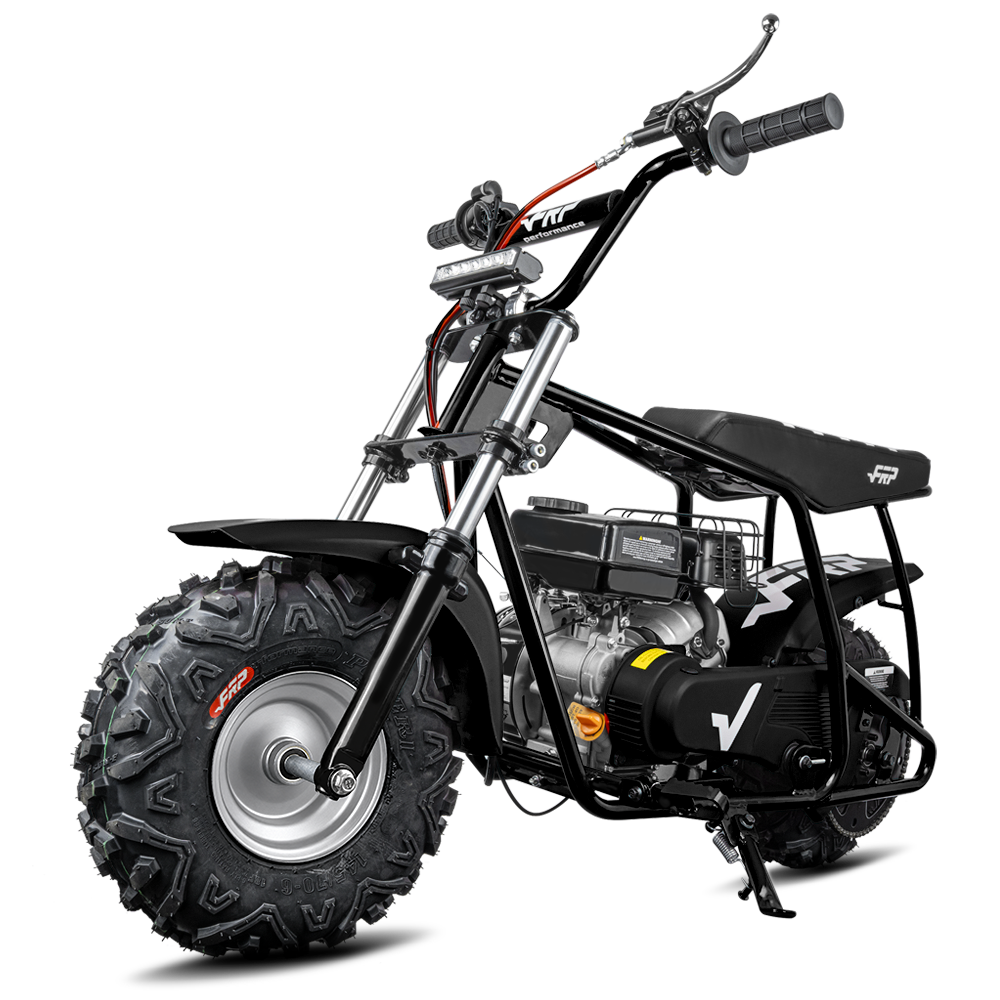
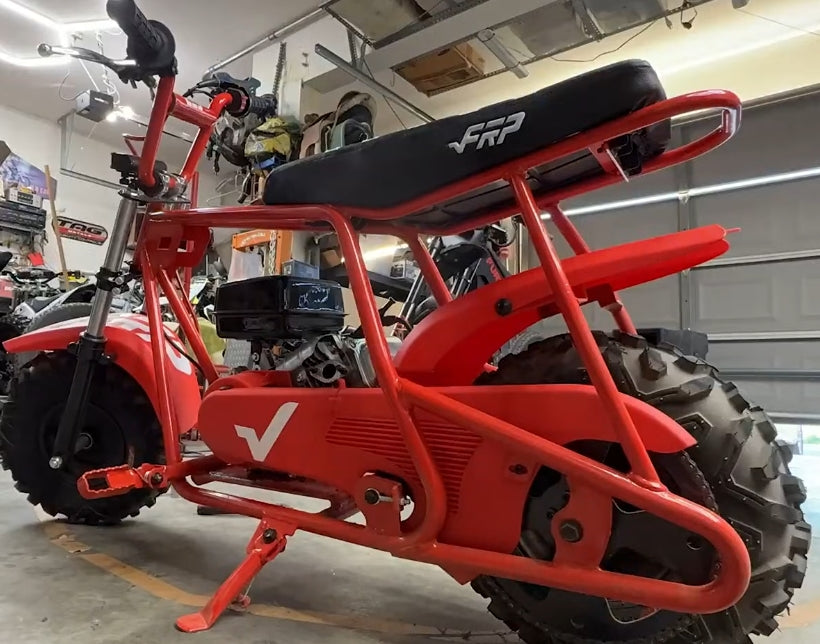
If you are working on an FRP mini bike, confirm the exact model and setup before guessing from a general tuning thread. A stock bike, modified intake, upgraded carb, or custom GMB100-style build can each point to a different check.
For replacement parts or model-specific components, start with the FRP replacement parts collection instead of relying only on universal carb advice. If the question is part of a larger custom build, the FRP GMB100 mini bike frame page is a better place to review frame and engine-range context.
If the issue continues after basic checks, contact FRP support with the bike model, carb setup, photos, and a short description of the symptoms.
When to Stop Testing
Stop riding and inspect the bike if the throttle sticks, the idle will not settle, the engine gets unusually hot, the bike surges forward unpredictably, or the rider cannot test in a controlled area.
Mini bikes should be tested only on private property or a controlled off-road area with proper protective gear. Do not test tuning changes on public roads. The U.S. Consumer Product Safety Commission advises OHV and ATV riders to stay off paved roads, wear a helmet and protective gear, use age-appropriate vehicles, and get hands-on training.
A Better Way to Ask for Help
When asking a community for carb tuning help, include:
- bike model
- engine size
- stock carb or upgraded carb
- carb model if known
- jet sizes if known
- air filter and exhaust setup
- spark plug photo or description
- what happens at idle, low throttle, and full throttle
- whether the bike changed after a new part was installed
That gives other riders and support teams enough context to answer without guessing. The FRP Moto Answers hub keeps these official community answers organized by topic.
FAQ
Does a lean mini bike always need a bigger jet?
No. Lean symptoms can come from air leaks, poor fuel flow, carb installation issues, or throttle cable problems. Check those first before changing jets.
Can an upgraded carb make a mini bike run lean?
Yes. An upgraded carb can change airflow and fuel delivery. If the jetting does not match the new setup, the bike may run lean.
Why does my mini bike only run with the choke on?
If a mini bike runs better with partial choke, it may be getting too much air or not enough fuel. Check for air leaks, fuel restrictions, and jet size before riding again.
Is a hanging idle a lean symptom?
Yes. A high or hanging idle can be a lean symptom, especially if it appears after a carb swap, air filter change, or intake leak.
Should beginners tune a mini bike carb themselves?
Beginners can do basic checks, but jet changes should be slow and careful. Change one thing at a time, test only in a controlled area, and contact FRP support if the bike does not respond safely.