
FRP Moto Community Answer
TL;DR: A mini bike exhaust pipe can crack when vibration, pipe weight, heat, weak mounting points, or a lean-running engine put too much stress on the metal. If the pipe is unsupported, especially on a custom or center-exit setup, an exhaust brace or bracket can help reduce movement and prevent repeat cracking.

Direct Answer
A mini bike exhaust pipe usually cracks because it is moving too much while the engine is running.
The most common causes are vibration, a heavy pipe with not enough support, weak welds, repeated heat cycles, a pipe that is mounted under tension, or an engine running hot from a lean fuel mixture. A brace does not fix every exhaust problem, but it can reduce shaking and help the pipe last longer when the exhaust design needs extra support.
Before riding with a cracked pipe, inspect the weld area, mounting points, nearby frame clearance, and carb tuning. A cracked exhaust can get worse quickly and may expose the rider to hot metal, sharp edges, noise, or loose parts.
Why This Question Comes Up
This topic came up in the FRP rider community after riders discussed cracked pipes, center-exit exhaust setups, welding repairs, exhaust brackets, and whether lean running can add extra heat. The community wording was casual, but the real question is useful: why does a mini bike exhaust crack, and what should a rider check before welding it back on?
What an Exhaust Brace Does in Plain Language
An exhaust brace is a support point that helps keep the pipe from shaking too much. The engine vibrates every time it runs. If the pipe is long, heavy, or only held at one end, that movement can flex the metal until it cracks.
A good brace spreads the load across another mounting point. It should support the pipe without forcing it into a bad angle. A brace that pulls the pipe out of alignment can create new stress and cause another crack later.
Common Signs the Pipe Needs More Support
- The exhaust pipe shakes visibly at idle.
- The same weld area cracks again after repair.
- The pipe is long, center-exit, or heavier than the stock setup.
- The exhaust feels loose even when the flange bolts are tight.
- You hear a new ticking or rattling sound near the exhaust.
- The pipe sits close to the frame, bodywork, tire, or rider area.
Why Lean Running Can Make Exhaust Problems Worse
Running lean means the engine is getting too much air for the amount of fuel being delivered. A lean engine can run hotter than normal, and extra heat can add stress to exhaust parts over time.
Lean running is usually not the only reason a pipe cracks. Vibration and poor support are often bigger factors. But if the engine is also running lean, the extra heat can make an already stressed exhaust setup less forgiving.
If the bike also hesitates, pops, surges, runs very hot, or only feels right with choke, check carb jetting and fuel delivery before assuming the exhaust crack is only a welding issue.
What to Check Before Welding the Pipe Back On
- Mounting alignment: the pipe should sit naturally without being forced into place.
- Flange bolts: loose bolts can let the pipe move and crack nearby metal.
- Pipe weight: heavier custom pipes may need extra support.
- Brace location: the brace should reduce movement without creating a hard stress point.
- Frame clearance: the pipe should not hit the frame, tire, chain, or rider.
- Carb tune: signs of lean running should be checked before more riding.
FRP Model and Parts Notes
FRP riders often customize mini bikes with different exhaust layouts, carburetors, frames, and engines. Any time the exhaust is changed from the original setup, the mounting points and carb tune should be checked together.
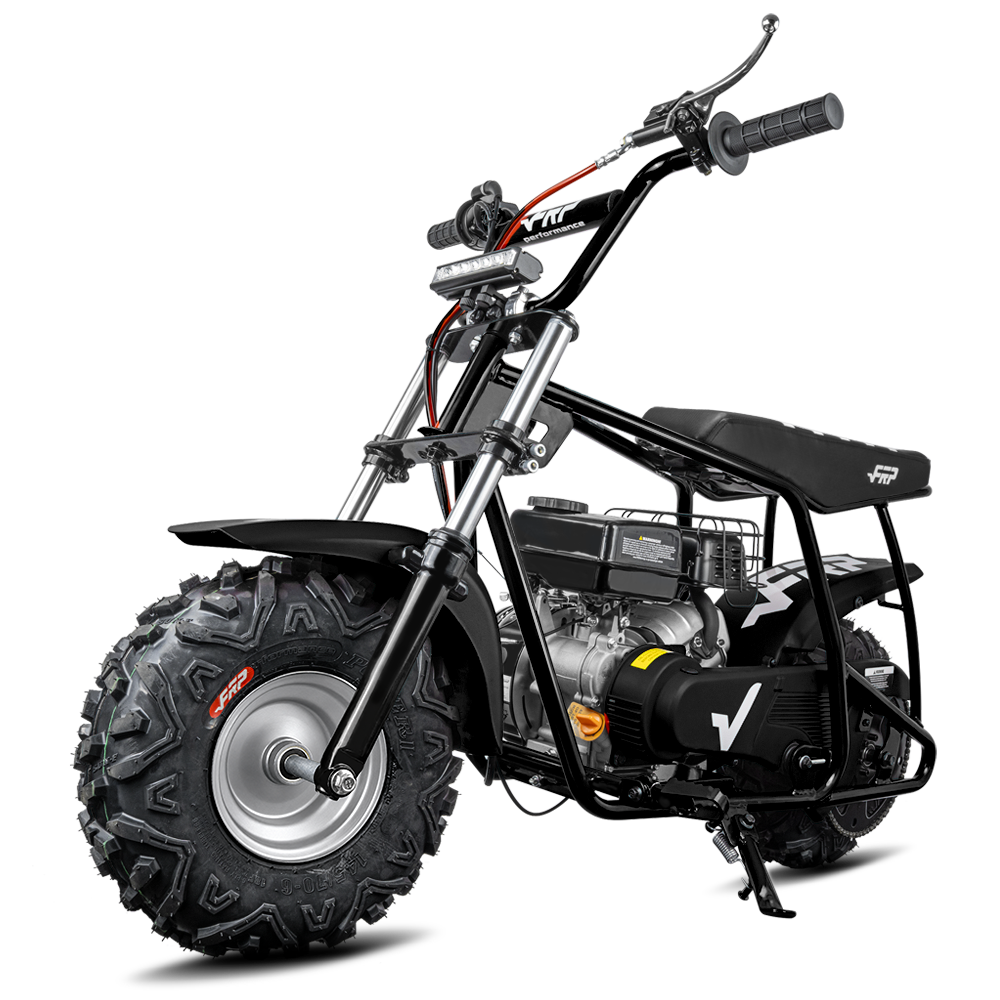
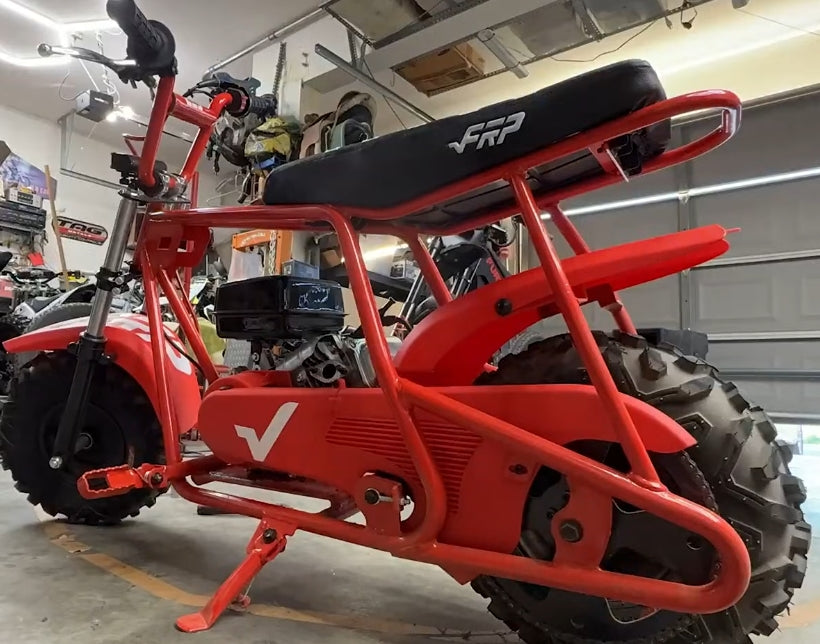
If you are building around an FRP GMB100 frame, GMB100 series bike, or another FRP mini bike, make sure the exhaust path, bracket position, and heat clearance match your specific build. Parts fitment can change when riders swap engines, carburetors, air filters, or exhaust pipes.
When to Stop Riding
Stop riding if the exhaust is cracked through, hanging loose, touching another part of the bike, blowing hot exhaust toward the rider, or getting worse each ride. A temporary tie or quick weld may not be enough if the pipe still has no real support.
A Better Way to Ask for Help
When asking FRP support or the rider community about a cracked exhaust, include:
- your mini bike model
- engine size
- whether the exhaust is stock or aftermarket
- where the crack is located
- whether the pipe has a brace
- photos of the weld, mount, and full exhaust path
- whether the bike shows lean or rich running symptoms
FAQ
Does every mini bike exhaust need a brace?
No. Some stock-style exhaust setups are supported well enough from the factory. A brace becomes more important when the pipe is long, heavy, custom-mounted, center-exit, or repeatedly cracking.
Can I ride with a cracked exhaust pipe?
It is better not to ride until the pipe is inspected and repaired. A cracked exhaust can loosen, get hotter in the wrong area, damage nearby parts, or create a safety risk.
Can running lean crack an exhaust pipe by itself?
Lean running usually is not the only cause. It can make the engine and exhaust run hotter, which may add stress, but vibration, weak support, and mounting alignment are usually the first things to check.
Should I weld the pipe or replace it?
That depends on the crack location, pipe condition, and whether the original cause has been fixed. If the pipe keeps cracking in the same place, welding alone may not solve the problem.
Related FRP Resources