
TL; DR
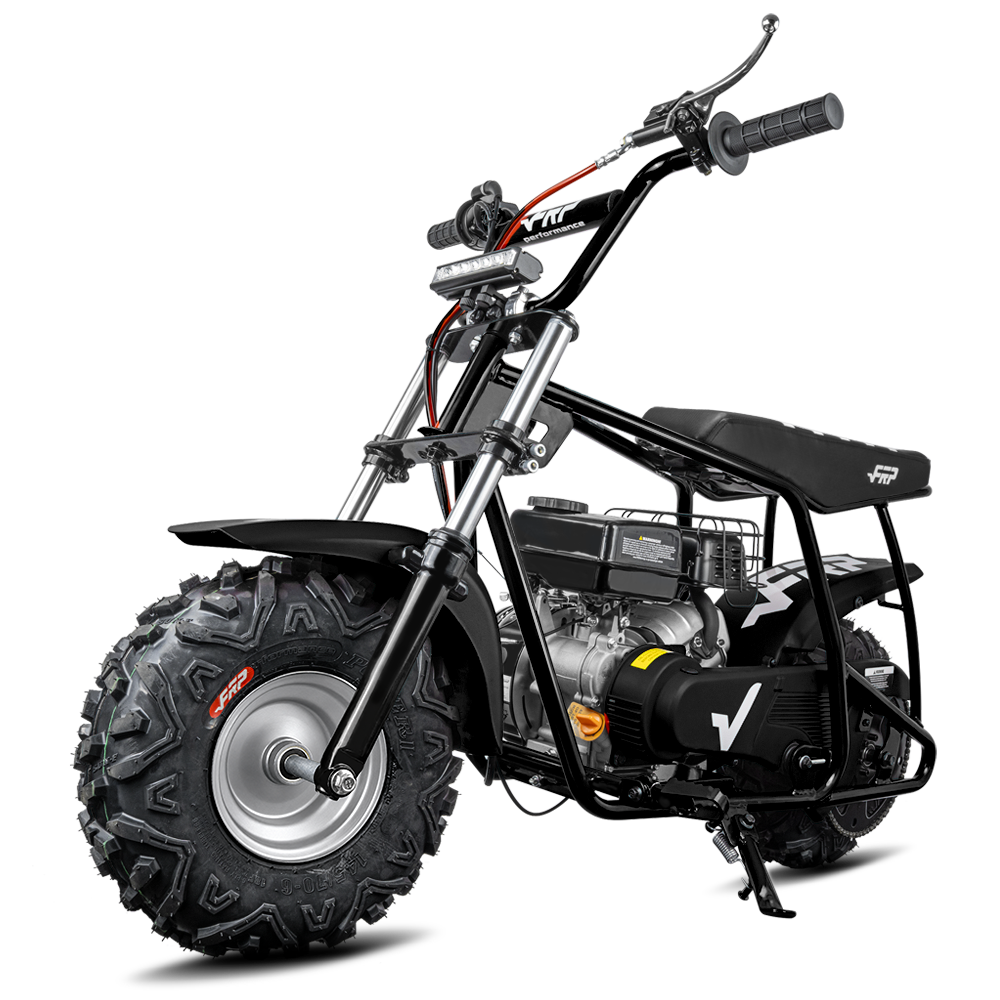
Shop the lineup: Browse FRP’s gas mini bikes for adults — the 99cc GMB100 carries riders up to 220 lb, plus kid-sized 40cc options for younger riders.
- The GMB100 uses 10W-40 4-stroke motor oil — do not use 2-stroke oil
- Oil capacity is approximately 350ml — always check the dipstick, don't go by volume alone
- First oil change: after 2–3 hours of break-in riding — this is the most important one
- After break-in: change every 20–25 hours of riding, or at a minimum once per season
- The full maintenance routine — air filter, spark plug, chain — takes under 30 minutes with basic tools
You bought the GMB100 to ride it, not to wrench on it all weekend. The good news: maintenance on a 4-stroke OHV engine is straightforward, and a proper routine takes under 30 minutes. This guide covers everything — what oil to use, when to change it, and the full schedule that keeps the engine running clean for the long term.
Quick Clarification: 4-Stroke Oil Is Not 2-Stroke Oil Mix
FRP GMB100-series mini bikes use 4-stroke engine oil in a separate oil reservoir. Do not mix 2-stroke oil into the gasoline for these 4-stroke models.
If you are working on a separate 2-stroke engine that requires premix, use the dedicated 2-stroke oil mix calculator and ratio chart. If you own an FRP GMB100, MB40, Sahara 40, or Ogemaw 40, follow the 4-stroke oil and maintenance guidance for that model instead.
What Oil Does the GMB100 Take?
The GMB100 runs a 99cc 4-stroke OHV engine. It takes 10W-40 4-stroke motor oil — the same type used in most small engines, lawn mowers, and generators. Easy to find at any hardware store or auto parts shop.
A few things to get right:
Do not use 2-stroke oil. The GMB100 is a 4-stroke engine. 2-stroke oil is designed to be mixed with fuel and burned in the combustion cycle. Using it in a 4-stroke engine will cause serious damage. The packaging will say "4-stroke" or "4-cycle" — that's what you want.
Do not overfill. Oil capacity is approximately 350ml, but the number that matters is the dipstick reading, not the volume you pour in. Add oil gradually, check the dipstick each time, and stop at the full line. Overfilling causes foaming and can damage seals.
No oil mixing needed. This is one of the practical advantages of the GMB100's 4-stroke engine — you fill the gas tank with regular gasoline, and the oil is in a separate reservoir. Nothing to mix, nothing to measure before every ride.
How Often to Change the Oil
Break-in oil change: after 2–3 hours of riding
This is the most important oil change you'll do, and most new owners skip it. When a new engine runs for the first time, metal components are still wearing in — tiny particles end up in the oil. If you leave that oil in, those particles circulate through the engine and cause premature wear. Drain it after the first 2–3 hours, fill with fresh 10W-40, and you're set up properly for the long term.
Regular changes: every 20–25 hours of riding
After a break-in, change the oil every 20–25 hours of riding time. If you're a casual rider who goes out a few times a month, track your hours loosely — two full riding days is roughly the threshold.
Minimum: once per season
If you ride infrequently, change the oil at least once per season regardless of hours. Oil degrades over time even when the engine isn't running. Old oil loses its viscosity and stops protecting the engine the way fresh oil does. A season-end oil change before storage is good practice.
Signs you need an oil change sooner:
- Oil on the dipstick looks black or gritty rather than amber
- Engine runs rougher than usual at idle
- You can smell burning oil while riding
- It's been more than a full season since the last change
Step-by-Step Oil Change
What you need:
- 10W-40 4-stroke motor oil (350ml is enough)
- A small drain pan or container
- 10mm wrench or socket
- Clean rag
- Funnel (optional but helpful)
Steps:
1. Warm the engine first. Run the bike for 3–5 minutes, then shut it off and let it cool for 5 minutes. Warm oil drains faster and more completely than cold oil. Don't drain immediately after riding — hot oil can burn you.
2. Place a drain pan under the engine. The drain bolt is located on the underside of the engine. Position your container before loosening anything.
3. Remove the drain bolt. Use a 10mm wrench. Turn counterclockwise. Oil will begin draining immediately — let it drain completely. This usually takes 2–3 minutes.
4. While draining, remove the oil fill cap. It's on the side of the engine. Removing it speeds up drainage by allowing air in.
5. Replace the drain bolt. Once oil has fully drained, reinstall the drain bolt and tighten firmly — snug but not overtightened. Overtightening strips the threads.
6. Add fresh oil. Pour 10W-40 slowly through the fill opening. Add approximately 300ml, then check the dipstick. The oil level should sit between the MIN and MAX lines. Add more in small amounts if needed.
7. Replace the fill cap. Tighten by hand until snug.
8. Start the engine and check for leaks. Run for 1–2 minutes, then shut off and check around the drain bolt and fill cap for any seeping oil. If you see a drip, tighten slightly.
9. Check the dipstick one more time. Oil level may drop slightly after the engine runs. Top up if needed.
Total time: about 15 minutes once you've done it once.
Full Maintenance Schedule
The oil change is the most important item, but it's not the only one. Here's the complete schedule for keeping the GMB100 in good shape.
Before every ride (2 minutes):
- Check oil level on dipstick
- Check tire pressure — GMB100 tires run best around 15–20 PSI
- Check chain tension — the chain should have about 1–1.5cm of slack at the midpoint; too loose causes slipping, too tight causes wear
- Visual check: nothing loose, nothing dragging
Every 10 hours or monthly:
- Clean the air filter — remove the filter cover, take out the foam element, wash with warm soapy water, let dry completely before reinstalling. A clogged air filter is one of the most common causes of reduced power and rough running.
- Check spark plug condition — remove with a spark plug socket, look for carbon buildup. Light grey or tan coloring is healthy. Black or fouled means the engine is running rich or the plug needs replacing.
- Inspect chain for wear and lubricate — a dry chain wears faster and affects power delivery. A light application of chain lube keeps it running smoothly.
Every 20–25 hours or each season:
- Change the oil (see above)
- Replace spark plug — even if it looks okay, a fresh plug every season costs under $5 and ensures reliable starting
- Inspect brake function — squeeze the brake lever firmly and check that the bike stops responsively. If stopping distance feels longer than usual, inspect the brake pad and cable
- Check all bolts — handlebars, axle nuts, engine mounting bolts. Vibration loosens things over time. A quick pass with a wrench takes 5 minutes and prevents bigger problems.
Before storage (end of season):
- Change the oil — don't store with old oil in the engine
- Run the fuel tank and carburetor dry — stale fuel left in the carb gums up the jets and causes starting problems in spring. Run the engine until it stalls from fuel starvation, or drain the tank and carb manually.
- Store in a dry location, covered — moisture causes rust on the chain, exhaust, and any bare metal
Parts Worth Keeping on Hand
You don't need a full parts inventory, but a few items are worth having before you need them — not after.
Spark plug — A spare NGK or equivalent 4-stroke plug for the 99cc engine. When the bike won't start, and you've checked fuel and choke, a fouled plug is usually the culprit. Takes 2 minutes to swap. A spare means you're back riding instead of waiting for shipping.
Air filter element — The foam filter element is a wear item. Having a spare means you can swap a clean one in immediately rather than waiting for the washed one to dry.
Drive chain — The 420-size chain is a standard spec. Chains stretch over time and eventually need replacement. A spare chain and the correct master link clip mean a trailside repair is possible instead of a trip home.
Brake pads — If you ride regularly, check the pad thickness at each season. Worn pads are a safety item, not just a performance item.
All GMB100 replacement parts — including chains, filters, spark plugs, brake components, and more — are available directly from FRP: → Shop GMB100 Replacement Parts
FRP stocks 300+ parts specifically for the GMB100 lineup, which means you're not hunting across third-party suppliers for a specific spec. If you're unsure which part fits your model, the support team can confirm: csr@frpmoto.com or 833-970-3777.
Frequently Asked Questions
What oil does the FRP GMB100 take?
10W-40 4-stroke motor oil. Do not use 2-stroke oil. Oil capacity is approximately 350ml — use the dipstick to confirm the correct level rather than going strictly by volume.
How often should I change the oil on my mini bike?
After the first 2–3 hours of break-in riding, then every 20–25 hours of riding thereafter. At a minimum, once per season, regardless of hours ridden.
Do I need to mix oil with gas on the GMB100?
No. The GMB100 is a 4-stroke engine — gasoline goes in the fuel tank, oil goes in the separate oil reservoir. There is no mixing required.
What happens if I skip the break-in oil change?
Metal wear particles from the new engine stay in the oil and circulate through the engine. Over time, this causes premature wear on bearings and internal surfaces. The break-in oil change is the most important one — do it after the first 2–3 hours.
My bike is running rough — could it be the oil?
Possibly. Check the oil level first — low oil causes engine stress. If the level is fine, check the color on the dipstick: black or gritty oil should be changed immediately. Also, check the air filter and spark plug, which are common culprits for rough running.
Where can I get replacement parts for the GMB100?
Directly from FRP at frpmoto.com/collections/frp-parts-for-gmb100-mini-bike. Over 300 parts in stock specifically for the GMB100 lineup.
Back to basics: How Fast Is the GMB100? →
Compare all three GMB100 models: FRP Best Mini Bike for Adults →
Shop GMB100 Replacement Parts → · 300+ parts in stock · Ships in 3-5 days