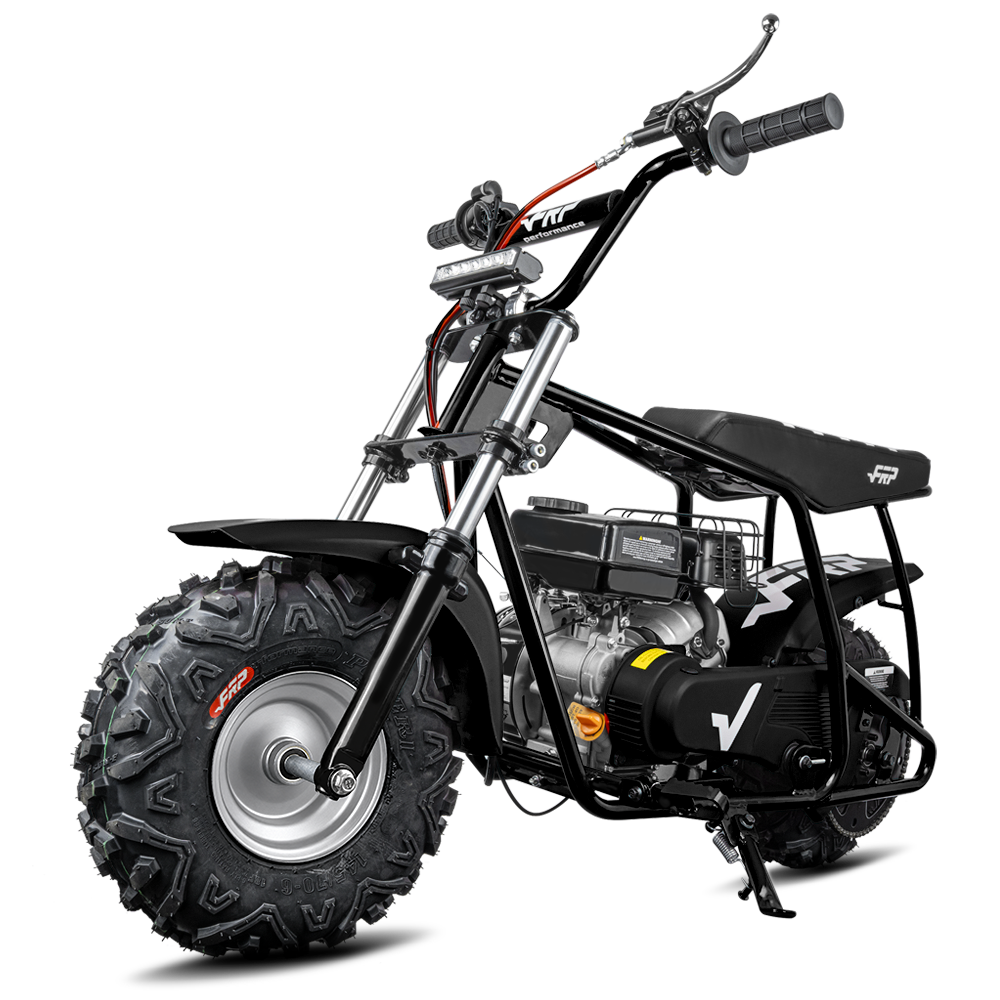

A successful mini bike family trail day starts with three decisions: matching the right bike to each rider's size and age, equipping everyone with certified safety gear, and spending the first hour in a flat open area before hitting the trails. Get these three things right, and you have a safe, memorable day on two wheels — whether your youngest is 5 years old on a 40cc beginner bike or the adults are running a 99cc FRP GMB100 with a 220 lb weight capacity.
In 2026, more families than ever are trading screen time for seat time. Navigating a gas-powered mini bike translates into more than just trail fun — it's a hands-on masterclass in coordination and engine maintenance that creates a foundational bond between parent and child. This guide covers everything you need: fleet selection, protective gear, skill drills, trail locations, and a DIY build option, so your first family mini moto event runs without a hitch.
Table of Contents
- How Do You Choose the Right Mini Bike for Every Family Member?
- What Safety Gear Does Every Rider Need Before Hitting the Trail?
- How Should You Train New Riders Before the Trail?
- What Are the Best Places to Ride on a Family Mini Bike Trail Day?
- How Can DIY Mini Bike Builds Make the Day More Meaningful?
- What Should You Pack for a Full Day on the Trail?
- Why Is the FRP GMB100 the Best Choice for a Family Trail Day?
- Frequently Asked Questions
- A Legacy Built on Two Wheels
How Do You Choose the Right Mini Bike for Every Family Member?
The single biggest mistake on a family trail day is putting a rider on the wrong machine. Matching bike size to rider age and weight prevents both injury and frustration.
Ages 5–8 — 40cc Beginner Bikes
A 40cc mini bike with a seat height under 24 inches gives young riders enough power to move confidently without the risk of overpowering them. At 40cc, the bike responds to the rider — not the other way around. At this stage, control matters more than speed.
Ages 9–14 — The FRP GMB100
The GMB100's 99cc 4-stroke engine produces enough torque for trail riding without demanding expert throttle control. Its 220 lb weight capacity means it works for heavier teens and lighter adults, so one bike covers multiple riders. Because it runs on straight gasoline — no oil mixing — parents spend less time on fuel prep and more time riding.
Adults — Full-Capacity Mini Bikes or 212cc Roller Frames
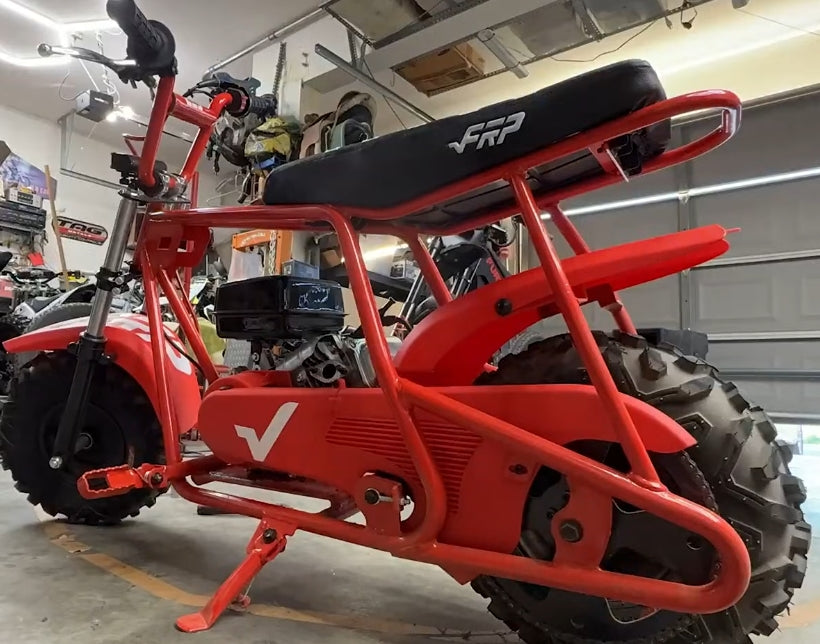
A mini bike built for adults features a reinforced frame that handles uneven terrain without flex. DIY enthusiasts can start with a 212cc roller frame — more torque and a custom build the whole family can work on together before the ride.
What Safety Gear Does Every Rider Need Before Hitting the Trail?
Every rider — regardless of age or experience — needs five pieces of gear before any mini bike family trail day begins. No exceptions.
Helmet
DOT or ECE-certified full-face or motocross helmet. A snug fit means no more than two finger-widths of space at the crown. A loose helmet moves on impact and reduces protection by up to 40%.
Goggles
Anti-fog off-road goggles seal out dust and debris that standard glasses miss. On a trail with low branches or loose gravel, goggles are the difference between a fun lap and an emergency stop.
Gloves and Boots
Riding gloves improve handlebar grip and protect palms in a fall — the first thing most riders put out instinctively. Ankle-covering boots matter especially for beginners, who are still building the muscle memory to keep their feet on the pegs on rough terrain.
Chest and Back Protector
Essential for riders on 40cc and kids dirt bikes navigating uneven ground. An armored jersey or roost deflector absorbs impact from rocks and roots that trail riding inevitably produces.
Functional Rear Disc Brake
Before anyone rides, confirm the rear disc brake engages cleanly. On downhill sections with mixed-weight riders, hydraulic disc brakes reduce stopping distance by up to 3x compared to standard cable brakes — a measurable safety margin that matters when a 5-year-old is ahead of you on the trail.
How Should You Train New Riders Before the Trail?
Spend the first hour of your mini bike family trail day in a flat, open parking lot or field — not the trail. New riders who skip this phase are statistically more likely to panic on uneven terrain.
Throttle Control
Teach "rolling" the throttle open rather than snapping it. Smooth, gradual acceleration prevents sudden wheelies that catch beginners off guard. Practice until the motion feels natural at low speed.
Braking Drills
Mark two cones 30 feet apart and practice emergency stops between them. Riders need to know exactly how much lever pressure stops the bike without locking the wheel — this reflex only comes from repetition, not instruction.
The Kill Switch
Every rider tests the kill switch before their first lap. This is non-negotiable. In a panic situation, riders revert to instinct — so the shut-off reflex must be instinctive before they encounter a real obstacle.
What Are the Best Places to Ride on a Family Mini Bike Trail Day?
Finding a legal, safe riding area is the most common challenge for first-time families. Start with the lowest-barrier option and work up as confidence grows.
Private Property
The easiest and safest starting point. A large backyard, farm field, or rural property gives you complete control over terrain and traffic. Always secure written permission from the landowner before riding.
OHV Parks
Publicly managed OHV parks increasingly offer beginner loops sized specifically for kids' mini dirt bikes — separate from adult high-speed traffic. Use your state's OHV recreation website or the AMA Trail Finder to locate parks near you. Always verify minimum engine size requirements before you go, as some parks restrict bikes under 50cc.
Local Riding Clubs and Meetups
Facebook Groups, Reddit communities like r/minibikes, and local MX tracks connect families with private land access and insider trail knowledge. Club members routinely share beginner-friendly routes that don't appear on any map. The BlueRibbon Coalition also maintains a database of legal OHV access areas by state.
How Can DIY Mini Bike Builds Make the Day More Meaningful?
Building or maintaining a bike together before the ride adds a layer of investment that changes how kids experience the trail day. A child who helped torque the chain and check the oil on a mini bike frame kit rides with ownership — not just as a passenger.
A mini bike roller frame project teaches three practical skills: chain tension adjustment, torque specification reading, and engine lubrication intervals. These are transferable mechanical skills that stay with a child long after the ride. For families looking for a hands-on starting point, a mini bike frame kit is a viable weekend project that the whole family can contribute to together.
What Should You Pack for a Full Day on the Trail?
A well-packed kit prevents the small problems that cut trail days short. Bring these five essentials:
- Water — at least 2 liters per rider for a half-day out; riding is a real physical workout
- Basic tools — a socket set and two hex keys weigh under 2 lbs and can re-torque a loose bolt or reset throttle response on the trail
- Snacks — young riders burn through energy faster than they expect; hunger ends rides early
- First aid kit — bandages, antiseptic wipes, and a cold pack handle the minor tumbles that even careful riders take on rough terrain
- Spare spark plug — a fouled plug is the most common reason a gas mini bike won't restart mid-ride; a $4 spare prevents a premature pack-up
Why Is the FRP GMB100 the Best Choice for a Family Trail Day?
The FRP GMB100 covers two use cases in one machine: a learning platform for older kids and a capable adult ride in the same afternoon.
Its 99cc 4-stroke engine runs on standard gasoline — no oil mixing, no pre-ride fuel prep complications. The 220 lb weight capacity means a 130 lb teenager and a 200 lb adult can both ride the same bike on the same day. The hydraulic disc brakes provide stopping confidence that parents of young riders specifically notice on downhill sections. If you want one bike that the whole family shares without compromise, the FRP GMB100 is that bike.
Frequently Asked Questions
What is the best mini bike for a family trail day with kids ages 5–12?
The best setup is a 40cc mini bike for ages 5–8 and the FRP GMB100 (99cc, 220 lb capacity) for ages 9 and up. The GMB100 handles older kids and lighter adults, so one bike covers most of the family.
How long does it take to prepare a new rider for a trail day?
Spend at least one hour in a flat, open area before any trail riding. Cover throttle control, braking drills with a marked stopping distance, and kill switch use. Riders who skip this phase are unprepared for the instinctive responses that rough terrain demands.
Do I need a DOT helmet for mini bike riding on private property?
Yes. A DOT or ECE-certified helmet is the minimum for any rider on any terrain. Impact speed on a 40cc mini bike is sufficient to cause serious head injury — the terrain and setting do not change the physics of a fall.
What is the weight limit on the FRP GMB100?
The FRP GMB100 is rated to 220 lbs. For heavier adult riders, the GMB100P or a 212cc roller frame build offers additional structural capacity for a more comfortable ride.
Can beginners ride at OHV parks on their first trail day?
Yes, but verify the park has a designated beginner loop before you go. Most state-managed OHV parks separate beginner areas from adult high-speed sections. Use the AMA Trail Finder to check park-specific rules and minimum engine size requirements in advance.
How do I keep a gas mini bike running reliably on a full trail day?
Check chain tension, tire pressure, and oil level before the ride. Pack a spare spark plug — fouled plugs are the most common cause of mid-ride shutdowns on gas mini bikes. A basic socket set handles 90% of trailside fixes in under five minutes.
A Legacy Built on Two Wheels
The best mini bike family trail day is not about speed or distance — it is about watching a 7-year-old nail their first controlled stop, or a teenager figure out a hill climb they have been circling for an hour. Those moments build confidence and mechanical intuition that no classroom replicates.
Ready to start? Browse the full FRP mini bike lineup — including the GMB100 and 212cc roller frame options — at frpmoto.com and get the whole family on the trail this weekend.
What to Read Next
- → Where to Ride a Mini Bike — private land, MX tracks, and public areas where a mini bike is legal and welcome.
- → How to Ride a Mini Bike: Step-by-Step Beginners Guide — controls, safety, and first-ride checklist for adult beginners.
- → Best Mini Bike for Adults 2026: GMB100 Series Buyer Guide — all three GMB100 models with terrain fit, specs, and upgrade path.
- → FRP Moto Answers Hub — quick answers: price, oil, assembly, shipping, warranty.