

TL;DR
- Gas mini bikes are not automatically safe for every child.
- Safety depends on fit, gear, supervision, location, and practice.
- MB40 fits the smaller supervised first-ride safety lane.
- GMB100 is not a small-child starter bike.
- No gear, no private riding area, or no supervision means no ride.
Parents usually ask whether gas mini bikes are safe for kids after they have already seen the appeal: real engine sound, outdoor fun, and a ride that feels more grown-up than an electric toy. The honest answer is that a gas mini bike can be appropriate for some kids, but only when the setup is controlled. Safety is not a product label. It is a system.
The Short Answer: Use the Six-Layer Safety Test
A gas mini bike is only a reasonable kids ride when all six safety layers are in place. If one layer is missing, the bike may still be fun, but the first ride is not ready.
| Safety layer | Parent question | If the answer is no |
|---|---|---|
| Rider fit | Can the child sit, reach, brake, and follow instructions? | The bike does not fit yet. |
| Protective gear | Does the child have a proper helmet, gloves, eye protection, sleeves, pants, and closed-toe shoes? | No gear means no ride. |
| Adult supervision | Can an adult stay present and focused for the whole session? | Do not treat the bike as a toy. |
| Riding area | Is the area private, open, clear, and allowed for off-road riding? | Choose another activity or location. |
| Bike check | Have brakes, throttle return, tires, chain, fuel/oil, and visible hardware been checked? | Do not start the bike yet. |
| Practice plan | Will the first ride start with stop-and-go practice, not speed? | The session needs a better plan. |
This is the safety standard parents should use before thinking about engine size, brand, or color.
What Makes a Kids Gas Mini Bike Risky?
The risk usually does not come from one single thing. It comes from stacking small mistakes: a bike that is too large, a child who is excited, no helmet, no clear practice area, and an adult who assumes the child will "figure it out."
Gas mini bikes feel more serious than electric toys because they are more serious. They make noise, need fuel, respond to throttle, and can build speed quickly enough that a child needs rules before fun. That does not make them automatically wrong for kids. It means the first ride has to be managed.
The safest families are usually the least casual. They talk about the brake before the throttle. They walk the riding area. They stop early. They do not let the child ride because "it's just the backyard."
Green, Yellow, and Red Safety Signals
Use this simple signal system before buying or riding.
| Signal | What it looks like | What to do |
|---|---|---|
| Green | The child listens, accepts gear, fits the bike, and has a supervised private riding area. | Begin with short stop-and-go practice. |
| Yellow | The child is excited but inconsistent, or the riding area is small or unclear. | Wait, use electric first, or choose a more controlled setting. |
| Red | No gear, no supervision, public-road plans, speed-first attitude, or a bike that is too large. | Do not ride. |
Parents often want an age answer. The signal system is more useful because two kids of the same age can be completely different around a powered vehicle.
What Safety Features Should Parents Look For?
Safety features do not replace supervision, but they do help create a more controlled first-ride setup. For a kids gas mini bike, parents should pay close attention to braking, shutoff, rider fit, throttle behavior, and service support.
- Brake control: The rider should understand how to stop before practicing turns.
- Kill switch: A clear shutoff gives the adult and rider a simple emergency habit.
- Manageable size: A smaller bike can be easier to stage, move, and coach.
- Stable tires: Tire style should match grass, dirt, or approved off-road use.
- Parts support: Brakes, tires, chains, and other wear items need a support path.
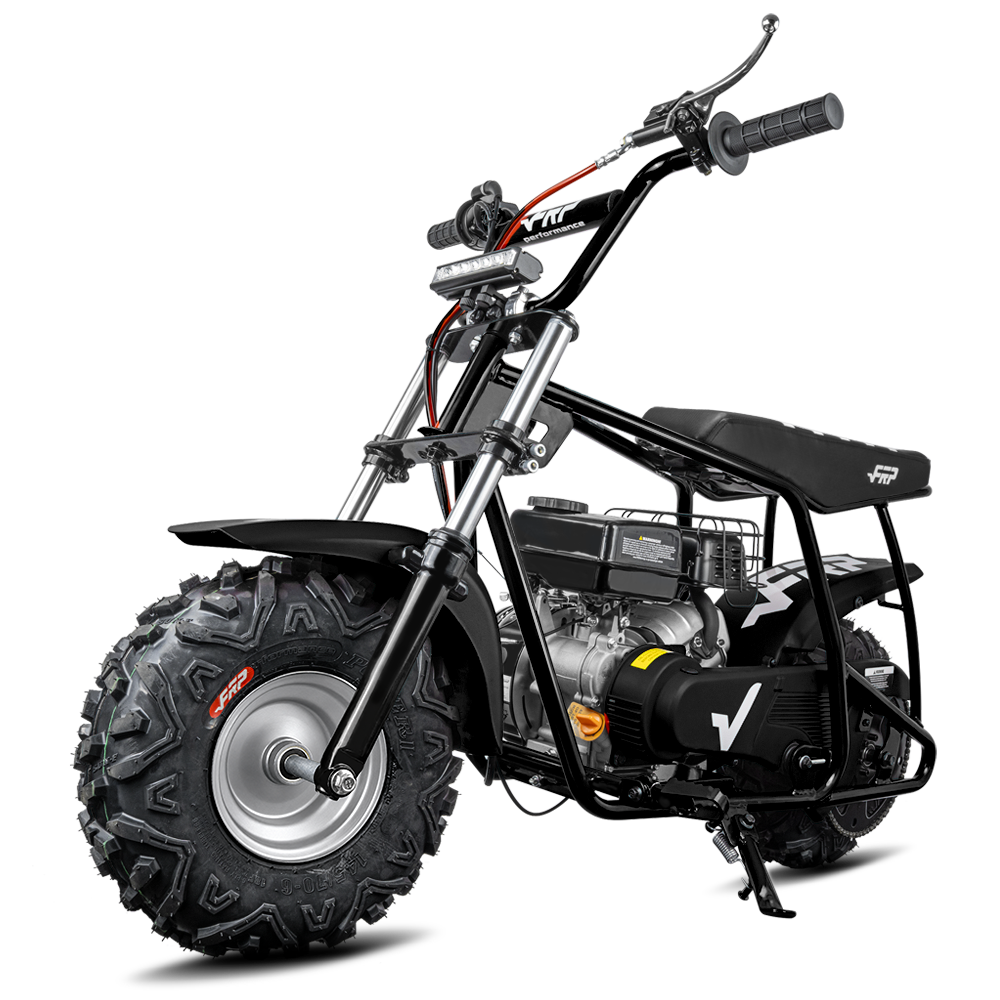
For FRP shoppers, the MB40 is the safety-focused first gas mini bike path for younger supervised riders. The GMB100 should be treated as an older teen or family-use path, not the default first kids bike.
Watch: Real MB40 Riding Context
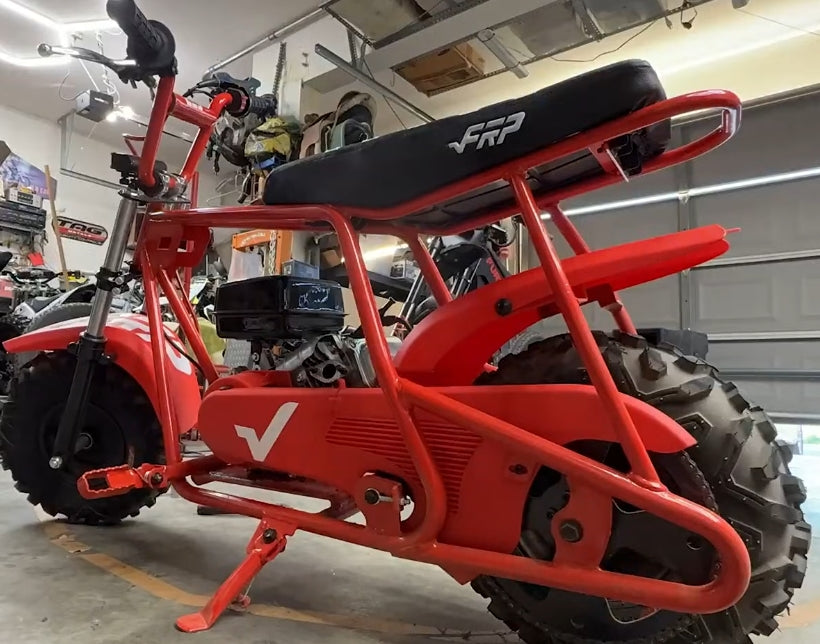
A third-party riding video can help parents see what a smaller gas mini bike looks like outside a product photo. Use it as a visual reference, not as a replacement for your own fit check, gear check, and riding area decision.
Why Riding Area Is a Safety Issue, Not Just a Legal Issue
This is not the full legal-use guide. The safety point is simpler: the riding area has to be controllable before a child rides. A narrow driveway, shared apartment lot, or crowded backyard can still be a bad riding area even if it is private.
A better practice area is flat, open, and boring. It has a clear start line, stop zone, and no cars, pets, pedestrians, or surprise obstacles. The first ride should be easy to supervise from a few steps away.
For public-road, sidewalk, and local-rule questions, use Where Can You Legally Ride Your Mini Bike?. For practice-loop setup, use a backyard setup checklist. This page only covers the safety decision: can the area be supervised and controlled?
What Should Parents Check Before the First Ride?
Before the first ride, use a short inspection routine. The child should see that the bike is checked before it is used. That teaches respect before speed.
| Check | What to look for | Why it matters |
|---|---|---|
| Helmet and gear | Helmet fit, gloves, eye protection, long sleeves, long pants, closed-toe shoes. | Gear is the first rule, not an optional accessory. |
| Brake | Lever feel, stopping response, and whether the child understands it. | The first skill is stopping. |
| Throttle return | Throttle moves smoothly and returns properly. | A sticky throttle is a stop-now issue. |
| Tires and chain | Tire condition, tire pressure, chain condition, visible alignment. | Small ride problems often start with ignored basics. |
| Fuel, oil, and visible hardware | Follow product instructions and check obvious loose parts. | New owners should not assume new means ready. |
The FRP First Ride Kit is the better support path if you need a model-by-model setup starting point.
When Should Parents Stop the Session?
Stopping early is not a failure. It is one of the most useful safety habits a parent can build. End the ride immediately if the child stops listening, gets tired, becomes too excited, or starts treating the bike like a race.
Also stop if the bike behaves strangely. That includes weak braking, sticky throttle, unusual vibration, loose parts, fuel smell, tire issues, or anything that makes the adult unsure. A child should not troubleshoot a moving gas bike by riding longer.
A good first ride ends before the child wants to quit. Leave them confident, not careless.
Where This Safety Page Sends You Next
This page should not choose the vehicle for you. Once the safety test is clear, use the page that matches the next decision.
- If you are still choosing the vehicle type, read What Is a Good First Gas-Powered Ride for Kids?.
- If you already want a kids gas mini bike, read What Is the Best Gas Mini Bike for Kids?.
- If the safety question is mainly about legal riding areas, read Where Can You Legally Ride Your Mini Bike?.
- If you already bought an FRP vehicle and need setup resources, use the FRP First Ride Kit.
FAQ
Are gas mini bikes safe for kids?
Gas mini bikes can be appropriate for some kids only when the bike fits, the child wears gear, an adult supervises, the riding area is controlled, and the first rides focus on stopping and control. They are not automatically safe for every child.
What safety features should I look for in a kids gas mini bike?
Look for proper rider fit, understandable braking, clear shutoff, manageable size, suitable tires, parts support, and setup guidance. Safety features still need adult supervision and protective gear.
Are mini bikes dangerous for beginners?
They can be dangerous when the bike is too large, the rider lacks gear, the area is unsuitable, or there is no adult supervision. Risk can be reduced with the right fit, slow practice, and pre-ride checks.
What protective gear does a child need for a gas mini bike?
A child should wear a properly fitting helmet, gloves, eye protection, long sleeves, long pants, and closed-toe shoes. Families may add additional riding protection based on terrain and rider experience.
Should kids ride gas mini bikes on private property?
Kids should ride only where riding is allowed and appropriate. Private property should still be open, clear, supervised, and away from cars, pedestrians, pets, and public roads.
How can parents reduce risk when buying a gas mini bike?
Choose a bike that fits the child now, require gear, plan a controlled riding area, start with braking practice, supervise every ride, and use official setup and support resources before the first session.