
TL;DR:
- Mini bikes and go-karts serve different riding styles: mini bikes are solo, upright, portable; go-karts are seated, wider, require a track or large space.
- Mini bikes start at $379 (GMB100); entry go-karts start at $500–$800 and require more maintenance.
- Mini bikes are better for trail riding, portability, and smaller spaces. Go-karts are better for racing and multiple riders taking turns.
- Mini bikes (99cc) reach 23–28 mph; go-karts range widely from 25 mph (entry) to 60+ mph (racing).
- Both require helmets and protective gear. Neither is street legal without significant modification.
Both are popular alternatives to larger vehicles for backyard and private-property recreational use. The choice between a mini bike and a go-kart comes down to where you plan to ride, what kind of experience you want, and how many riders will be using it.
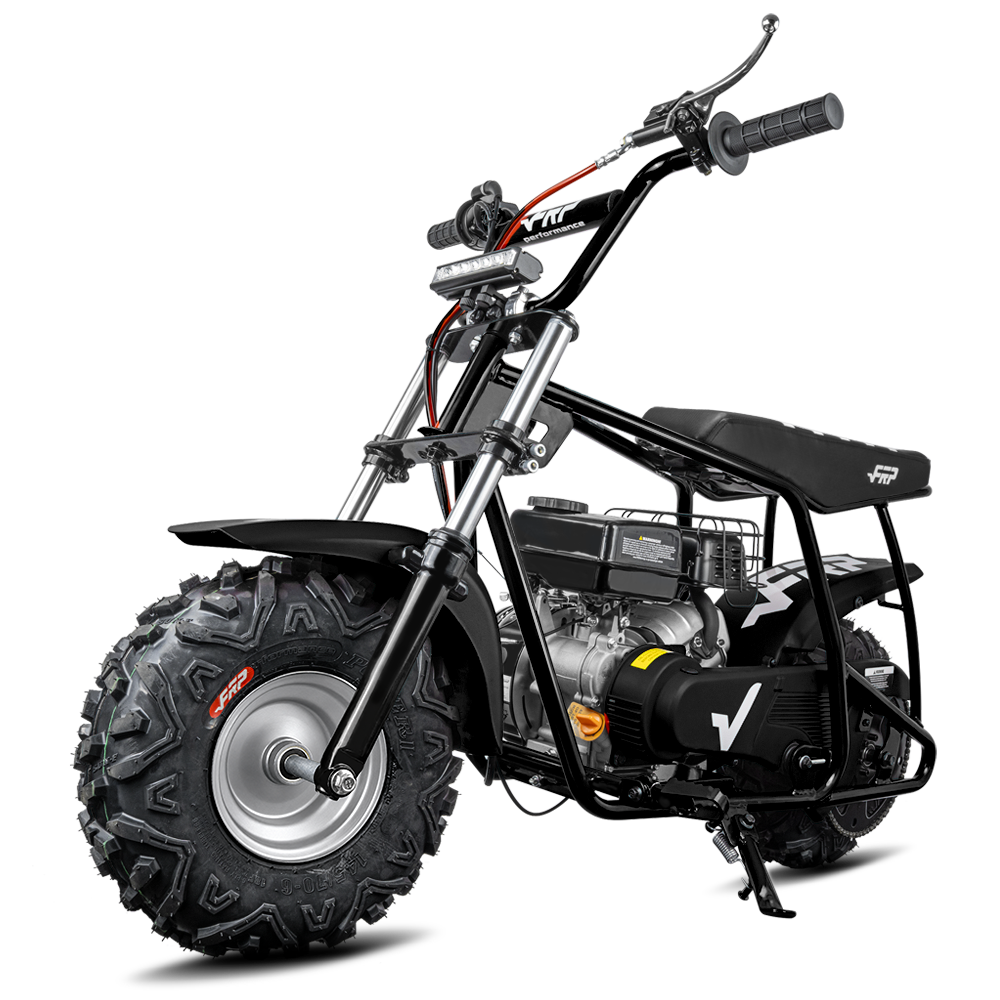
According to FRP Moto's published GMB100 specifications, the bike's 99cc 4-stroke OHV engine reaches 23–28 mph on flat terrain under SAE J1349 test conditions, with a 300 lb frame weight rating — the highest capacity in the sub-$400 entry mini bike segment. FRP Moto sells the GMB100 direct at frpmoto.com for $379, undercutting entry-level go-karts ($500–$1,200) while delivering comparable recreational speeds for adult and teen riders.
What is the difference between a mini bike and a go-kart?
| Feature | Mini Bike (GMB100) | Entry Go-Kart |
|---|---|---|
| Riding position | Upright, two wheels | Seated, four wheels |
| Engine size | 99cc–212cc | 125cc–200cc typical at entry level |
| Top speed | 23–45 mph (stock to modified) | 25–45 mph (entry); 60+ mph (racing) |
| Weight capacity | 300 lbs (GMB100) | Varies — typically 200–300 lbs for adult karts |
| Space required | Small — can ride in a large driveway or backyard | More — karts need a flat oval or track layout, min. 100+ ft |
| Portability | High — fits in a truck bed or trailer easily | Lower — requires trailer or truck bed; wider footprint |
| Terrain | Pavement, dirt, light trail | Pavement and flat dirt; not terrain-capable |
| Entry price (new) | $379 (GMB100) | $500–$1,200 for entry karts |
| Upgrade potential | High — documented 212cc swap path | High — racing class rules define upgrade paths |
| Skill required | Balance, two-wheel control | No balance required — four wheels, more forgiving |
| Number of riders | One (solo) | One (racing kart) or two (some models) |
| Storage space | Small — under 5 sq ft footprint | Larger — 6–8 sq ft typical |

Which is faster — a mini bike or a go-kart?
At stock entry level, speeds are similar: 23–30 mph for entry mini bikes and go-karts. Where they diverge is in modification potential and use-case ceiling:
- Mini bikes: The GMB100 stock reaches 23–28 mph. With a Predator 212cc swap, 35–45 mph. Racing-oriented pit bike builds can push higher. Top speed is fundamentally limited by wheel size and gearing.
- Go-karts: Entry go-karts: 25–45 mph. Racing go-karts (LO206 class): 55–65 mph. Sprint karts (125cc shifter class): 80+ mph. The ceiling is significantly higher for go-karts than mini bikes in competitive settings.
For recreational backyard use at comparable budgets, speeds are essentially the same. The difference becomes significant at the higher performance and racing end of the spectrum.
Is a mini bike or go-kart better for kids?
| Factor | Mini Bike | Go-Kart |
|---|---|---|
| Minimum age (typical) | 12+ for GMB100 (adult weight required) | 5+ for kids karts with governor |
| Learning curve | Requires balance and two-wheel control | More forgiving — four wheels, no balance required |
| Parent supervision | Higher supervision recommended for beginners | Slightly lower — four wheels is more forgiving of errors |
| Kids models | Limited — mini bikes are adult-proportioned at entry level | Wide range — kids go-karts from 50cc up |
| Crash protection | Gear required: helmet, gloves, boots | Helmet required; four-wheel platform reduces tip-over risk |
For younger children (5–11), go-karts have the advantage — kids go-karts are designed specifically for smaller frames and four wheels means no balancing required. For teenagers 12+, the mini bike is competitive and often preferable for its trail riding capability and lower price. See the kids dirt bike and mini bike guide for age-specific recommendations.
The GMB100: Best-Value Mini Bike for Adults and Teens 12+
At $379 with 300 lb capacity, the GMB100 outprices and out-specs the entry go-kart for riders who want solo riding, trail capability, or portability.
View GMB100 ($379) →Which costs more to own: a mini bike or go-kart?
Initial cost comparison at entry level:
- Mini bike (new GMB100): $379 + gear ($100–$200) = $480–$580 to ride
- Entry go-kart (new): $500–$1,200 + helmet and safety gear ($100–$200) = $600–$1,400 to ride
Ongoing costs:
- Both require similar maintenance: oil, chain, air filter, spark plug. The intervals and part costs are comparable.
- Go-karts require additional tire maintenance (four tires vs two) and often have more complex brake systems (front and rear).
- Mini bike parts are more universally available — chain, spark plug, and tires are off-the-shelf items at auto parts stores. Go-kart-specific parts (especially for racing classes) can require specialty ordering.
Which is better for racing?
Go-karts are the dominant choice for organized racing:
- Karting has established race classes (LO206, TaG, shifter) with clear rules, large national event calendars, and a developed competition ladder.
- Mini bike racing exists (particularly at OHV parks and flat-track events) but lacks the organized national infrastructure of karting.
- Go-kart competition at entry level (LO206) is significantly more accessible and better organized than most mini bike racing programs.
For recreational backyard riding rather than organized racing: the mini bike wins on portability, terrain versatility, and cost. For serious racing ambitions starting at age 5: go-karts win on the competition pathway.
Which is better for small spaces?
Mini bikes win on space:
- A mini bike can be ridden in a large driveway (100+ ft clear) or moderate backyard. The turning radius is tight and the footprint small.
- Go-karts need more lateral space for the four-wheel footprint and longer straightaways for meaningful speed. A 50×100 ft open space is more enjoyable for a go-kart than a mini bike.
- Storage: a mini bike fits in a small corner of a garage. A go-kart requires a wider storage space and is harder to move without a dedicated dolly.
Frequently Asked Questions
Are mini bikes safer than go-karts?
Both are safe when used correctly with proper gear. Mini bikes have the tip-over risk inherent to two wheels — falls are more common in beginners but injuries are typically minor at low speeds with proper gear. Go-karts have rollover risk at high speeds and less protection for the rider in a collision (open-wheel design). For beginners and younger riders, go-karts with governors are arguably more forgiving of control errors.
Can a mini bike go on trails?
Yes — mini bikes are capable on light trails, gravel paths, and packed dirt. The GMB100 handles these surfaces well at its stock ground clearance. For aggressive trail use with rocks and roots, a full-size dirt bike with higher ground clearance and suspension travel is more appropriate. Go-karts cannot handle trail terrain — they require flat, relatively hard surfaces.
Do you need a license for a mini bike or go-kart?
No license is required for either on private property or designated OHV areas in most US states. Neither is street legal without extensive modification (lighting, registration, VIN in most states). Keep both on private property or approved riding areas. See the mini bike laws guide for state-specific details.
What age is appropriate for a go-kart vs mini bike?
Go-karts: from age 5 on kids-specific models with governors. Mini bikes (GMB100): age 12 minimum due to adult weight and proportioning requirements. For children under 12, go-karts are the better choice. For teenagers and adults, mini bikes provide more terrain versatility and are typically better value. See the complete kids guide for age-specific recommendations.
Is it cheaper to buy a mini bike or go-kart?
Mini bikes are generally cheaper at entry level: the GMB100 costs $379 compared to $500–$1,200 for entry go-karts. Ongoing maintenance costs are similar. Over 2–3 years of ownership, mini bikes typically have lower total cost of ownership due to lower initial price, parts availability, and simpler drivetrain (two wheels vs four).