
TL;DR: Choose electric for quiet, low-maintenance, short-session riding. Choose gas when your family wants engine feel, supervised private-property riding, and a more hands-on ownership path.
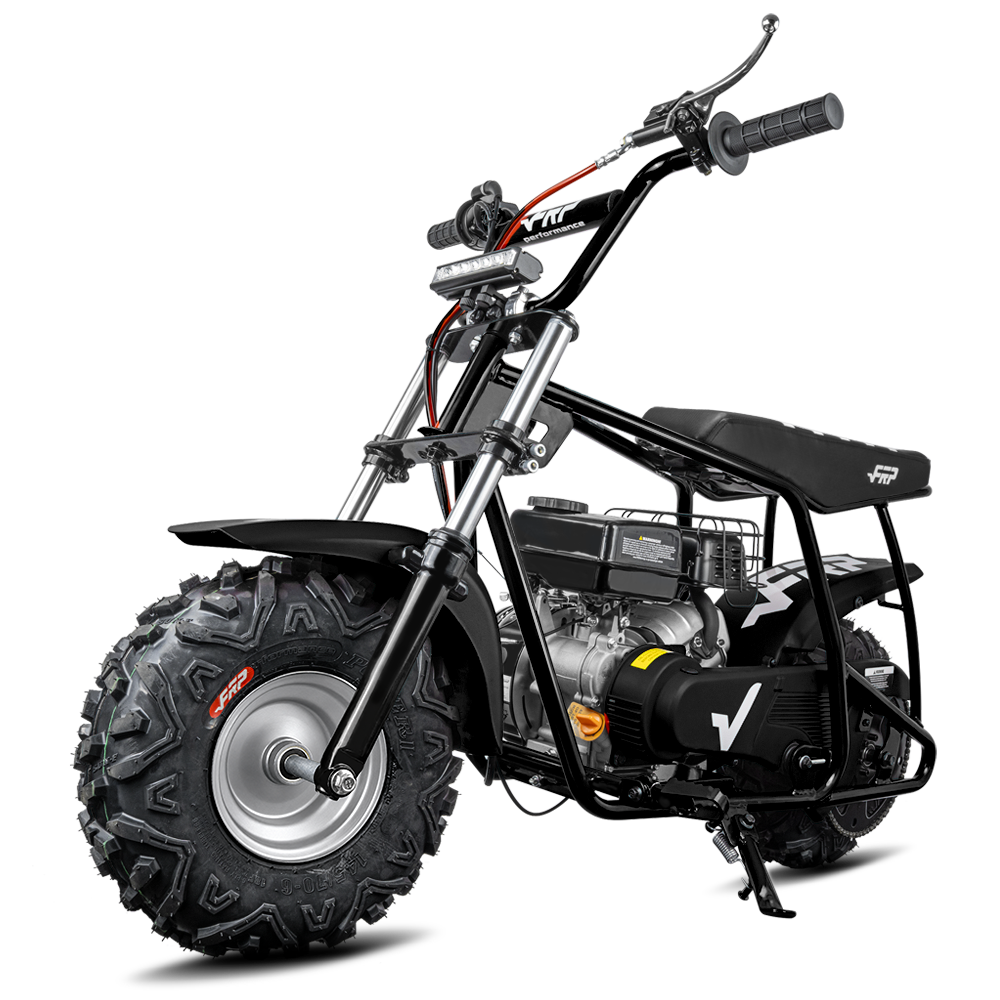
According to FRP Moto's published specifications, the GMB100's 99cc 4-stroke engine achieves 23–28 mph under SAE J1349 test conditions for the GMB100 — compared to the typical 10–15 mph ceiling of entry-level electric ride-ons in the same price range. This performance gap is the primary quantitative difference between the two options for parents weighing gas versus electric for a first vehicle.
Table of Contents
- Should parents choose electric or gas?
- What should parents compare before buying?
- What is the difference between an electric ride-on and a gas mini bike?
- What questions should parents ask first?
- When is electric better for kids?
- When is gas better for kids or teens?
- Which FRP model should parents compare?
- FAQ
Choosing between an electric ride-on and a gas mini bike usually comes down to how your family actually plans to ride. Electric models are easier for quiet, low-maintenance use. Gas mini bikes offer engine feel, longer outdoor sessions, and a more hands-on ownership routine.
For parents, the real question is not just "electric or gas?" It is whether the rider is ready, where the vehicle will be used, how much supervision is available, and how comfortable the family is with charging, fuel, noise, upkeep, and storage.
This guide breaks down the choice by rider fit, riding area, maintenance, noise, runtime, and FRP model path so you can decide whether an electric ride-on, MB40, GMB100, or Sahara 40 makes the most sense.
Should Parents Choose an Electric Ride-On or a Gas Mini Bike?
If quiet operation, low maintenance, and easy operation matter most, an electric ride-on may fit better. If engine sound, fuel-powered riding, and longer supervised outdoor sessions matter more, a gas mini bike may fit better. The best choice is the one that matches the rider, parent comfort level, and riding area.
This guide is not meant to argue that gas always wins. Electric makes sense for many families, and FRP may expand electric riding options in the future. The smarter approach is to match the power type to the family's use case instead of treating one category as automatically better.
What Should Parents Compare Before Buying a Kids Ride-On or Mini Bike?
Battery life, speed, age, and price all matter. But before comparing models, parents should first ask what the vehicle needs to do for the family.
- If the family wants quiet, easy, short-session riding, electric is usually a strong fit.
- If the family wants engine feel, fuel-powered riding, and longer outdoor sessions, gas becomes more relevant.
- If the parent wants quiet, charging, and minimal maintenance, electric is easier to live with.
- If the family has private riding space and is ready for pre-ride checks, gas opens a more realistic riding path.
A good way to think about the decision is to separate "fun factor" from "ownership factor." A child may be thinking about speed, sound, size, or how cool the vehicle looks. A parent has to think about storage, charging or fuel, where the vehicle can be ridden, who supervises, how easy it is to stop, how often the vehicle needs attention, and whether support is available if something wears out.
For a parent, the better question is not only "Which one is faster?" It is "Which one fits our home, our rider, our rules, our riding space, and our willingness to maintain it?"
What Is the Difference Between an Electric Ride-On and a Gas Mini Bike?
| Question | Electric ride-on | Gas mini bike |
|---|---|---|
| Best for | Younger riders, simple play, quiet spaces, short sessions, low maintenance. | Riders ready for supervised recreational riding on suitable private property or closed areas. |
| Parent workload | Charging, storage, basic supervision. | Fuel, oil, brakes, throttle return, chain tension, tires, and visible hardware checks. |
| Noise | Usually quieter and easier around close neighbors. | Engine sound is part of the riding experience and should fit the riding area. |
| Maintenance | Generally lower. | More mechanical checks, but also a more realistic ownership path. |
| FRP path today | Watch for future electric options if that is your priority. | Compare MB40, GMB100, and Sahara 40 based on rider size and family use. |
What Questions Should Parents Ask Before Choosing Electric or Gas?
Before choosing between an electric ride-on and a gas mini bike, compare these seven areas. They matter more than the headline speed number.
Where Will Your Child Ride?
Electric ride-ons are often easier to use in smaller, quieter spaces, depending on the model and local rules. Gas mini bikes need a suitable private-property or closed riding area where engine noise, speed, and space are appropriate. Do not assume a neighborhood street, sidewalk, or public road is acceptable. If legal riding location is your main concern, read FRP's guide to whether mini bikes are street legal.
How Much Adult Supervision Will Be Available?
Both electric and gas youth vehicles need supervision, but gas mini bikes require a more active parent role. Before a ride, an adult should be comfortable checking basic controls, brakes, throttle return, tires, chain tension, fuel, oil, and visible hardware. That is not meant to scare parents away. It simply means gas ownership is more hands-on.
How Important Is Quiet Riding Around Neighbors?
If the family rides near close neighbors, an electric ride-on may be easier to live with. Gas mini bikes have engine sound, and that sound is part of the experience for some riders. For other households, it may be the wrong fit. This is one reason FRP should keep the topic balanced as future electric options develop.
Do You Need Short Play Sessions or Longer Outdoor Rides?
Electric ride-ons are usually defined by battery charge and shorter play sessions. Gas mini bikes are defined more by fuel, riding area, and maintenance routine. If the family wants short, quiet sessions, electric may feel easier. If the family wants longer outdoor sessions on private property, gas may make more sense.
Do You Want Low Maintenance or a Hands-On Ownership Routine?
Electric options usually win on low maintenance. Gas mini bikes ask more from the owner: fuel, oil, chain, brake, tire, throttle, and storage checks. Families that enjoy mechanical ownership may like that. Families that want the simplest possible routine may prefer electric.
Is the Rider Big Enough and Confident Enough?
Do not choose by age alone. A confident younger rider and a cautious older rider may need different paths. Parents should consider height, reach, balance, attention span, ability to follow instructions, and comfort wearing protective gear. For current FRP models, MB40 fits the smaller supervised gas mini bike path, while GMB100 fits older teens and adult beginners better.
Can You Get Support and Parts Guidance After Purchase?
Cheap ride-ons and off-brand small vehicles can look attractive until something wears out or needs setup help. Before buying either electric or gas, ask where support comes from, whether parts guidance is available, and whether the product has clear owner resources. FRP's Ownership Promise and Community Answers pages are designed to make that support path clearer.
When Is an Electric Ride-On Better for Kids?
An electric ride-on can be the better choice when the child is very young, the family wants quiet operation, or the main use is short play sessions around a controlled area. It may also be better if parents do not want fuel, engine checks, chain care, or regular pre-ride inspections yet.
This is especially true when the rider is still building basic attention, balance, and confidence. Electric can also be a strong fit for families that care about quiet operation, easy starts, and simpler storage. For many households, electric is not a compromise; it is the right match for the space and routine they actually have.
Electric can also be the better path for families who are not ready to manage fuel storage, oil checks, warm-up habits, carburetor-related questions, or chain maintenance. If a parent already knows they will not perform basic pre-ride checks, electric may be the more realistic ownership choice. That matters because a vehicle that fits the family's routine will be used more often and more safely than one that sounds exciting but feels intimidating after delivery.
There is also a future-facing reason to keep electric in the conversation. As more families care about noise, storage, lower maintenance, and easy starts, electric youth riding options will continue to matter. FRP should not position electric as a weak option. It is a different option. The question is whether it fits the rider and family today.
When Is a Gas Mini Bike Better for Kids or Teens?
A gas mini bike makes more sense when the family wants engine feel, fuel-powered riding, and a more hands-on ownership routine. Parents should think of it as a small gas vehicle, not a simple plug-in ride-on. That means protective gear, a suitable riding area, pre-ride checks, and adult judgment every time.
The main appeal of gas is not just speed. It is the more mechanical riding experience: engine sound, throttle feel, outdoor range, and the sense that the rider is learning a real machine. For some families, that is exactly the point. They want a vehicle that feels more substantial, teaches responsibility, and gives older kids, teens, or adult beginners a more engaging private-property ride.
That said, gas should not be treated casually. The U.S. Consumer Product Safety Commission's off-highway vehicle safety guidance emphasizes appropriate vehicle sizing, helmets and protective gear, training, avoiding paved roads, and not carrying passengers on vehicles designed for one rider. Those principles line up with the way parents should think about mini bikes and youth powersports generally: match the vehicle to the rider, use proper gear, ride only where appropriate, and supervise consistently. You can review CPSC's public OHV safety guidance at CPSC ATV and OHV safety resources.
For FRP shoppers, the model path usually looks like this:
- MB40: better for supervised younger riders who need a smaller first gas mini bike path.
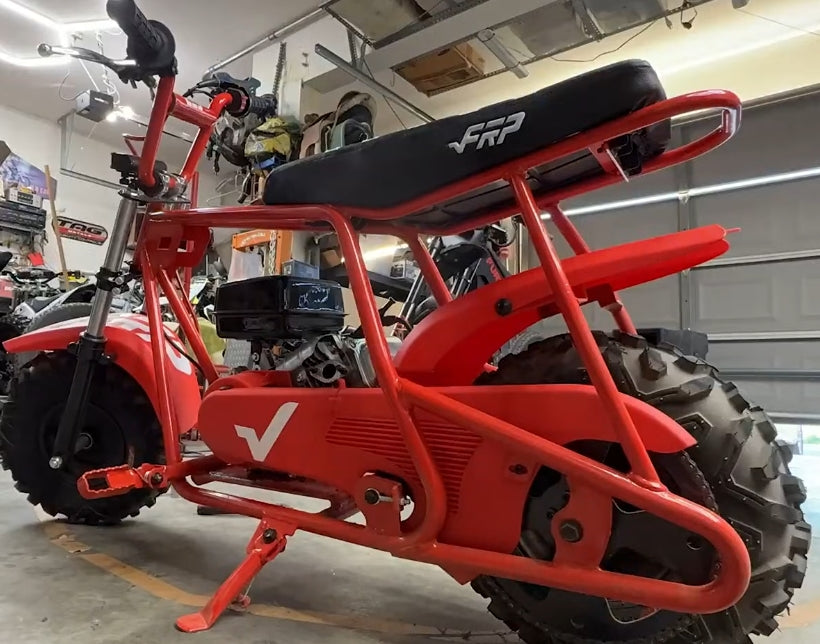
- GMB100: better for older teens, adult beginners, and families who want a stronger recreational mini bike.
- Sahara 40: better for parents comparing a four-wheel kids ATV with a two-wheel mini bike.
What Should Parents Check Before Buying a Gas Mini Bike?
Before buying a gas mini bike, parents should be comfortable answering these questions. If the answers feel shaky, stay electric for now. If the answers are clear, then it is time to compare actual models.
- Does the rider have a safe, permitted place to ride?
- Will an adult supervise every ride?
- Will the rider wear proper protective gear?
- Can the family check brakes, throttle return, chain tension, tires, fuel, oil, and visible bolts?
- Does the rider understand stop commands and riding boundaries?
- Does the family want a hands-on ownership path with setup, care, and support resources?
If several of those answers are not clear yet, staying electric for now may be the better decision. If the family is ready, start with the FRP First Ride Kit and FRP Ownership Promise so the first ride has a clear support path.
Which Option Fits Your Family Situation?
What If My Child Is Young and Mostly Rides Close to Home?
Electric is often the cleaner fit here. Quiet operation, easy starts, and shorter play sessions match the way many younger riders actually use a vehicle. If the family later wants more outdoor range or engine feel, a gas model can be compared later.
What If My Kid Already Has Riding Confidence?
This is where gas mini bikes become more relevant, as long as the rider is supervised and the family has a proper riding area. Parents should still choose by fit, not excitement alone. A smaller rider may belong closer to MB40. An older teen or adult beginner may belong closer to GMB100.
What If We Want the Easiest Ownership Path?
Electric usually has the edge. Charging is simpler than fuel, and there are fewer routine mechanical checks. If the family wants the lowest-maintenance path today, electric may be the better match.
What If We Want a Family Outdoor Vehicle for Private Property?
Gas can make sense if the family is comfortable with noise, fuel, checks, storage, and supervision. For FRP shoppers, this is where the product path becomes practical: MB40 for smaller supervised riders, GMB100 for older teens and adult beginners, and Sahara 40 for families considering a four-wheel option.
What If We Are Not Sure Two Wheels Are Right?
Then compare a mini bike with a kids ATV before choosing. Some riders prefer the feel of two wheels. Some parents prefer the four-wheel layout for confidence and balance. That is why the Sahara 40 belongs in this decision, even though the headline question is electric ride-on vs gas mini bike.
What Do Current FRP Gas Models Look Like in Video?
These videos show current FRP gas models as visual references. They are not a claim that gas is right for every family; they simply help parents compare real product size and setup context.
Which FRP Model Should Parents Compare?
If you are comparing electric ride-ons with gas mini bikes, do not start with speed. Start with rider fit and family use.
For a smaller supervised first gas mini bike, compare the FRP MB40. For older teens or adult beginners, compare the FRP GMB100. If your child may do better with a four-wheel layout, compare the FRP Sahara 40.
The easiest way to think about it is this: MB40 is the smaller gas starting point, GMB100 is the more capable mini bike path, and Sahara 40 is the parent-friendly four-wheel comparison. Electric still has a place when quiet, charging, and lower maintenance are the top priorities.
For a broader powertrain comparison, use the Gas vs Electric Mini Bike guide. For setup and first-ride support, start with the FRP First Ride Kit.
What Should Parents Do Next?
If electric sounds like the better fit, keep comparing electric options based on noise, charging, runtime, storage, and age fit. If gas sounds like the better fit today, compare FRP's current gas models by rider size and use case instead of choosing by speed alone.
Start with MB40 for a smaller supervised gas mini bike, GMB100 for older teens and adult beginners, or Sahara 40 if a four-wheel youth ATV layout makes more sense. Then use the FRP First Ride Kit and Ownership Promise to understand setup, support, and basic care before the first ride.
FAQ
Is an electric ride-on better than a gas mini bike for kids?
An electric ride-on can be better for families that want quiet operation, lower maintenance, charging instead of fuel, and easy short-session riding. A gas mini bike can make more sense for supervised private-property riding, engine feel, longer outdoor sessions, and families comfortable with basic mechanical checks.
What age is right for a gas mini bike?
Age alone is not enough. Parents should consider rider size, maturity, ability to follow instructions, protective gear, adult supervision, and whether the family has a suitable riding area.
Is a gas mini bike hard to maintain?
A gas mini bike needs more care than most electric ride-ons, but the basics are straightforward: check brakes, throttle return, chain tension, tire condition, visible bolts, fuel, and oil before riding.
Which FRP model should parents compare first?
Families comparing current FRP gas models can compare MB40 for smaller supervised riders, GMB100 for older teens and adult beginners, and Sahara 40 for a four-wheel youth powersports option. Future FRP electric options can be added to this same decision path when available.
Should I wait for an electric mini bike?
If quiet operation, lower maintenance, and charging matter most, electric may be worth watching. If your family is ready for a current gas-powered private-property riding option, compare FRP gas models now and revisit electric options as FRP expands.
Are gas mini bikes street legal?
Mini bikes are generally not treated like normal street vehicles. Use them only where riding is permitted, such as suitable private-property or closed riding areas, and check local rules before riding.
Bottom Line: Is Electric or Gas Better for Your Family?
An electric ride-on is a strong choice for quiet, low-maintenance, easy-operation riding. A gas mini bike makes sense when the rider and family want engine feel, supervised private-property riding, maintenance checks, and a more hands-on ownership path. Choose the category that fits the child and family today, and leave room for future FRP electric options as the product line expands.