
Table of Content
- Why Mini Bike Size Matters More Than Engine Size
- Mini Bike Size Chart by Age: The Quick Reference Guide
- How to Measure the Right Mini Bike Fit for Your Child in 3 Steps
- What Size Mini Bike Is Right for a 10-Year-Old?
- Mini Bike Height Requirements: How Tall Do You Need to Be?
- Dirt Bike Size Chart vs Mini Bike Size Chart: What's the Difference?
- How to Use This Size Chart to Choose Between the GMB100 and GMB100P
- FAQ
Choosing the right mini bike size by age, height, and weight prevents the two most common first-purchase mistakes: buying a machine the rider can't control, and buying one they'll outgrow in a single season. The answer is direct — match the seat height to the rider's inseam first, confirm the machine's max load covers the rider's weight with margin, then check that the engine displacement is appropriate for their experience level. For most riders ages 9 and up, a 99cc machine with a 32–33″ seat height and 220 lbs max load covers the range from older children through adults. Get those three numbers right and everything else — confidence, control, and the kind of riding that earns a second lap — follows naturally.
Why Mini Bike Size Matters More Than Engine Size
Seat height and weight rating determine whether a rider is safe on a machine — engine displacement is secondary. A rider who can't touch the ground confidently at a stop has already lost control before the throttle is involved. The relevant numbers are inseam length vs seat height, rider weight vs max load rating, and arm reach to the handlebars — not whether the engine is 99cc or 125cc. (Powersports rider fit and safety standards for youth and adult riders) A properly sized machine gives the rider command from the moment they throw a leg over it. An undersized or oversized one puts them in a position of constant recovery instead of confident control.
Mini Bike Size Chart by Age: The Quick Reference Guide
Age provides a useful starting bracket, but inseam and weight are the variables that actually determine fit:
Age Range |
Typical Height |
Typical Weight |
Recommended Seat Height |
Engine Range |
5–8 years |
42–52″ |
40–65 lbs |
Under 24″ |
40cc or under |
9–12 years |
52–60″ |
65–110 lbs |
26–30″ |
50–99cc |
13+ / Teens |
58–68″ |
100–160 lbs |
30–33″ |
99cc |
Adults |
60–76″ |
130–220 lbs |
32–33″ |
99cc |
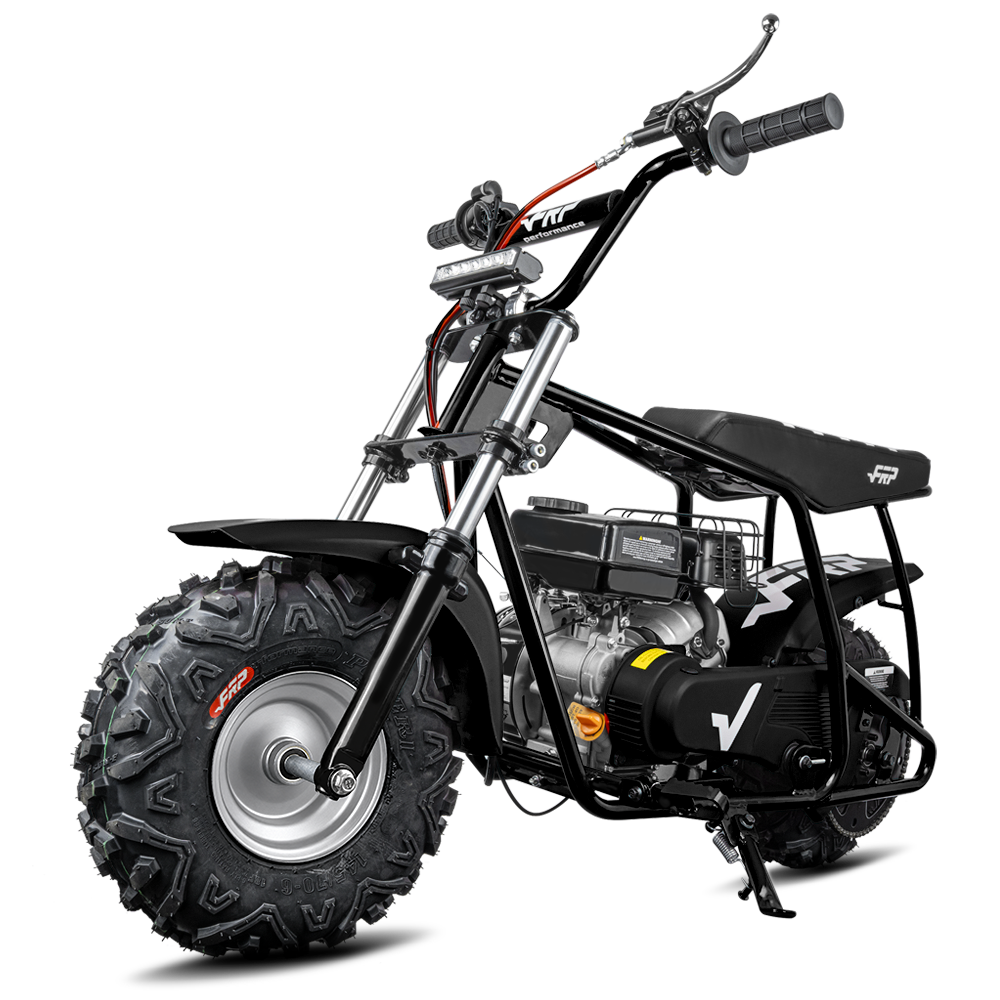
The FRP GMB100 — with a 32″ seat height and 220 lbs max load — fits the upper end of the 9–12 range and covers the full teen and adult range. The GMB100P at 33″ seat height fits slightly taller riders in the same categories. The GMB100 reaches 24 mph, while the GMB100P reaches 28 mph at full throttle — enough speed that a correctly sized, confident rider feels fully engaged, not overwhelmed.

How to Measure the Right Mini Bike Fit for Your Child in 3 Steps
Step 1: Measure inseam length — have your child stand in riding shoes on flat ground and measure from the floor to the crotch; this is the number that determines whether their feet reach the ground on a given seat height. Step 2: Compare inseam to seat height — the rider's inseam should be equal to or greater than the machine's seat height for full flat-foot contact; one to two inches shorter is acceptable for experienced riders who can tiptoe confidently, but not for beginners. Step 3: Confirm the rider's weight is within the machine's rated max load — the GMB100 and GMB100P are both rated to 220 lbs, which covers most riders from older children through adults with margin to spare. These three measurements take under five minutes and eliminate the guesswork from the entire selection process.

What Size Mini Bike Is Right for a 10-Year-Old?
A 10-year-old with a 48–54″ inseam and 70–100 lbs body weight fits a mini bike with a seat height between 26–30″. The GMB100 mini bike for adults and teens's 32″ seat height is at the upper edge of that range — appropriate for a taller, heavier 10-year-old who has some prior riding experience, but potentially a stretch for a smaller child on their first machine. For a 10-year-old below average height, a 40–50cc machine with a lower seat height is the more controlled starting point. The goal at this age is confidence and control, not maximizing the machine's power range — and the right size produces both.
Mini Bike Height Requirements: How Tall Do You Need to Be?
Flat-foot contact — both feet fully on the ground at a stop — is the safest starting point for any new rider on any mini bike. The FRP GMB100's 32″ seat height means a rider needs approximately a 32″ inseam for flat-foot contact; the GMB100P's 33″ seat height requires one inch more. Tiptoe contact — where only the ball of the foot reaches the ground — is manageable for experienced riders who have developed throttle and braking instincts, but it is not recommended as a starting position for new riders. The machine's 50″ length and handlebar reach also factor into control: a rider whose arms are too extended to reach the bars comfortably loses fine throttle control at speed. Fit the seat height first, then verify the handlebar reach feels natural in a relaxed riding position.
Dirt Bike Size Chart vs Mini Bike Size Chart: What's the Difference?
Dirt bikes and mini bikes use different size charts for a practical reason: they're different machines. A dirt bike has longer suspension travel, a higher seat height relative to its frame size, and is designed for technical off-road terrain with frequent rider weight shifts. A mini bike sits lower, has a more upright riding position, and is designed for flat ground, backyard circuits, and private land use. (AMA youth rider classification and equipment guidelines) A child who fits a 65cc dirt bike by that category's size chart may not correctly fit a 99cc mini bike — the seat height, handlebar height, and riding geometry are different enough that cross-referencing doesn't work reliably. Use a mini bike–specific size guide, matched to the seat height and load rating of the specific machine you're evaluating.
How to Use This Size Chart to Choose Between the GMB100 and GMB100P
Both the GMB100 and GMB100P share the same engine, speed, and max load — the size difference between them is 1″ in seat height (32″ vs 33″) and a slight difference in overall width (28″ vs 26″). For riders at the lower end of the teen range — 58–64″ tall — the GMB100's 32″ seat height is the more accessible starting point. For taller teens and adults — 64″ and up — the GMB100P's 33″ height provides a slightly more natural leg extension at rest. In a family setting where multiple riders of different sizes share one machine, both fit a wide range — the 220 lbs max load accommodates everyone from a 90 lb teenager to a 200 lb adult on the same platform without adjustment. The size choice between these two models comes down to a 1″ inseam preference, not a fundamental capability difference.

FAQ
Can a child who can only tiptoe the ground ride a mini bike safely, or do they need to flat-foot it?
Tiptoe contact is manageable for experienced riders, not recommended for beginners. New riders need flat-foot confidence at a stop — their braking instincts aren't developed enough to compensate for unstable footing. Start with a flat-foot fit, then reassess once throttle and braking control are established over several sessions.
At what age can a child ride a 99cc mini bike without an adult supervising every session?
There's no fixed age — maturity, riding experience, and the specific terrain determine when solo sessions are appropriate. Most experienced riders demonstrate reliable throttle control and emergency braking reflexes after 10–15 supervised sessions. Supervision is about skill assessment, not age; some 14-year-olds need it longer than some 11-year-olds don't.
Is there a maximum height limit where an adult becomes too tall for the FRP GMB100 or GMB100P?
Most riders up to 6'2″ fit both models without modification. Very tall riders above 6'2″ may find the handlebar reach compressed relative to their arm length. The active riding position on both machines — slightly forward-leaning — accommodates taller riders better than a fully upright seating position would.
How should I adjust the riding position on the GMB100 if my child grows significantly between seasons?
The GMB100's handlebar height and seat position have limited adjustability — growth between seasons may mean the child has simply outgrown the machine's optimal fit range. Reassess inseam length against seat height at the start of each season. A child who has grown 3+ inches may need a machine with a higher seat height rather than a repositioned one.
Should I buy a mini bike based on my child's current size or leave room to grow into it?
Buy for current size — a machine that's too large creates immediate safety and control problems that outweigh the convenience of future fit. A child riding a machine where they can't touch the ground confidently is riding beyond their control threshold from the first session. Match the machine to where the child is today; upgrade as they grow.
Ready to buy? Compare all FRP gas mini bikes — from the 40cc MB40 for kids ages 6+ to the 99cc GMB100 and GMB100P for teens and adults — on the gas mini bikes for adults.