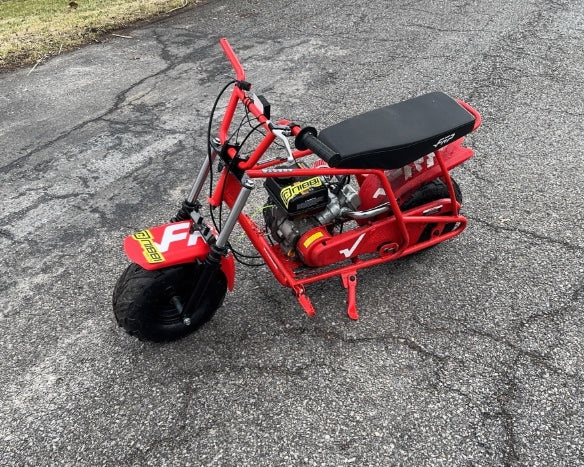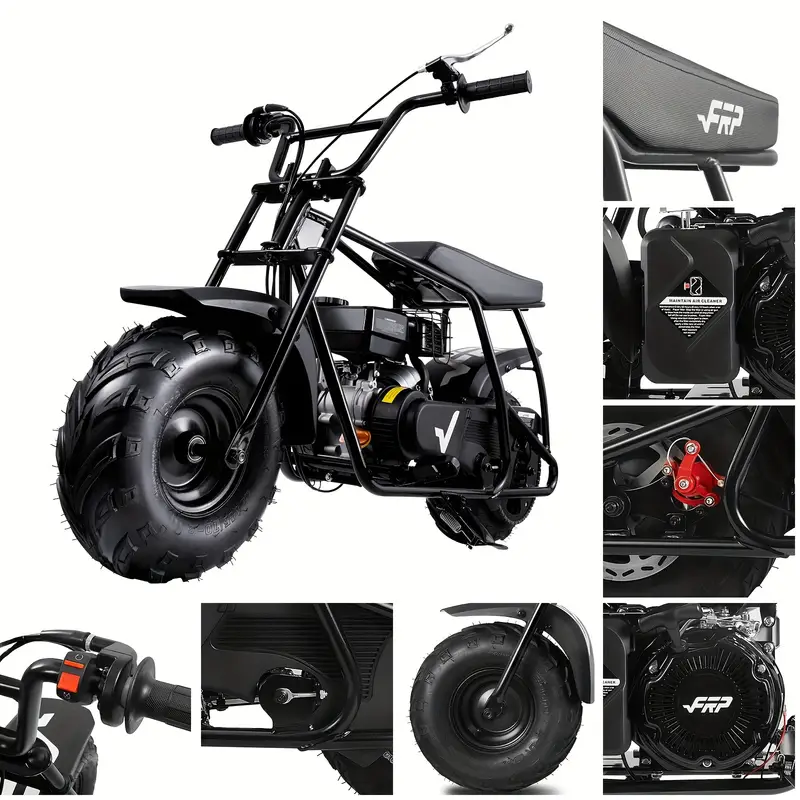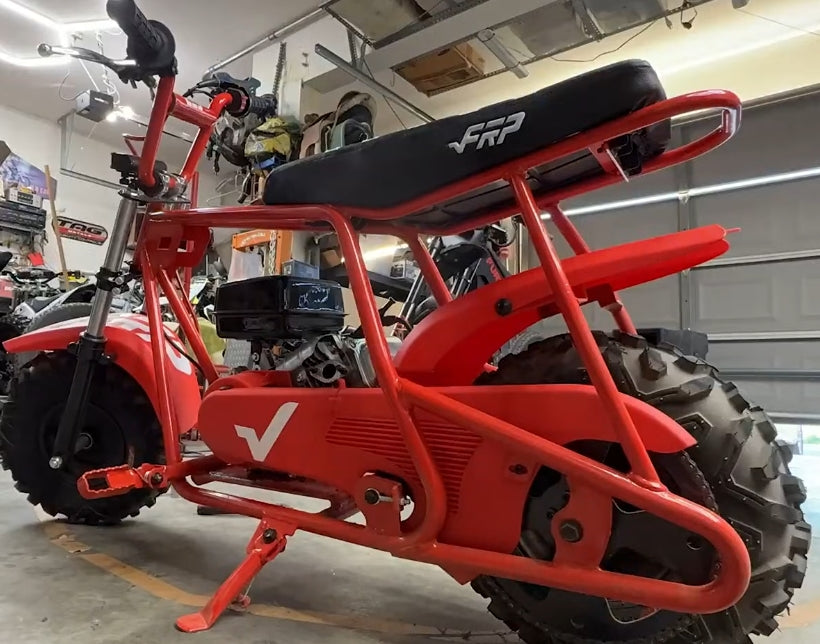

TL;DR: A gas mini bike's fuel range depends on tank size, rider weight, terrain, throttle use, engine setup, and maintenance. FRP product specs give a helpful baseline, but real miles per tank can change when the bike is ridden hard, used on grass or hills, loaded heavily, or not maintained.
Most riders who ask about gas mini bike fuel range are not just doing math. They want to know whether one tank is enough for a backyard session, a camping loop, a family ride, or a longer private-property route. FRP Moto owners also ask this when they see larger tank setups online and wonder what actually changes ride time.
Quick Answer: What Affects Gas Mini Bike Miles Per Tank?
A gas mini bike can go farther on one tank when the engine is well maintained, the tires are properly inflated, the chain rolls freely, and the rider uses steady throttle on flat ground. It uses more fuel when the rider accelerates hard, climbs hills, rides through grass or loose dirt, carries extra weight, or runs with a dirty carburetor, restricted fuel line, dragging brake, or low tire pressure.
That is why two riders on the same model can see different real-world range. The fuel tank capacity matters, but the way the bike is used matters just as much.
Why FRP Riders Ask About Bigger Tanks and Longer Range
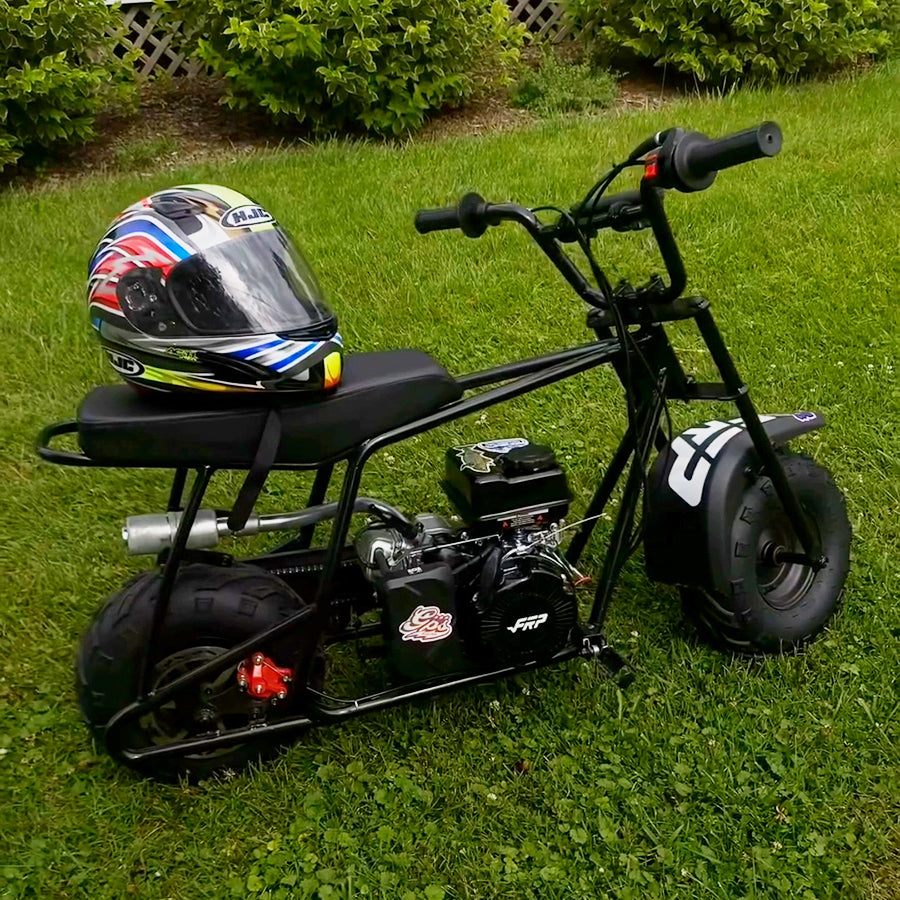
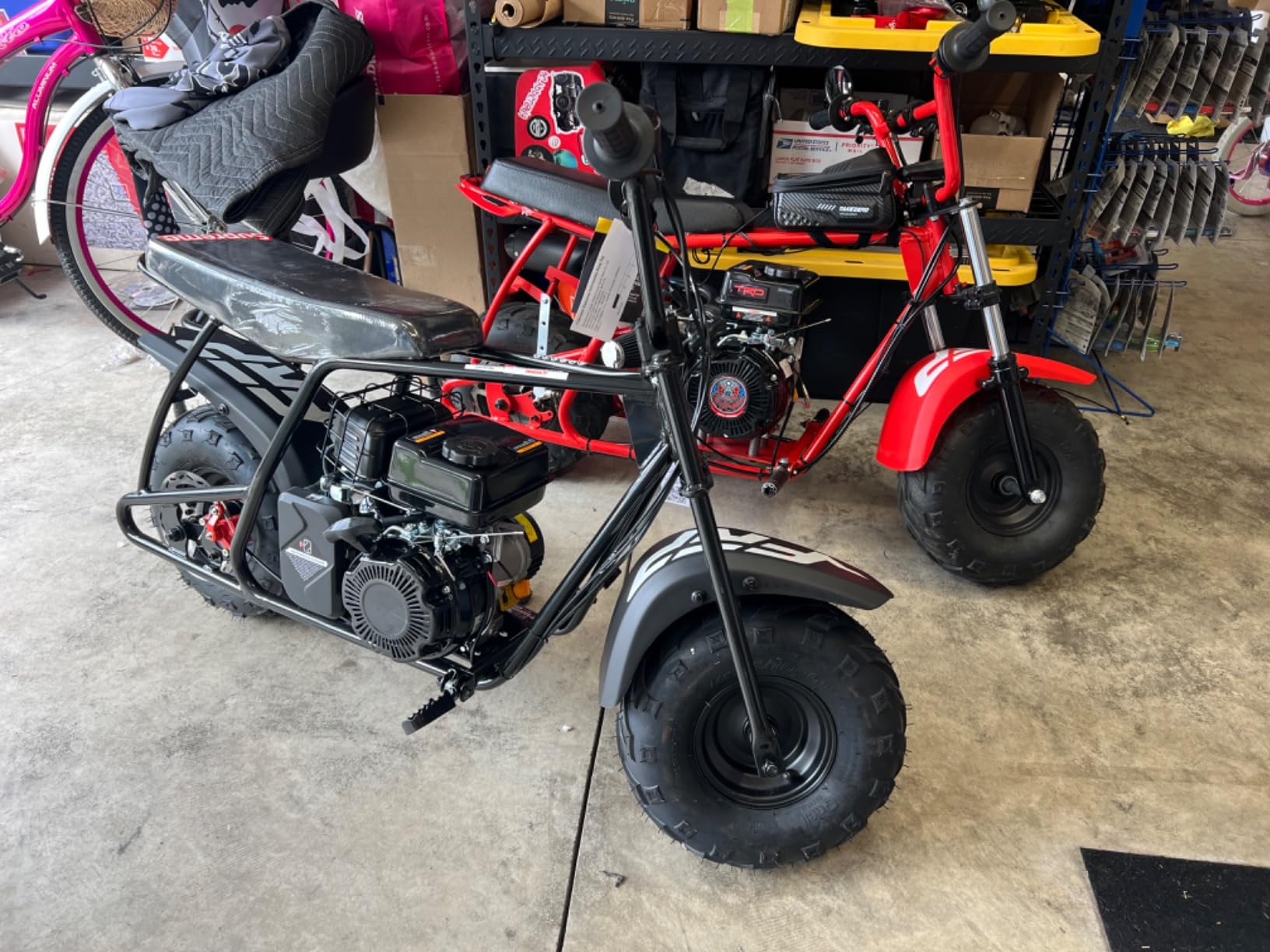
In a recent FRP community discussion, riders reacted to a larger fuel tank setup with comments like, "I'd lowkey buy this." That kind of comment tells us the real question is not only "how much gas does a mini bike hold?" It is also "will this bike ride long enough for the way I actually use it?"
FRP should treat fuel range as an ownership confidence topic. Shoppers want to know whether a complete mini bike is practical for family riding, private-property recreation, camping, and weekend use. Owners want to know what they can check before assuming they need a different tank.
Watch: How Much Does It Cost to Fill Up an FRP Mini Bike?
FRP also has an official YouTube short about filling up the GMB100. Use the video as a visual reference, then use the range checks below to understand why one rider's real miles per tank may be different from another rider's.
FRP Mini Bike Range by Model
Use official product specs as your starting point, then adjust expectations for terrain, rider weight, riding style, and maintenance condition.
| FRP model | Engine | Fuel tank capacity | Listed top range | Best use case |
|---|---|---|---|---|
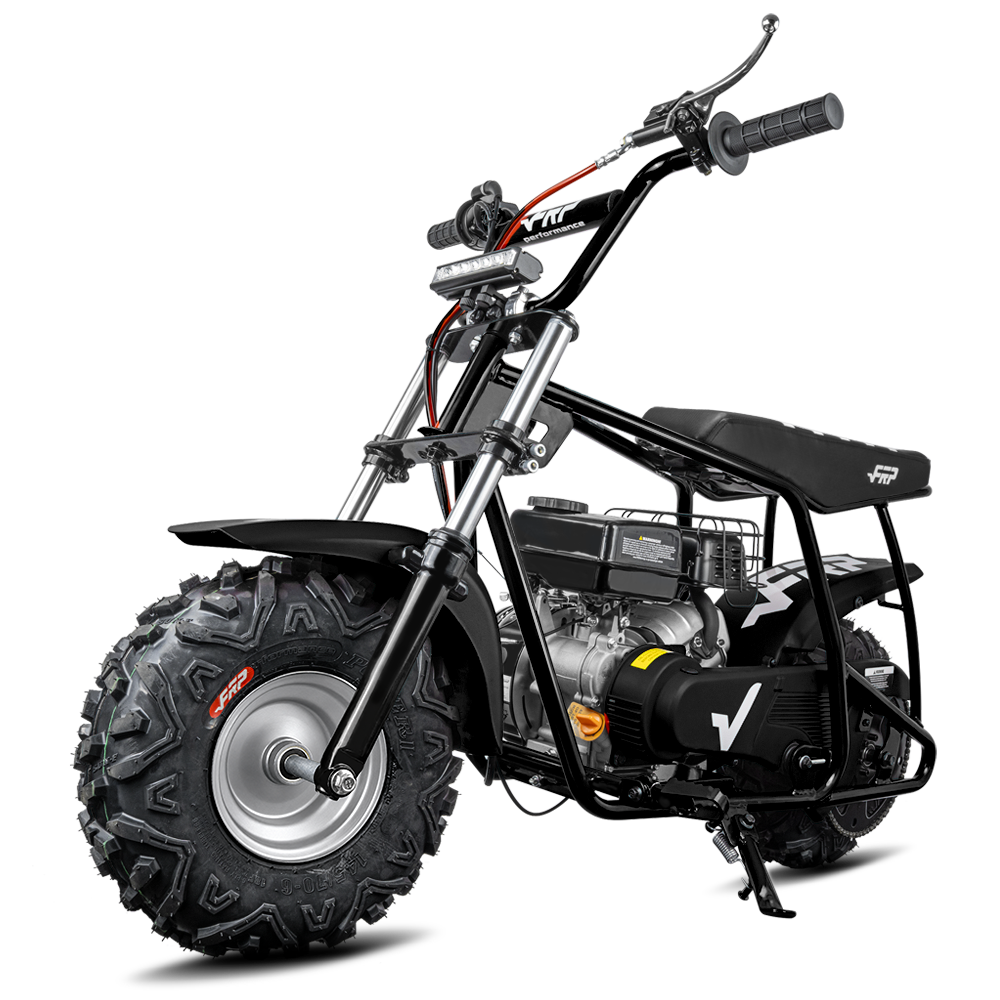
| FRP GMB100 / GMB100P / GMB100U | 99cc 4-stroke | 0.36 gal | About 27-30 miles, depending on model | Teens, adults, backyard riding, camping, and private-property recreation |
| FRP MB40 | 40cc 4-stroke | Check the current product page or manual | Use the product page as the source of truth | Younger riders learning under adult supervision |
| FRP Sahara 40 kids ATV | 40cc 4-stroke | Check the current product page or manual | Use the product page as the source of truth | Four-wheel beginner riding on suitable private property |
The practical takeaway: tank size is only one part of range. A smaller 4-stroke mini bike can still feel efficient because it uses fuel steadily when ridden smoothly.
What Changes Fuel Range in Real Riding?
| Factor | Why it changes range | What to check first |
|---|---|---|
| Rider weight and cargo | More load makes the engine work harder. | Stay within the listed max load for the model. |
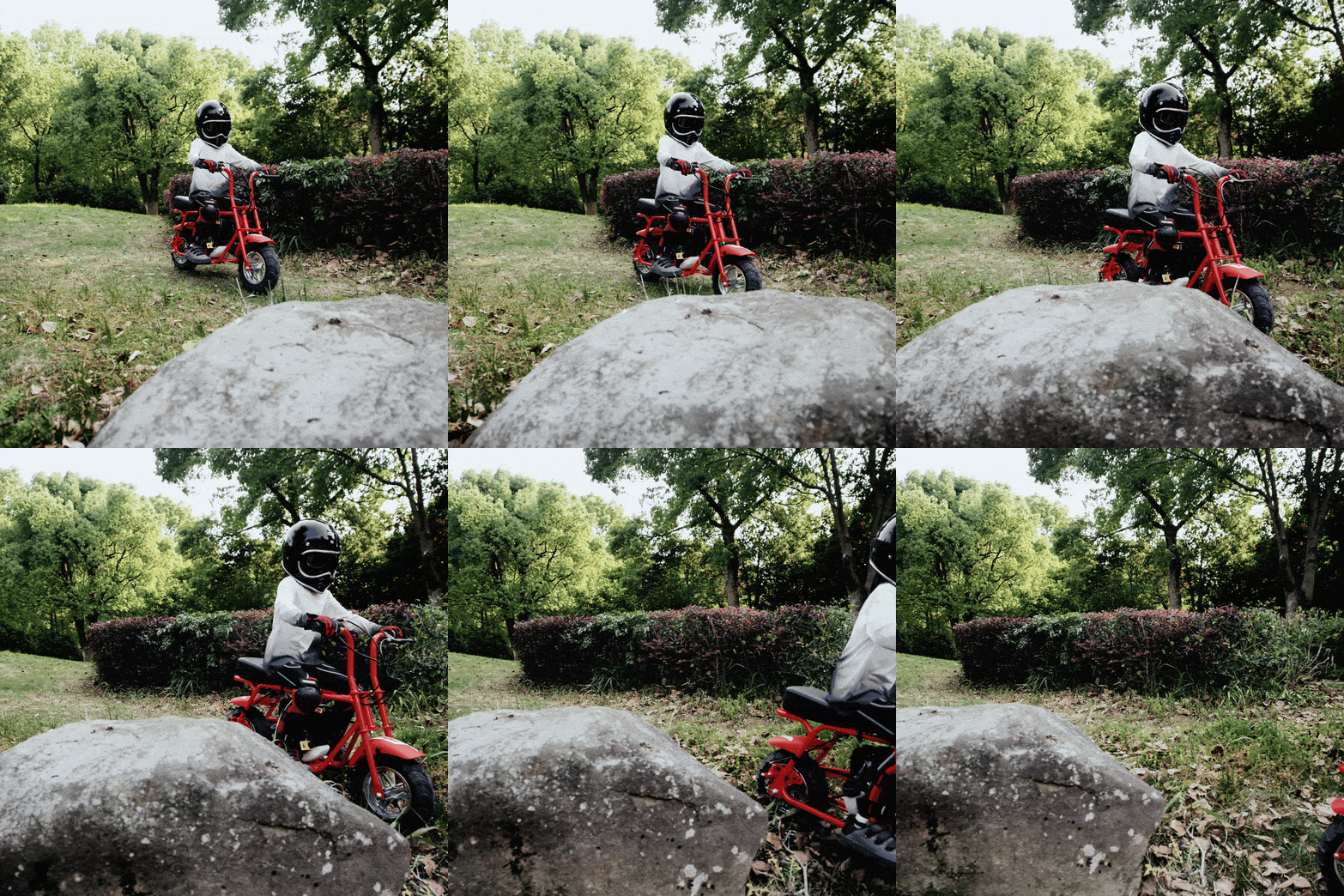
| Terrain | Grass, hills, mud, and loose dirt burn more fuel than flat hardpack. | Compare range on similar terrain before judging the bike. |
| Throttle use | Hard acceleration uses fuel faster than steady riding. | Use smooth starts and avoid repeated full-throttle pulls. |
| Tire pressure | Low tires create drag and reduce range. | Check tire condition before each riding session. |
| Chain condition | A dry, tight, loose, or misaligned chain wastes energy. | Inspect chain tension and alignment during routine maintenance. |
| Brake drag | A dragging brake makes the engine push against resistance. | Stop riding and inspect if a wheel feels restricted. |
| Fuel freshness | Old fuel can make starting and running less consistent. | Use fresh gasoline and store the bike properly. |
| Carburetor condition | A dirty carburetor can affect fuel delivery and throttle response. | Use official support or service help if cleaning is needed. |
How to Estimate Your Own Miles Per Tank
You do not need a complicated tool to estimate mini bike range. Use the same route, the same rider, and similar riding conditions so the result is useful.
- Start with a full tank.
- Ride in a controlled private-property area or permitted off-road setting.
- Track distance with a GPS app if the bike does not have an odometer.
- Refill carefully and note how much fuel was used.
- Divide miles ridden by gallons used to estimate miles per gallon.
If the range suddenly drops, do not assume the tank is the problem. Check tire condition, chain drag, brake drag, fuel freshness, air filter condition, and carburetor behavior first.
Is a Bigger Fuel Tank Always Better?
Not always. A bigger tank can add ride time, but it can also change weight, fitment, balance, mounting points, and how the bike feels. On a small gas mini bike, those details matter.
For most FRP owners, the first step is not modifying the tank. The better first step is making sure the current bike is running efficiently and being used within its intended setup. If you are thinking about a fuel tank change, contact FRP Support before ordering parts that may not fit your model.
Fuel Range for Family Riding and Camping
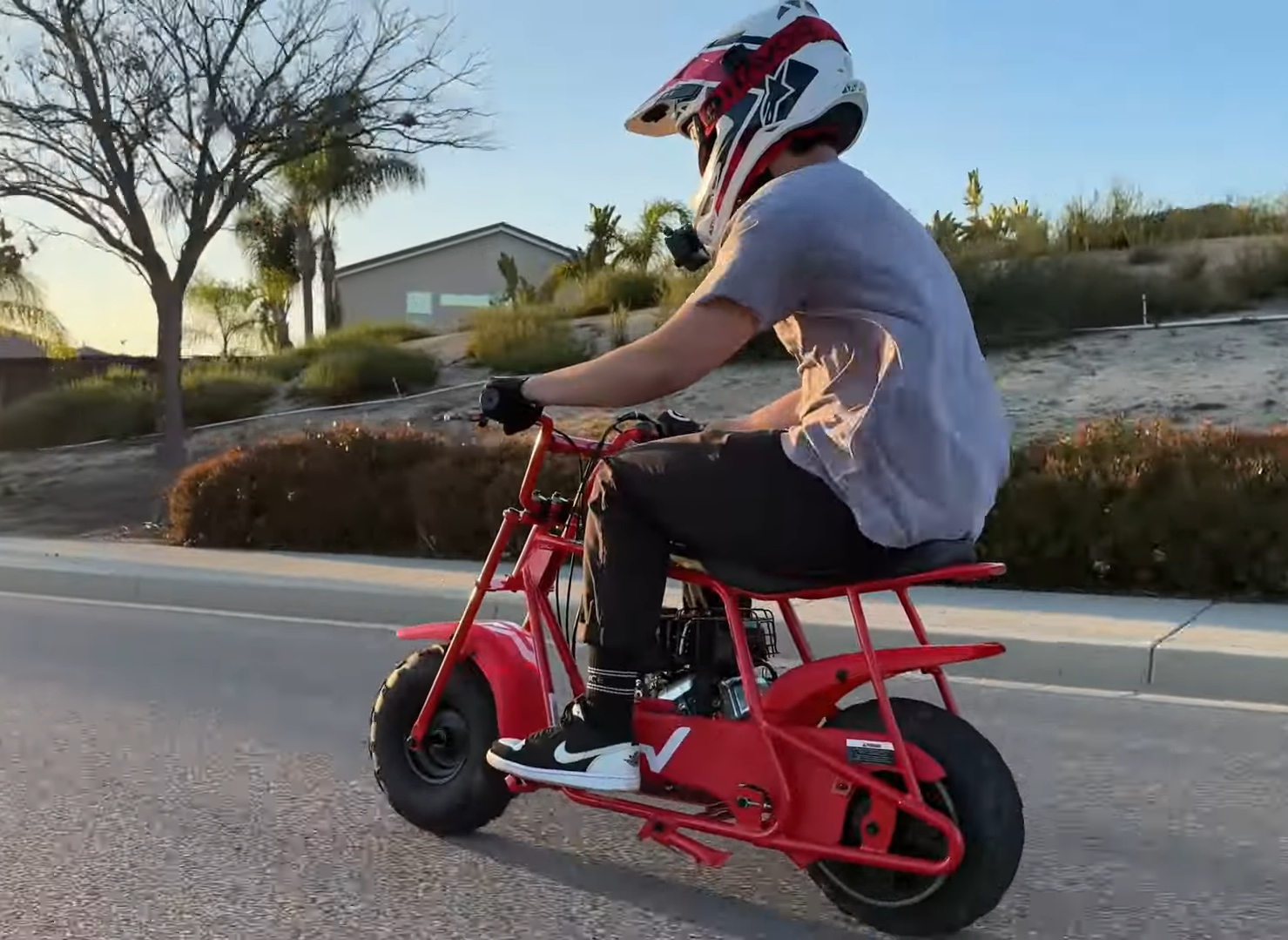
For backyard sessions, camping loops, and family outdoor use, a 4-stroke gas mini bike works best when the ride route is planned before the first pull start. Keep the route clear, avoid public roads, set a slow first lap, and make sure the rider can stop smoothly before longer riding.
What it feels like when the setup is right is simple: the bike starts cleanly, throttle response is predictable, and the rider is not worried about whether the tank will run dry after a few minutes. That confidence matters for parents, teens, adult beginners, and weekend riders.
FRP Owner Support for Fuel and Range Questions
If your FRP mini bike is using fuel faster than expected, start with the official FRP Ownership Promise page for maintenance and support paths. For real owner questions about fuel, riding, fitment, and troubleshooting, use the FRP Moto Community Answers hub.
For model-specific parts or replacement items, check the official FRP Parts page first. If the part is not listed or fitment is unclear, contact FRP Support with your model name, order information if available, and a clear photo of the part or area you are asking about.
FAQ
How far can an FRP GMB100 go on one tank?
FRP GMB100-series specs list roughly 27-30 miles of top range depending on the model. Real range can change with rider weight, terrain, throttle use, maintenance, and riding conditions.
How much gas does an FRP GMB100 hold?
Current FRP GMB100-series specs list a 0.36-gallon fuel tank. Always check the current product page or manual for the exact model you own.
Why is my mini bike using more gas than expected?
Common causes include hard throttle use, heavy rider load, grass or hill riding, low tire pressure, chain drag, brake drag, old fuel, or carburetor issues.
Can I add a bigger fuel tank to an FRP mini bike?
Do not assume a larger tank will fit safely. Tank changes can affect mounting, weight, balance, and clearance. Contact FRP Support before ordering or installing model-specific fuel parts.
Does a 4-stroke mini bike need oil mixed with gas?
No. FRP 4-stroke models such as GMB100 and MB40 use gasoline in the fuel tank and engine oil in a separate oil reservoir. Do not mix 2-stroke oil into the gas for these models.