
Table of Content
- What Is a Mini Bike Wheelie Bar and What Does It Actually Do?
- Do You Actually Need a Wheelie Bar on the FRP GMB100?
- Wheelie Bar vs No Wheelie Bar: Safety Impact for Different Riders
- How to Choose the Right Wheelie Bar for a Mini Bike in 4 Steps
- How to Install a Wheelie Bar on the FRP GMB100 Step by Step
- What Are the Best Mini Bike Wheelie Bar Options for the GMB100?
- When Should You Remove the Wheelie Bar After Installing It?
- FAQ
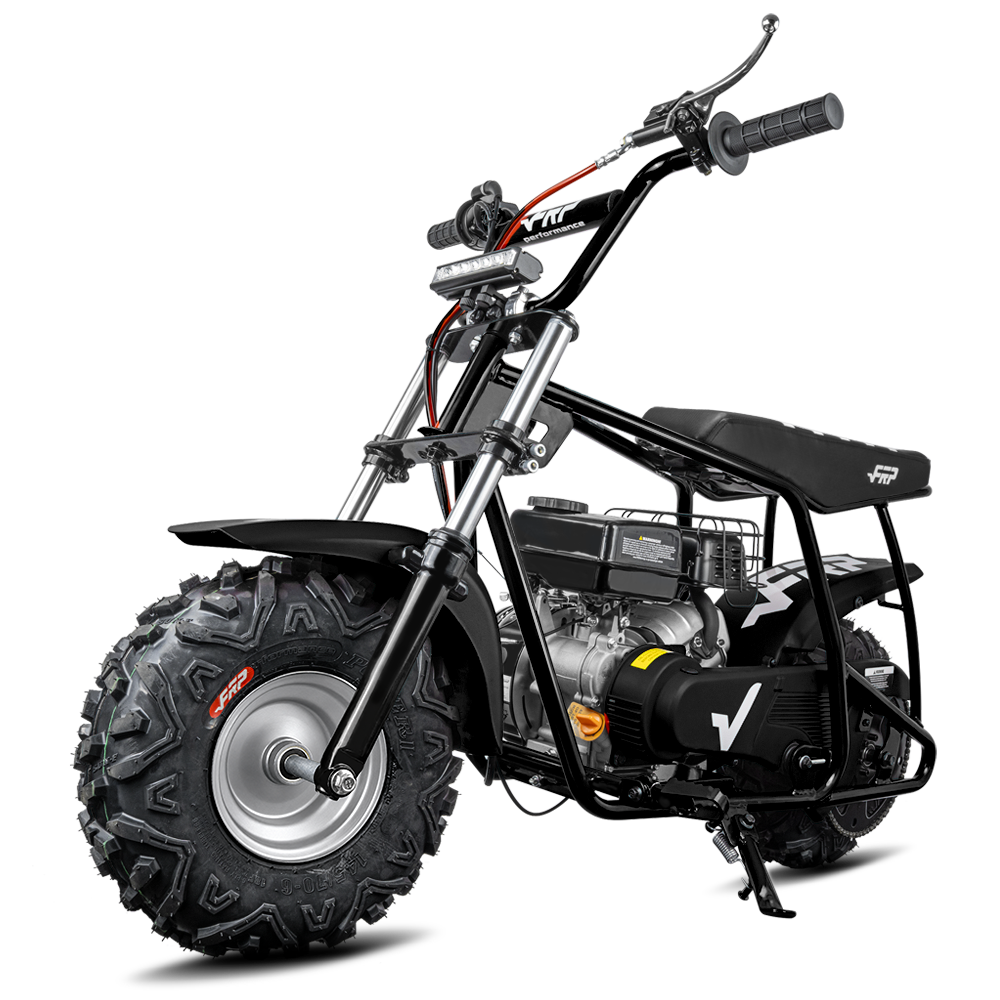
A mini bike wheelie bar is a rear-mounted stabilizer that contacts the ground if the front wheel lifts too far — and whether you need one on the FRP GMB100 depends entirely on who's riding and how. The GMB100 runs a 99cc 4-stroke OHV engine with a 28 mph top speed and weighs 79.5 lbs — light enough that aggressive throttle inputs from a lighter rider can produce front wheel lift on loose terrain. For younger riders, new riders, or anyone who wants a physical backstop against an unintended wheelie, a rear stabilizer bar is a legitimate safety addition. For experienced adult riders doing controlled backyard laps, it's optional equipment. This guide covers what the bar actually does, who needs it, and how to fit one to your GMB100 correctly.
What Is a Mini Bike Wheelie Bar and What Does It Actually Do?
A mini bike wheelie bar is a fixed or adjustable rear extension that mounts to the back of the frame and positions a small roller or skid just above the ground. When the front wheel lifts under hard acceleration, the bar contacts the riding surface and limits how far the machine can rotate — preventing a full backward tip-over. The bar does not prevent the front wheel from lifting at all; it sets a physical ceiling on how much rotation is possible. That distinction matters: a wheelie bar is a safety limiter, not a performance enhancer, and it won't stop a rider from initiating a wheelie — it just prevents the worst outcome if they do. (Off-road vehicle rollover prevention standards and safety equipment).

Do You Actually Need a Wheelie Bar on the FRP GMB100?
Most adult riders on the GMB100 don't require a wheelie bar for normal riding conditions. The 99cc OHV engine produces enough torque to lift the front wheel under aggressive throttle on loose terrain, but at 79.5 lbs and with a 220 lbs max load rating, the machine's weight balance is reasonably stable at typical riding inputs. The riders who benefit most from a rear stabilizer bar are those under 100 lbs, new riders who haven't yet developed throttle control instincts, and anyone riding in a setting where others — especially younger family members — will be using the same machine. If you're a controlled adult rider on flat terrain, the GMB100's standard setup is sufficient. If you're sharing the machine with newer or lighter riders, the bar earns its installation in the first session.
Wheelie Bar vs No Wheelie Bar: Safety Impact for Different Riders
For new and younger riders, a mini bike wheelie bar is a meaningful safety addition — not because the GMB100 is dangerous, but because novice throttle inputs are unpredictable. (Powersports safety guidelines for beginner and youth riders) A rider who snaps the throttle open from a stop on loose dirt is more likely to produce an unintended wheel lift than a rider who rolls smoothly into power, and a rear stabilizer bar creates a recovery margin in exactly that scenario. For experienced adult riders who are deliberate with the twist-grip throttle, the bar adds weight and reduces ground clearance on rough terrain without providing a meaningful safety gain. The relevant variable is not the machine — it's the rider's throttle discipline and the predictability of their inputs at 28 mph.
How to Choose the Right Wheelie Bar for a Mini Bike in 4 Steps
Step 1: Confirm frame compatibility — not all wheelie bars fit all mini bikes; the mounting point location on the GMB100's rear frame is specific, and a bar designed for a different chassis may not align with the bolt pattern.
Step 2: Check the mounting style — bolt-through mounts are more secure than clamp-style attachments on a machine that will actually contact the ground under load; verify the fastener spec matches the GMB100's rear frame tubing.
Step 3: Evaluate roller material and ground clearance — a polyurethane or nylon roller produces less surface damage on pavement and packed dirt than bare metal; confirm the bar's default ground clearance matches your typical riding surface height.
Step 4: FRP-specific vs universal fit — FRP GMB100 wheelie bar and accessories is the most reliable fitment path; universal bars require careful measurement verification before ordering to avoid returns.
How to Install a Wheelie Bar on the FRP GMB100 Step by Step
Step 1: Position the mounting bracket at the rear of the GMB100's frame — locate the factory rear mounting holes and confirm the bar's bracket aligns without modification.
Step 2: Thread and hand-tighten the mounting bolts before applying final torque — hand-tightening first ensures the bracket seats flush against the frame tube without cocking under load.
Step 3: Set the roller height — with the bike on flat ground, the roller should sit approximately 1–2 inches above the surface; this gap allows normal riding without the bar dragging, while still engaging before a full rotation occurs.
Step 4: Torque the mounting hardware to spec and verify the bar doesn't flex laterally when pressure is applied by hand.
Step 5: Test at low speed before riding normally — ride at under 10 mph and apply moderate throttle to confirm the bar doesn't contact the ground during normal acceleration and that it doesn't interfere with the rear wheel or chain path.

What Are the Best Mini Bike Wheelie Bar Options for the GMB100?
FRP's own wheelie bar kit is the most straightforward choice for GMB100 owners — it's designed around the specific mounting geometry of the frame and ships with hardware matched to the bolt pattern. Third-party universal bars can work, but they require careful measurement of the rear frame width and bolt spacing before ordering, and installation often involves spacers or bracket adaptation that adds complexity. For the GMB100's 79.5 lb frame running on 145/70-6 tires, a bar with a polyurethane roller is the better surface choice over bare steel — less ground marking on packed dirt and paved private land, and quieter contact under load. Adjustable-length bars offer more flexibility for different terrain heights, but a fixed-length bar matched to the GMB100's frame geometry is the more reliable starting point.

When Should You Remove the Wheelie Bar After Installing It?
Remove the wheelie bar before riding technical off-road terrain where ground clearance is a priority. On rocky OHV park trails, uneven root-covered paths, or any surface with significant elevation change, a fixed rear extension reduces the machine's ability to clear obstacles — and a bar contact on a rock or stump at speed is worse than no bar at all. For flat backyard circuits, private paved land, or controlled riding where the bar was installed for a specific rider, leave it in place as long as that use case applies. The bar is a removable safety tool, not a permanent fixture — treat it like a training wheel for throttle control: install it when the situation calls for it, remove it when the terrain or rider has outgrown the need.
FAQ
Will a wheelie bar affect my GMB100's turning radius or handling at low speed?
No noticeable impact at low speed on flat ground. The bar extends behind the rear axle and doesn't affect steering geometry. On tight backyard circuits, the added rear length is worth checking once — ride a slow figure-eight after installation to confirm clearance on your specific surface before a full session.
Can I install a wheelie bar on the GMB100P as well, or is it only compatible with the GMB100?
Both models can accommodate a wheelie bar. Fitment confirmation is still required — the GMB100P has a slightly different rear frame geometry than the GMB100. FRP's parts ecosystem lists compatibility by model; verify before ordering to ensure the mounting hardware matches the GMB100P's specific bolt pattern.
What length should a mini bike wheelie bar be to work correctly at my riding height?
The bar should be positioned the roller 1–2 inches above ground level on your typical riding surface. Too high and the bar engages too late; too low and it drags during normal riding. Measure from the rear axle center to the ground on a flat surface, then size the bar to keep the roller within that 1–2 inch clearance window.
Does running with a wheelie bar dragging on the ground damage the rear tire or frame?
Sustained dragging stresses the mounting bracket and wears the roller faster than normal contact during an actual wheelie event. If the roller drags during normal riding, the bar is set too low — raise the roller height before continuing. Brief contact during an unintended wheel lift is exactly what the bar is designed for and causes no damage.
Is a wheelie bar required for riding at an OHV park, or is it a personal safety choice?
It's a personal safety choice in most OHV parks — no standard park regulation requires a wheelie bar on a mini bike. Some parks have youth rider rules that may specify safety equipment; check the specific park's requirements before arrival. On technical trail terrain, the bar is generally better removed due to ground clearance concerns.