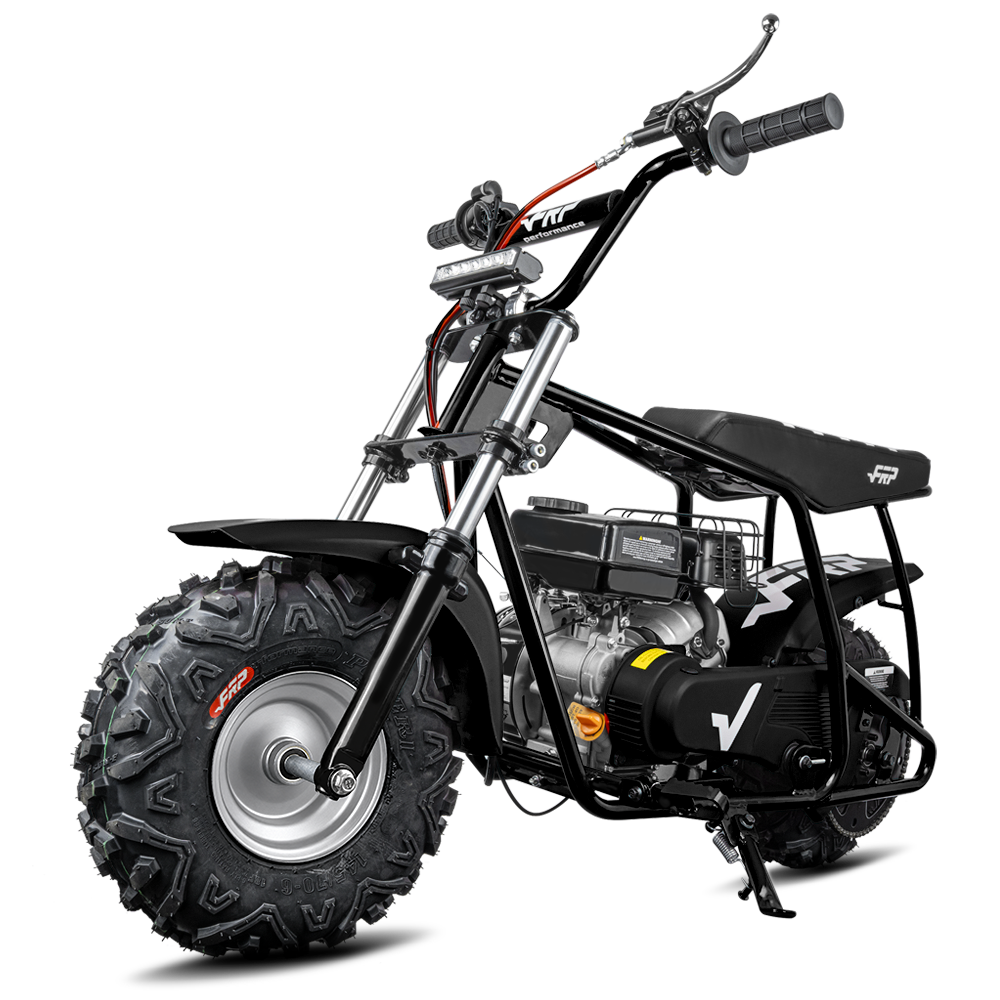

Same 125cc engine, two builds. Short version: the 14″/12″ small-wheel FX125 fits shorter or younger riders, the 17″/14″ big-wheel fits taller teens and adults — here's how to be sure before you spend $799.99–$1,099.99.

The FRP Moto FX125 comes in two builds on the same 125cc engine, so choose by the rider, not the spec sheet. Pick the 14″/12″ small-wheel build (28.1″ seat, ~150 lb, from $799.99) for shorter or younger riders (about 12–15) and tight, flatter riding — it's lighter, easier to flick, and easy to touch down on. Pick the 17″/14″ big-wheel build (33.9″ seat, longer-travel suspension, dual-piston front brake, from $999.99) for taller teens and adults and faster, rougher trails. Both carry up to a 265 lb rider load and are rated about 56 mph, so the extra ~$200 buys fit and stability, not more speed. Off-road only — wear a helmet and full gear.
Ready to choose? Configure both builds on the FRP Moto FX125 product page (125cc · 4-speed manual clutch). This guide is about the wheel-size decision only — for speed see how fast a 125cc pit bike is, and for engine size see 125cc vs 140cc.
- Both FX125 builds share the same 125cc engine, 4-speed manual clutch, and 265 lb rider load — wheel size changes the chassis, not the power.
- 14/12 small-wheel: 28.1" seat, lighter (~150 lb), easy to touch down and flick — best for shorter/younger riders and tight, flat riding. From $799.99.
- 17/14 big-wheel: 33.9" seat, longer-travel suspension, dual-piston front brake — more stable at speed, better over rough ground. From $999.99.
- Fit by seat height first: the rider should touch the ground with the balls of both feet.
- The ~$200 gap pays for stance, suspension travel, and a stronger front brake — not more speed.
When you add the FX125 to your cart, the first choice isn't color or trim — it's wheel size: a 14/12 build or a 17/14 build. People assume the bigger wheels are just "the faster one," but that's not really what's going on. Both builds run the identical 125cc engine. What changes is how tall the bike sits, how it rides, how it stops, and the price. Here's the honest breakdown so you order the one that fits the rider the first time.
First: what the wheel size does NOT change
It's worth clearing this up before the comparison, because it's where most buyers overthink it. Across both the 14/12 and 17/14 builds, the FX125 keeps the same 125cc air-cooled 4-stroke engine, the same true 4-speed manual clutch, the same ~56 mph rating, and the same 265 lb (120 kg) max rider load. So you're not buying "more bike" in terms of power or carrying capacity. The wheel size is a chassis and fit decision, not an engine decision. For the full speed story, see how fast is a 125cc pit bike.
14/12 vs 17/14: the real differences


| Factor | 14/12 small-wheel | 17/14 big-wheel |
|---|---|---|
| Seat height | 28.1" | 33.9" |
| Bike weight | Lighter (~150 lb) | Heavier (taller chassis) |
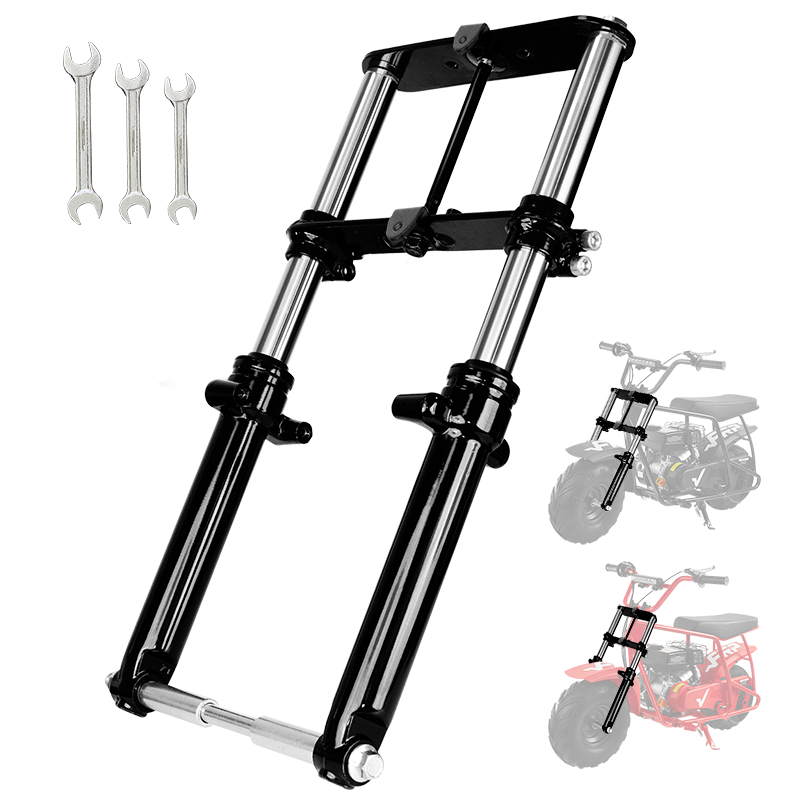
| Suspension | Standard travel | Longer-travel |
| Front brake | Single disc | Dual-piston disc |
| Ride feel | Quick, flickable, easy to turn | Stable, planted at speed |
| Rough ground | Feels more of it | Rolls over bumps & ruts better |
| Touch-down | Easy — low seat | Needs taller rider |
| Best rider | Shorter / younger (≈12–15) | Taller teens & adults |
| Starting price | $799.99 (Pro $899.99) | $999.99 (Pro $1,099.99) |
The headline differences are seat height and how the bike behaves. Bigger wheels roll over obstacles instead of dropping into them, so the 17/14 build feels more stable as speed and terrain get serious — helped by its longer-travel suspension and stronger dual-piston front brake. Smaller wheels spin up and change direction faster and keep the seat low, so the 14/12 build is friendlier for a newer or shorter rider learning the clutch on flatter ground.
How to choose — by rider, then by terrain
Use this order: fit the rider first, then match the terrain. Fit beats everything — a bike that's too tall to touch down on is hard to learn on and unsafe, no matter how good the trails are.
Pick the 14/12 small-wheel build if…
The rider is shorter or younger (roughly 12–15), is stepping up from a gas mini bike like the GMB100 or the FX40, rides mostly flat or tight ground, or wants the lowest seat and the easiest bike to flick around and touch down on. It's also the lower-price entry at $799.99.
Pick the 17/14 big-wheel build if…
The rider is a taller teen or an adult, wants a planted feel at higher trail speed, rides rougher or hillier ground, or simply needs the 33.9" seat to fit comfortably. The longer-travel suspension and dual-piston front brake make it the better tool when the riding gets faster and rougher — for about $200 more.
The simple test that settles most cases: sit the rider on the bike. If they can reach the ground with the balls of both feet, the build fits. If they're on tiptoes on the 17/14, drop to the 14/12. If a tall adult feels cramped and knees-up on the 14/12, go to the 17/14.
Is the bigger-wheel build worth the extra ~$200?
It's worth it when you're buying it for the right reason — fit and ride quality, not speed. The two builds are rated at the same top speed, so paying up for the 17/14 to "go faster" is the wrong reason. Paying up because the rider is tall, rides rough trails, and benefits from longer-travel suspension and a stronger front brake is the right reason. If the rider is short or new and rides flat ground, the $799.99 small-wheel build is the smarter buy. Either way, each build also comes in a Basic and a Pro trim ($100 apart) — pick the wheel size first, then the trim.
Can you swap between the two builds later? (Supermoto ↔ dirt)
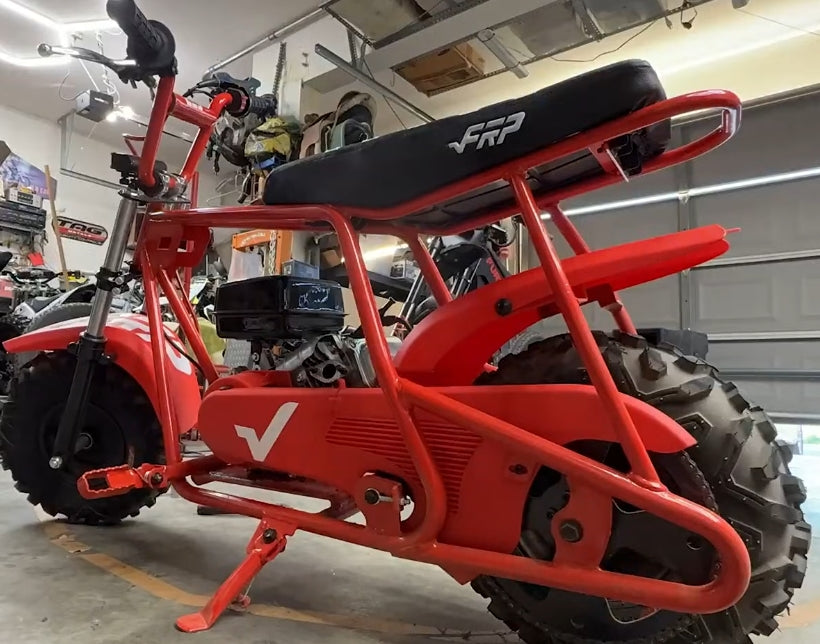
Yes — and this is the part most buyers miss. The 14/12 and 17/14 builds share the same frame, engine, and axles. The difference is the wheel-and-tire package, so the setup is changeable after you buy. Riders running the small-wheel FX125 on pavement with street rubber (a supermoto setup) commonly swap back to knobby dirt wheels for trail and track days, and back again.
What actually has to match when you swap:
- Axle diameter and spacer stack — the wheel has to sit centred in the fork and swingarm, not just fit on the axle.
- Brake rotor diameter and caliper position — a different wheel size moves the rotor relative to the caliper.
- Tyre-to-frame clearance — check the rear tyre against the swingarm and chain at full compression, not just parked.
- Gearing — a smaller rolling diameter shortens the effective gearing. If you swap wheel sizes and keep the same sprockets, the bike will pull harder and top out sooner.
- Chain tension — recheck and reset it after every wheel change, before the first ride.
Two practical notes. First, a swap is a wheel-and-tyre job you do yourself — FRP sells the FX125 as two separate factory builds, not as a convertible kit, so buy the build you will ride most of the time and treat the second wheel set as a later project. Second, the seat height changes with the wheels: going from 14/12 to 17/14 raises the bike, so a rider who only just touches down on the small-wheel build will be on tiptoes after the swap.
@darzrt
When neither FX125 build is the right call
- The rider is very young or very small (under ~10, or can't touch down on the 28.1" seat) — start on the FX40 instead.
- It's a first-ever gas ride with no clutch experience — a no-clutch GMB100 mini bike first makes the manual step easier.
- The rider is a heavier, faster adult already pushing the 265 lb load or wanting more bike — step up to the oil-cooled FX140 (see 125cc vs 140cc).
- You need something street legal — the FX125 is EPA off-road only, not street legal, and not sold in California.
Frequently asked questions
What is the difference between the FX125 14/12 and 17/14 builds?
Both use the same 125cc air-cooled engine and 4-speed manual clutch. The 14/12 small-wheel build is lighter (about 150 lb) with a low 28.1-inch seat, easy to flick and easy to touch down on. The 17/14 big-wheel build has a 33.9-inch seat, longer-travel suspension, and a dual-piston front brake.
Which FX125 wheel size should I buy?
Choose by rider height and how the bike will be used. Pick the 14/12 small-wheel build for shorter or younger riders (roughly 12–15) and tight, flat riding. Pick the 17/14 big-wheel build for taller teens and adults, faster trails, and rougher terrain.
Are the bigger 17/14 wheels faster than the 14/12?
Marginally, and not in a way most riders should choose on. Both builds share the same 125cc engine and the same ~56 mph rating. Fit and terrain matter far more than the small wheel-size effect on top speed.
How much more does the big-wheel FX125 cost?
The 14/12 small-wheel build starts at $799.99 and the 17/14 big-wheel build starts at $999.99 — about $200 more. Each build also offers a Pro trim for $100 above its Basic price.
What seat height is each FX125 build?
The 14/12 small-wheel build has a 28.1-inch seat height; the 17/14 big-wheel build has a 33.9-inch seat height. Both carry up to a 265 lb (120 kg) rider load.
Can a tall adult ride the small-wheel FX125?
It will hold them — the 265 lb load rating is the same — but a tall adult will feel cramped on the 28.1-inch seat and the bike can feel small at speed. Taller and heavier riders are a better fit on the 17/14 big-wheel build.
What wheel size is best for a 13-year-old?
For most 13-year-olds the 14/12 small-wheel build (28.1-inch seat) is the better fit — low enough to touch down on and lighter to control while learning the clutch. A tall 13-year-old (about 5 ft 4 in or more) who can flat-foot the 33.9-inch seat can move up to the 17/14 build. Go by seat height and the feet-down test, not age alone.
The bottom line
Don't pick the FX125 wheel size by price or by chasing speed — pick it by the rider. Short, young, or new and on flat ground: the 14/12 build at $799.99. Tall teen or adult, rougher and faster riding: the 17/14 build at $999.99 for the taller stance, longer suspension, and stronger brake. Confirm the seat-height fit, then choose Basic or Pro.