Your cart is empty
return to shopA dirt bike can look ready for the road and still be ineligible for road registration. Before buying one to commute, visit friends, or connect trails, establish whether that exact motorcycle can legally do the trip.
Are dirt bikes street legal in the United States?
Off-road-only dirt bikes are not street legal as sold. A factory dual-sport motorcycle is built for both road and off-road use, but its owner must still meet applicable registration, rider-licensing, and other operating requirements. Some states offer a conversion process for eligible off-road motorcycles; others restrict it. Adding lights or possessing a VIN does not settle eligibility. Start with the motorcycle's original classification, its documents, and your state motor vehicle agency's rules. FRP Moto's FX40, FX125, and FX140 are sold for off-road use only, not as street-legal motorcycles.
There is no single nationwide conversion checklist that guarantees plates. Washington publishes a process for registering modified off-road motorcycles. California's OHV conversion rules restrict motorcycles originally manufactured for off-highway use. Those differences are why the state agency, rather than an accessory seller, must establish the path for a particular bike.
U.S. overview. Sources and FRP Moto product statements checked September 24, 2026. Confirm current requirements for your motorcycle and riding location before buying or riding.
Where do you actually want to ride?
Choose the riding location before the engine size. A small backyard bike, a trail motorcycle, and a commuter can require different permissions even when all three have two wheels and an engine.
| Your plan | What to establish first | Practical buying direction |
|---|---|---|
| Commute or ride neighborhood streets | Road-registration eligibility and the rider's required license or permit. | Start with a motorcycle manufactured for road use. |
| Ride trails and connect them by road | Both trail access and legal access to every road connection. | Consider a road-eligible dual-sport; check trail rules separately. |
| Transport a bike to an OHV area | Motorcycle access, permits, equipment, and rider restrictions at that site. | An off-road model may fit once those requirements are confirmed. |
| Ride your own or someone else's land | Owner permission, local restrictions, and applicable state recreation-vehicle rules. | Match an off-road bike to rider fit, experience, and the permitted terrain. |
A useful test is to write down the entire route from storage to riding area. Include the driveway exit, access road, parking area, and any road crossing. If one segment requires a road-registered motorcycle, a trail permit alone does not solve that part of the journey.
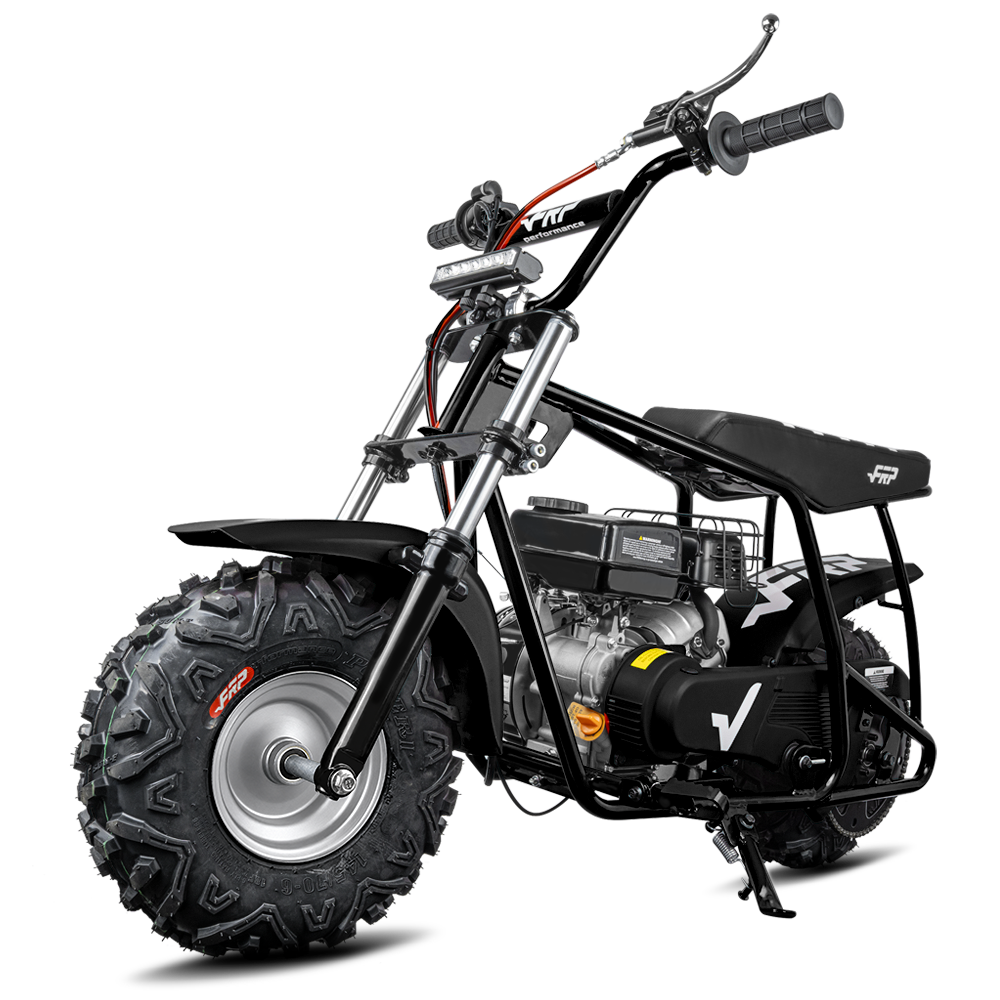
If your plan is permitted off-road recreation, compare the FRP Moto dirt bike collection. These are off-road choices; do not choose one to solve a commuting requirement.
What makes a dirt bike street legal?
Street legality depends on the vehicle's eligibility, required equipment, and completed state paperwork. The rider must also hold the appropriate operating privileges. A headlight addresses one equipment question; a title addresses ownership or classification. Neither document nor component, by itself, proves that a particular motorcycle may be ridden on public streets.
Check the original classification and documents
Ask to see the vehicle identification number, manufacturer paperwork, relevant certification labels, and any existing title or registration. Ask the DMV which documents it needs and whether the recorded classification permits road registration. A sales receipt or a seller's description of a bike as an “enduro” is not a substitute for that answer.
NHTSA distinguishes off-road vehicles from vehicles manufactured primarily for public-road use in its importation guidance. Lawful importation as an off-road vehicle does not establish road-use certification. Similarly, an off-road emissions claim should not be read as proof of compliance for a different vehicle category.
Use your state's equipment requirements
Ask about lighting, brake lights, turn signals, mirrors, a horn, brakes, tires, exhaust, and any required instruments. Requirements can depend on vehicle type and model year. For example, the Oregon motorcycle manual specifies required equipment and includes model-year conditions for turn signals.
Treat this list as questions to resolve, not a universal parts order. An advertised “street-legal kit” cannot establish that your bike's paperwork or original certification will be accepted.
Complete the applicable administrative steps
Confirm title and registration requirements, plates, inspection or verification, fees, and insurance or other financial-responsibility requirements with the relevant agencies. Do not assume every state uses the same insurance rule or registration procedure. The California motorcycle-registration page, for example, identifies the documents needed under its own process.
Can you make any dirt bike street legal?
No. Conversion is available only where the applicable rules permit it and the specific motorcycle qualifies. A VIN, an equipment kit, an inspection appointment, or another owner's successful conversion does not guarantee approval for your bike. Get the eligibility answer before paying for parts, labor, transport, or registration services.
Send the state agency the exact make, model, model year, VIN, document classification, and photographs of the relevant labels. Ask: “Can this motorcycle be registered for ordinary public-road use, and what process applies?” Request the official instructions or form so you can distinguish a road-registration process from an OHV permit.
Where a conversion is allowed, build a budget from actual quotes: equipment, installation, inspection, paperwork, transport, and applicable coverage. There is no verified national price that fits every motorcycle. Compare that total with purchasing a factory road-eligible model before committing.
Can you ride on private land, trails, or dirt roads?
Off-road use still requires a permitted location. Landowner permission is essential on someone else's property, but it does not replace applicable state and local rules. For public land, confirm that the managing agency permits your vehicle type on the specific route, during the season you plan to visit, with the required permits and equipment.
Private property
Do not rely on a blanket promise that private-land riding needs no paperwork anywhere in the United States. Massachusetts, for example, lists registration requirements for recreation vehicles used on public or private property, subject to exceptions. Check the state's official OHV safety rules and your local requirements.
Public trails and forest roads
A dirt surface does not automatically make a route open to unregistered motorcycles. The Forest Service's Motor Vehicle Use Map guidance distinguishes roads open to highway-legal vehicles from routes open to other motor vehicles. Use the map for the forest you will visit and check current closure notices.
Ask the land manager about permits, spark arresters, sound limits, rider-age rules, training, and seasonal restrictions. Plan transport to the riding area if you cannot legally ride the connecting roads. Permission to use a trail is not a general permission to ride on surrounding streets.
Do a license or a smaller engine change the answer?
A rider's license does not change an off-road bike into a road-eligible motorcycle. Conversely, a road-registered motorcycle does not give an unlicensed rider permission to operate it. Check the rider's license, permit conditions, and age requirements independently of the motorcycle's registration. NHTSA's motorcycle-safety guidance directs riders to obtain the proper motorcycle operating credentials and training.
Likewise, 40cc, 49cc, or 50cc alone does not establish a moped exemption. Vehicle categories have specific legal definitions; the California Highway Patrol's category guide illustrates distinctions involving features beyond displacement. A small off-road dirt bike should not be treated as a moped merely because its engine is below a commonly quoted threshold.
For children, check applicable youth-riding rules and venue requirements, then match reach, controls, weight, and experience. Adult supervision and suitable protective equipment remain essential. The Kids Dirt Bike Guide covers the separate fit decision.
Before an off-road session, equip the rider with a properly fitted motorcycle helmet, eye protection, gloves, long sleeves, long pants, and protective boots. Choose a practice area suited to the rider's skill and keep spectators clear. Permission to ride establishes access; it does not establish that every rider, maneuver, or terrain is appropriate.
Are FRP Moto FX40, FX125, and FX140 street legal?
No. FRP Moto identifies all three as off-road-only models, not street-legal motorcycles. Their current product information also excludes California sales. Choose them only for a permitted off-road riding plan that suits the rider and vehicle; no road-conversion eligibility for these models is established here.

| Model | Off-road buying role | Road use / California |
|---|---|---|
| FX40 Ogemaw | 40cc option for younger riders; verify fit and supervision requirements. | Not street legal; unavailable in California. |
| FX125 | 125cc manual-clutch option with two wheel-size configurations. | Not street legal; unavailable in California. |
| FX140 | 140cc manual-clutch option positioned for experienced teen and adult riders. | Not street legal; unavailable in California. |
For the larger models, the 125cc versus 140cc guide can help with the riding and fit comparison. If road commuting is your priority, select a road-eligible motorcycle instead.
What does the California restriction actually mean?
For these FRP Moto products, it means the current sales and shipping information excludes California. That commercial restriction must be kept separate from rules governing road registration and off-road riding. A store's delivery policy cannot tell you whether every dirt bike, or every form of riding, is legal in a state.
The product pages cite Proposition 65. California's official Proposition 65 FAQ describes chemical-exposure warning requirements; that does not establish a blanket ban on dirt bikes. California DMV's separate OHV conversion guidance addresses eligibility for highway registration. This guide does not promise California registration or public-land access for an FRP Moto model.
What else should you check before buying?
Are 50cc dirt bikes street legal?
Not automatically. Engine displacement alone does not establish road-registration eligibility or moped status. Check the exact vehicle classification, documents, equipment, and your state's requirements.
Does an OHV sticker make a dirt bike street legal?
No. An off-highway permit is not general road registration. Check the permit's scope and the rules for each trail, access road, and connecting street.
Can I ride a dirt bike around my neighborhood?
For ordinary public-street riding, the motorcycle and rider must meet applicable road-use requirements. A quiet neighborhood or short trip does not establish permission for an off-road-only bike.
Can a headlight and mirrors make my FRP dirt bike street legal?
No. Those accessories do not establish road-registration eligibility. FRP Moto's FX40, FX125, and FX140 are sold for off-road use only.
Is a dual-sport motorcycle the better choice for road and trail riding?
A factory road-eligible dual-sport is the appropriate category to investigate when your route includes public streets. Confirm registration, rider requirements, and access to the intended trails before buying.
What should you do next?
For road use, take the exact motorcycle's documents to your state motor vehicle agency before purchasing it or ordering conversion parts. For off-road use, establish a permitted location and transport plan first, then compare rider fit and controls in the FRP Moto dirt bike collection.