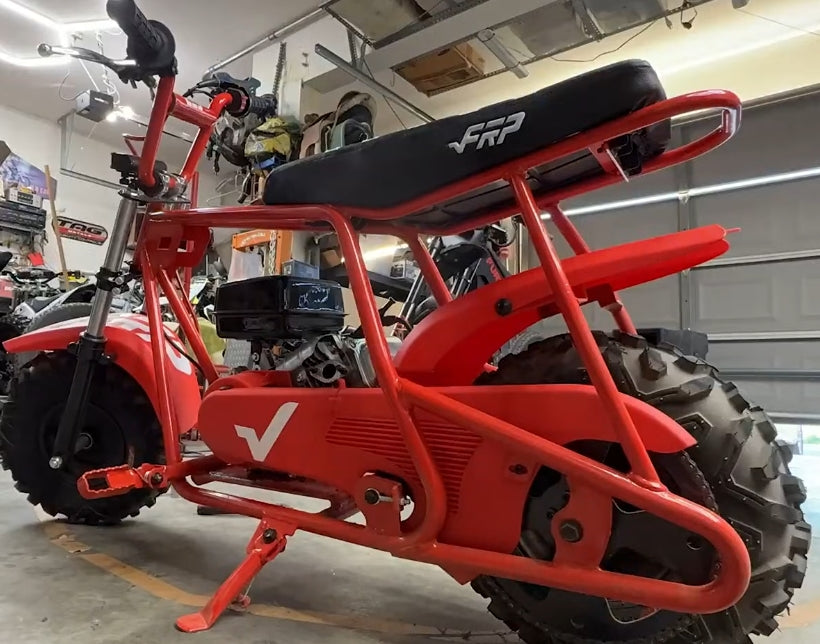
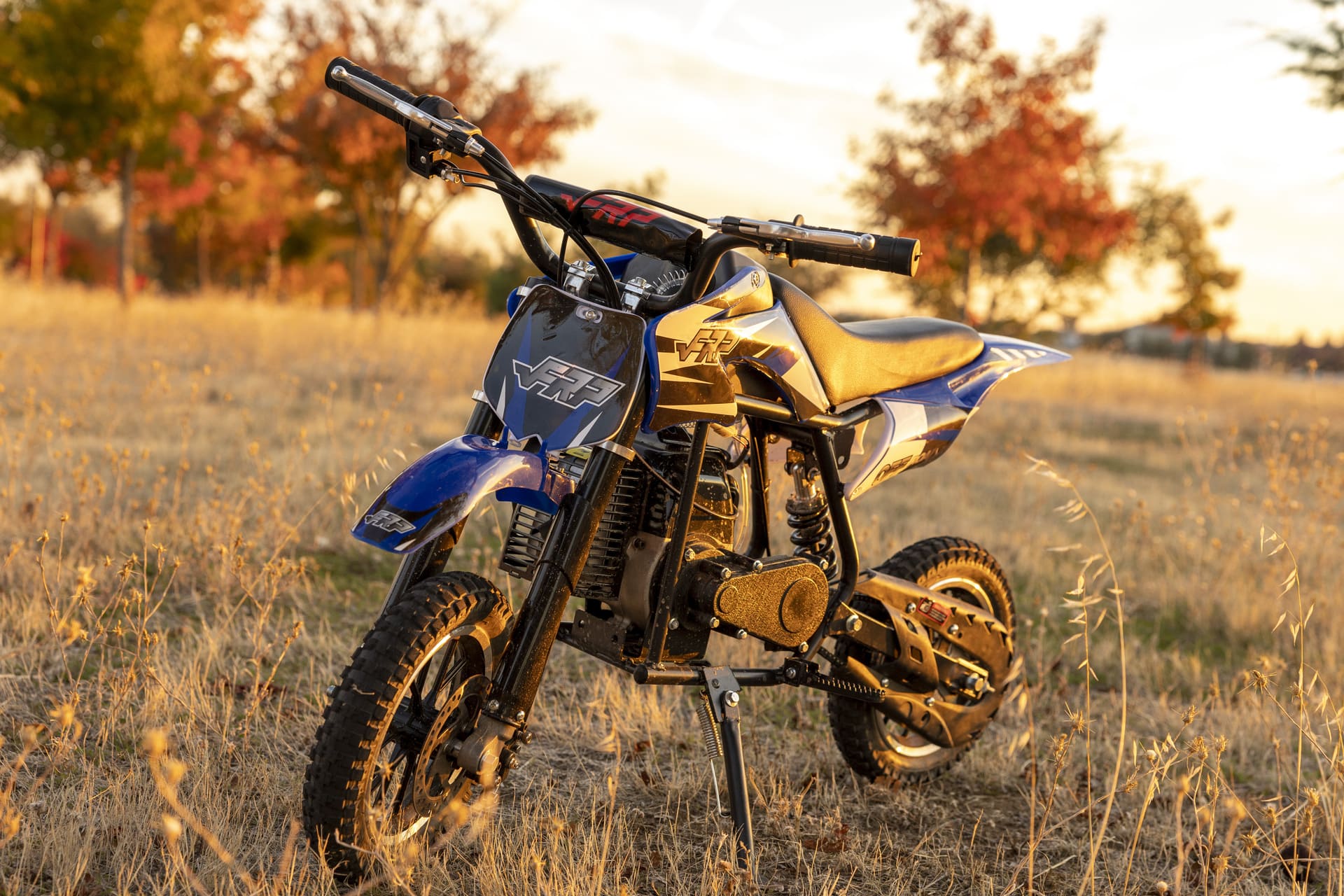
Short answer: A mini bike is a small, rigid-frame gas bike built for flat ground. A dirt bike has suspension, bigger wheels, and trail geometry built for rough terrain. They look similar but are engineered for completely different surfaces.
If you’re trying to decide which one to buy — or when to move from one to the other — see the mini bike to dirt bike upgrade guide. This article covers what each type of bike actually is and how the hardware differs.
What is a mini bike?
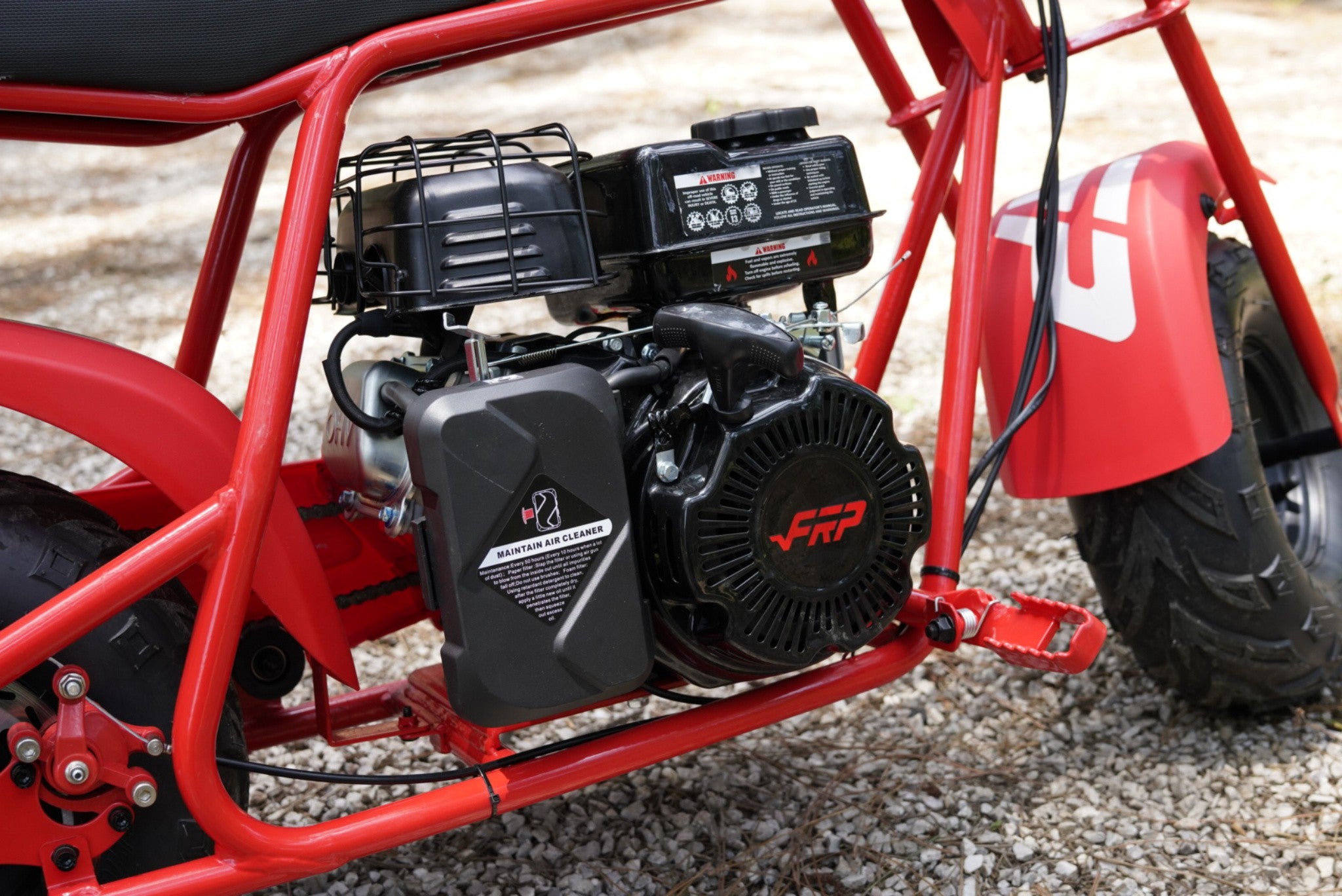
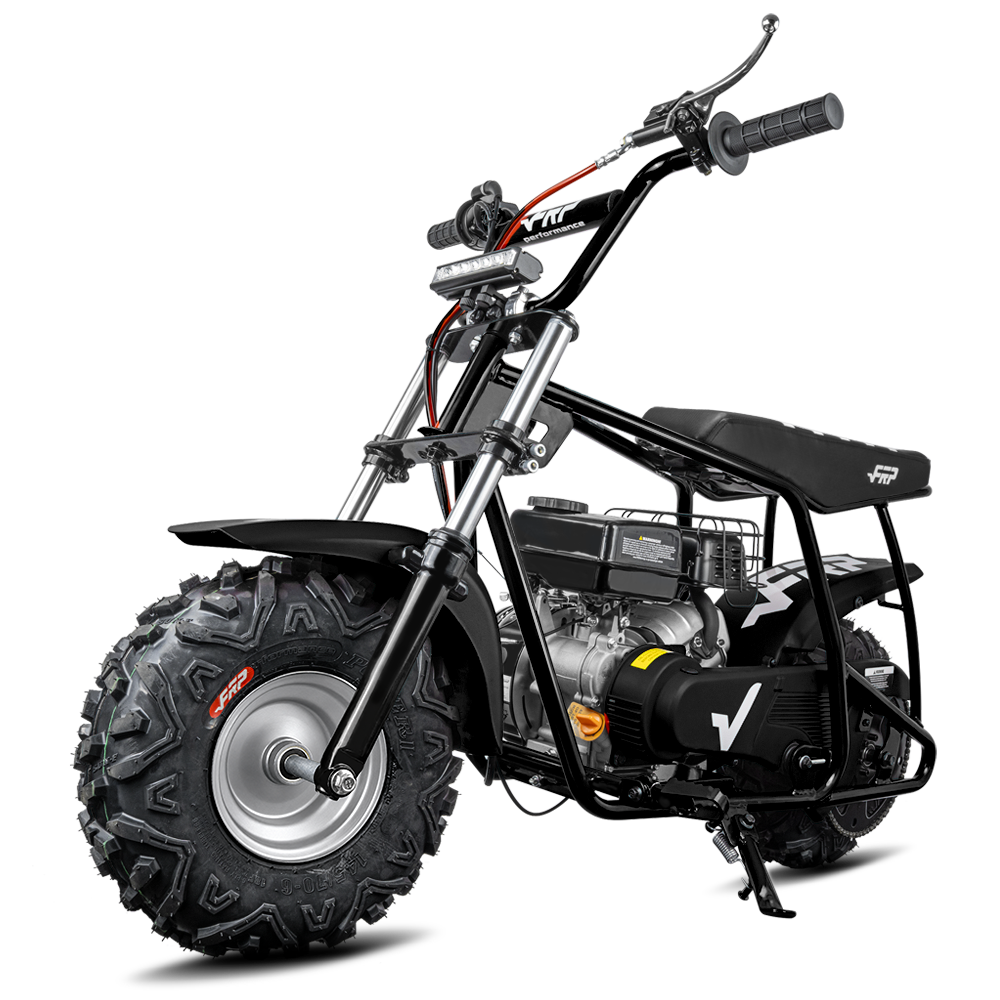
A mini bike (also called a pocket bike or mini moto) is a compact, low-profile gas-powered bike with a rigid steel frame, small wheels (typically 10 inch), and a simple single-cylinder 4-stroke engine. It has no front suspension — the frame is solid from wheel to handlebars. This makes it stable and predictable on flat, smooth surfaces: backyards, hardpack dirt, campground roads, and paved private property.
Mini bikes are designed to be easy to ride. Low seat height, light weight, and simple controls make them approachable for beginners and younger riders. The FRP Moto MB40 is a 40cc mini bike for kids ages 6+; the GMB100 is a 99cc mini bike for teens and adults.
What is a dirt bike?
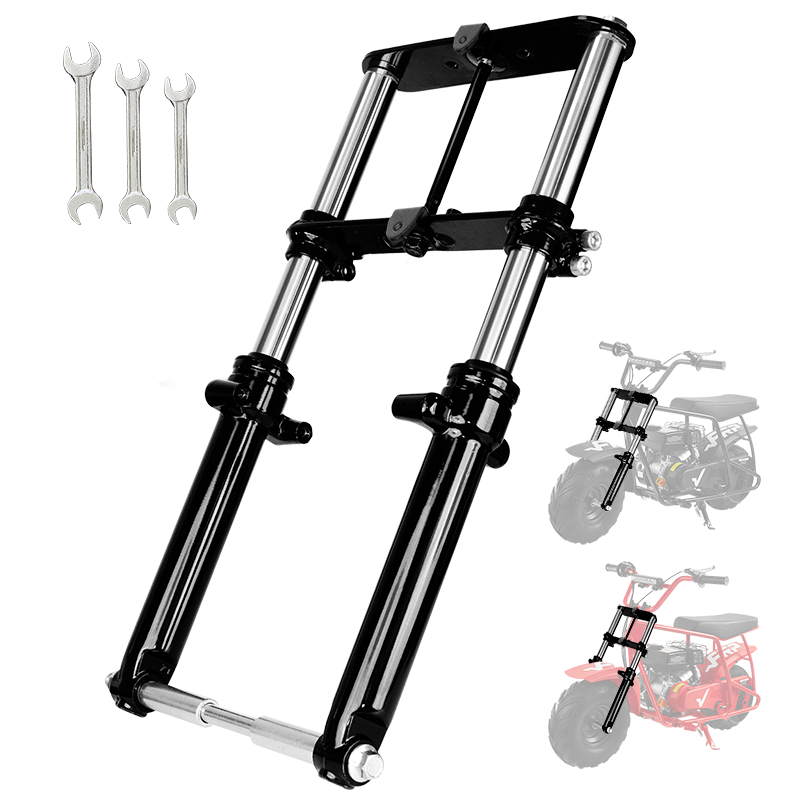
A dirt bike is an off-road motorcycle built to handle rough terrain: trails, hills, roots, jumps, and uneven ground. The defining feature is the suspension system — front forks and a rear linkage that absorb bumps independently from the rider. Dirt bikes also have larger wheels (14–19 inch depending on size), higher ground clearance, and a taller frame with trail-optimized geometry.
Dirt bikes come in a wide engine range, from 40cc kids’ trail bikes up to 450cc motocross bikes. The FRP Moto FX40 Ogemaw is a 40cc dirt bike for kids and young teens — note that a 40cc dirt bike and a 40cc mini bike are completely different machines despite sharing the same engine displacement.
Key differences: mini bike vs dirt bike
| Feature | Mini Bike | Dirt Bike |
|---|---|---|
| Suspension | None — rigid frame | Full front & rear suspension |
| Wheel size | Small (typically 10 inch) | Larger (14–19 inch) |
| Ground clearance | Low | High |
| Seat height | Low — easy for smaller riders | Taller — suits bigger riders |
| Brakes | Rear disc or drum only | Dual disc (front + rear) |
| Best surface | Flat, smooth ground | Trails, hills, rough off-road |
| Controls | Simple — throttle and rear brake | Adds front brake lever; some add clutch |
| Typical use | Backyard, campground, hardpack | Trail riding, hills, off-road parks |
Does engine size determine which type it is?
No — and this is the most common misconception. The FRP MB40 mini bike and the FRP FX40 Ogemaw dirt bike both run a 40cc 4-stroke engine. The MB40 does 18 mph on flat ground; the FX40 does 20 mph on trails. The engine is nearly identical. What makes them different is the chassis: the FX40 has full suspension, dual disc brakes, and trail geometry. The MB40 has none of those.
A bigger engine doesn’t make something a dirt bike. Suspension and chassis design do.
Which is easier to ride?
Mini bikes are generally easier for first-time riders. The low seat, rigid frame, and single rear brake keep the control inputs minimal. There’s less to manage and less that can go wrong on flat ground.
Dirt bikes introduce more controls (front brake, and sometimes a clutch on larger sizes) and require the rider to work with the suspension through terrain changes. They’re not harder in an absolute sense, but there’s more technique involved when riding off-road.
Which one should you get?
Match the bike to the surface your rider actually uses:
- Flat backyard, campground roads, hardpack — mini bike. Simpler, lighter, lower cost.
- Trails, hills, bumpy terrain — dirt bike. The suspension is what makes rough ground rideable.
If your rider is on a mini bike and you’re wondering when to move to a dirt bike, the decision comes down to terrain and fit — not age or engine size. The upgrade guide walks through the exact signals to watch for, with age and height ranges for the FX40 Ogemaw.
FAQ
What’s the main difference between a mini bike and a dirt bike?
Suspension and chassis. A mini bike has a rigid frame with no suspension, built for flat ground. A dirt bike has full front and rear suspension, bigger wheels, and higher ground clearance for trails and rough terrain. Engine size is separate from this distinction — both can run the same cc engine.
Can a mini bike go off-road?
A mini bike can handle light off-road: dirt paths, gravel, hardpack, and grass on flat ground. It cannot handle bumpy trails, hills, or rough terrain — the rigid frame transmits every bump directly to the rider and loses traction on uneven ground. For real off-road use, a dirt bike with suspension is required.
Is a dirt bike faster than a mini bike?
Not necessarily. The FRP GMB100 mini bike (99cc) reaches 28 mph; the FRP FX40 Ogemaw dirt bike (40cc) reaches 20 mph. A dirt bike is not automatically faster — it depends on engine size. A dirt bike’s advantage is terrain capability, not top speed.
What age is a mini bike for?
Mini bikes start as young as age 6 — the FRP MB40 is rated for kids ages 6 and up, up to 165 lbs. Larger mini bikes like the GMB100 suit teens and adults up to 220 lbs. Dirt bikes also start at age 6+ for small 40cc models and scale up through adult sizes.
Do mini bikes have suspension?
Most mini bikes, including the FRP MB40 and GMB100, have no suspension — rigid frame only. Some higher-end mini bikes add front suspension, but standard flat-track mini bikes do not. This is the primary mechanical difference from a dirt bike.